Ryden Narrow-Wide Chainring – CNC 7075 1× Bicycle Chainring
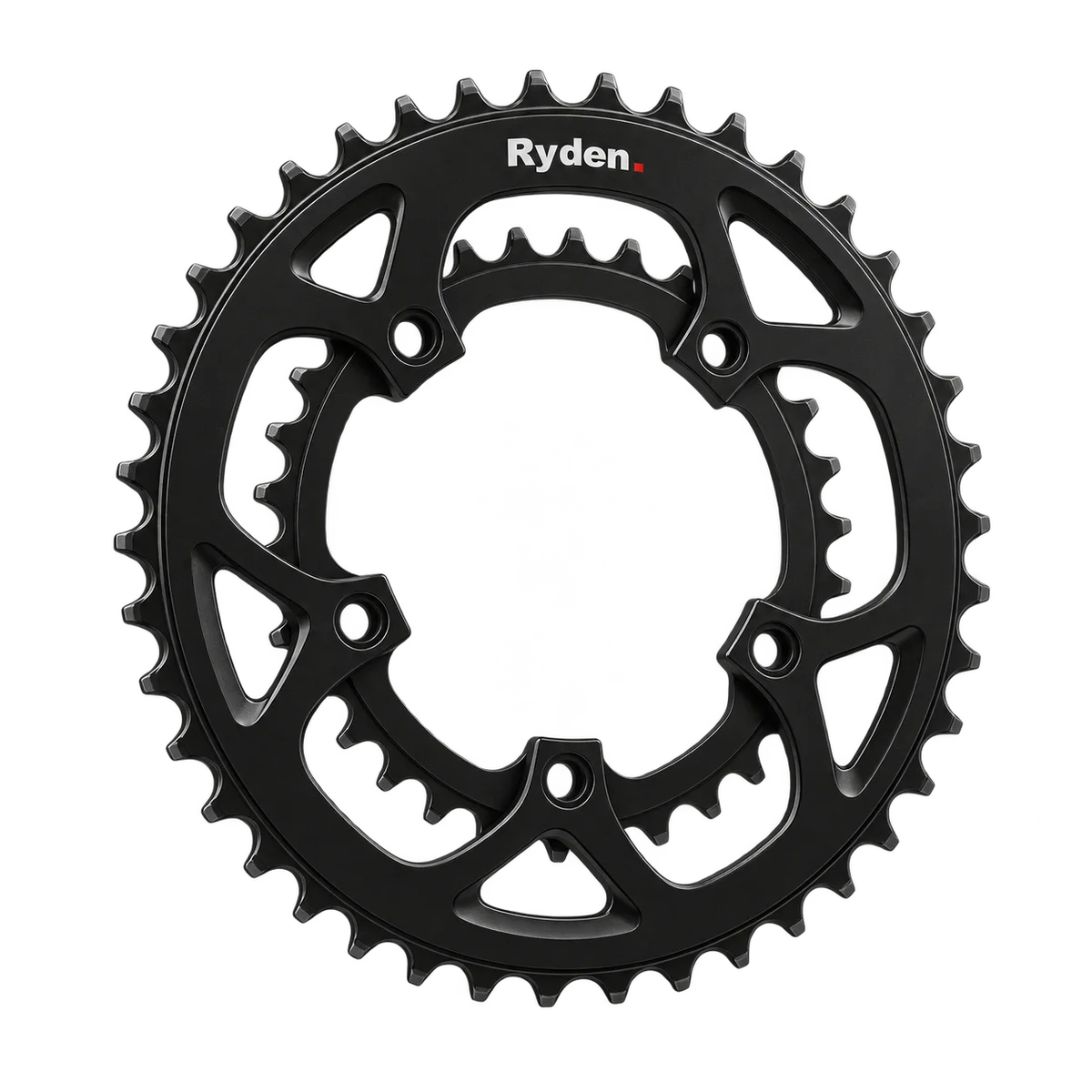
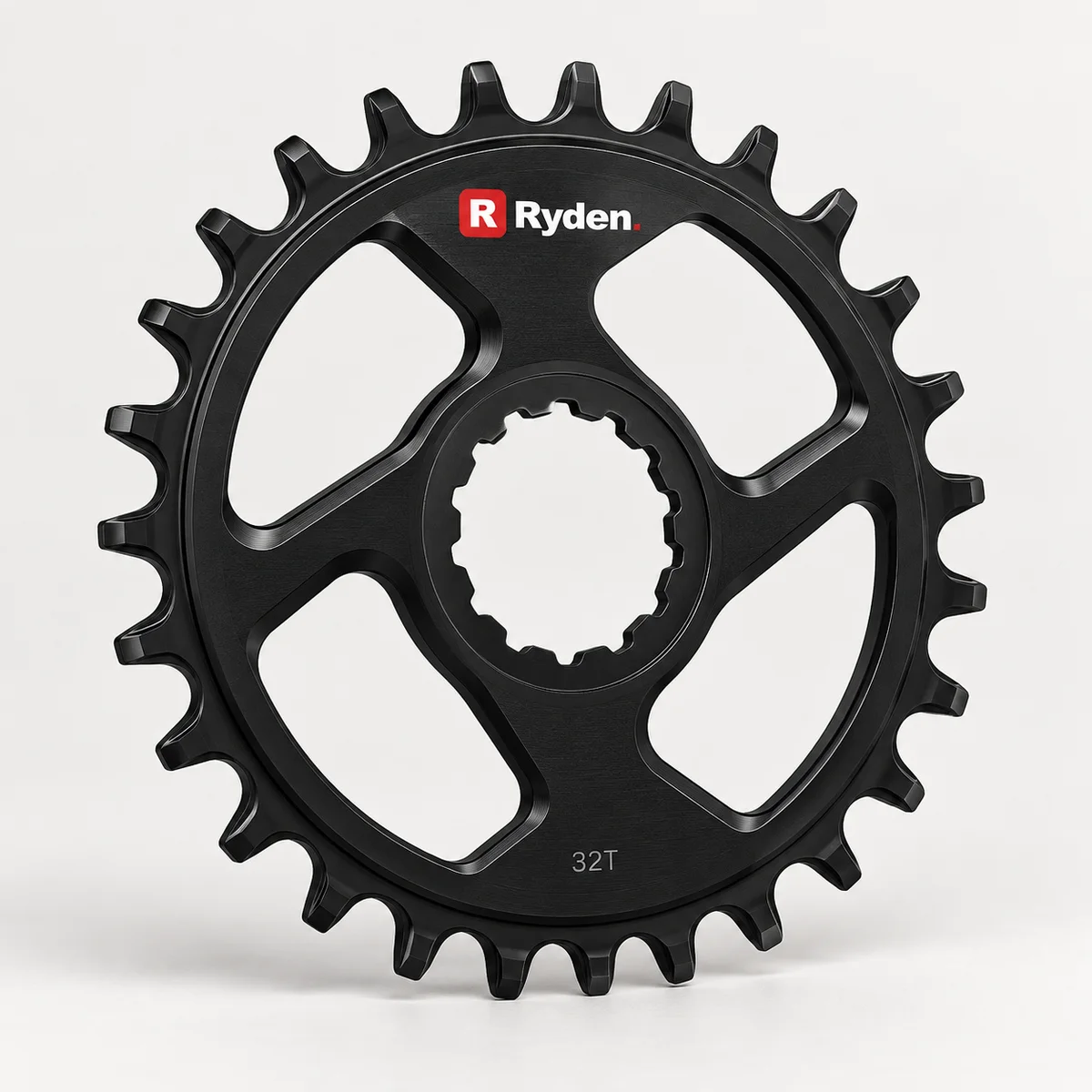
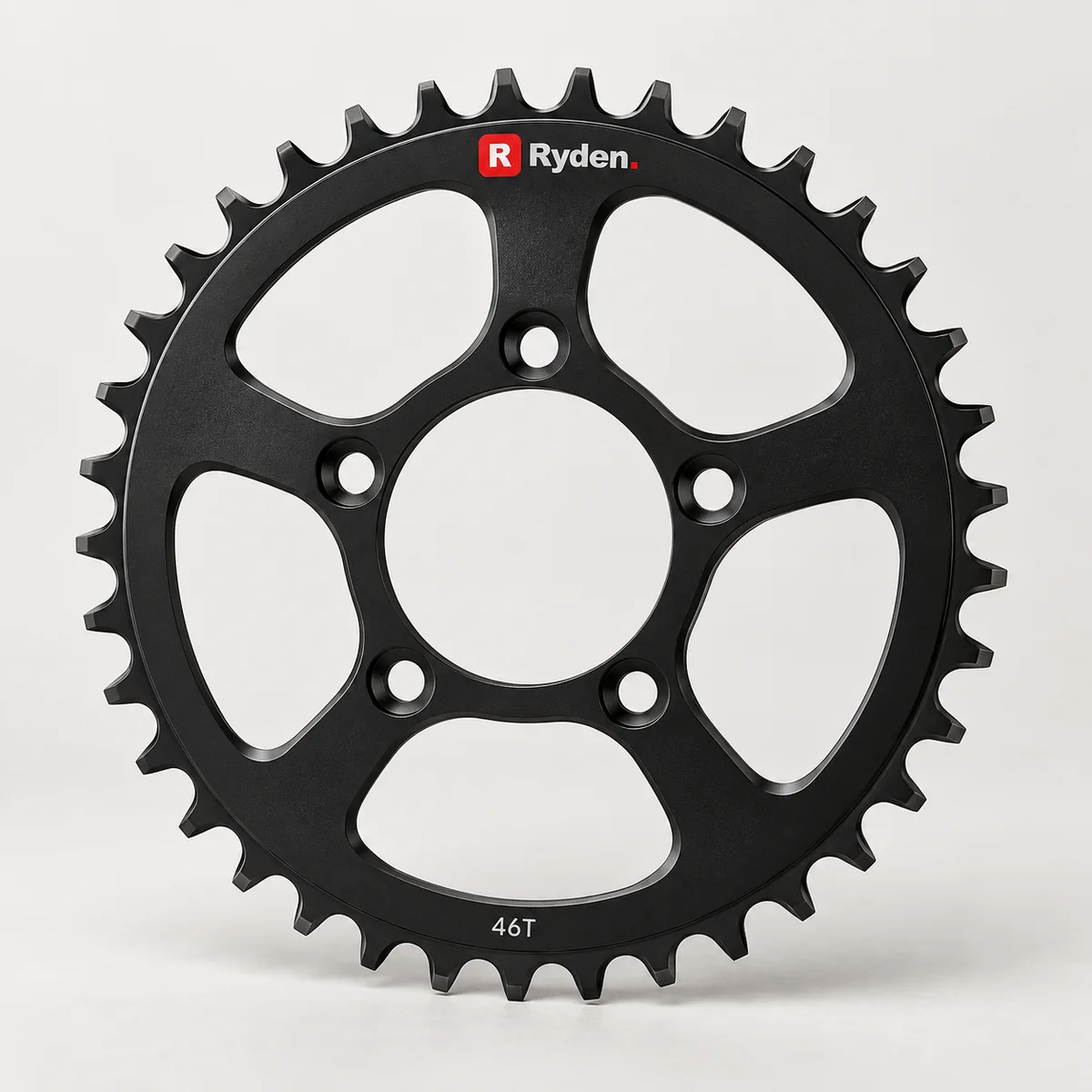
The Ryden Narrow-Wide Chainring is a lightweight 1× chainring engineered to improve chain retention on compatible mountain, gravel, hybrid, commuter, and adventure drivetrains. CNC-machined from 7075-T6 aluminum, it uses alternating narrow and wide tooth profiles to engage the inner and outer chain links more securely, reducing lateral chain movement without requiring a front derailleur. Available in multiple tooth counts and mounting standards, it is designed for riders converting to or maintaining a simple, reliable 1× drivetrain.
Match your crankset’s BCD, bolt pattern or direct-mount interface. 104 BCD rings come in 30T to 38T, 110 BCD rings in 38T to 42T. Direct-mount versions fit selected cranksets: confirm yours with us.
Some 12-speed chains use proprietary shapes: check your drivetrain with us if you’re unsure.
- ✓ For dedicated 1× drivetrains
- ✓ 30T to 42T
- ✓ 104 BCD, 110 BCD and direct-mount versions
- ✓ CNC-machined 7075-T6 aluminum
- ✓ Alternating narrow-wide tooth profile
- ✓ 9, 10, 11 and 12-speed versions
Keep the chain engaged. Keep the drivetrain simple.
Alternating tooth widths engage the chain more securely, helping reduce dropped chains on compatible 1× drivetrains.
A strong, lightweight aluminum alloy provides an excellent balance of stiffness, durability, and low mass.
Designed specifically for single-chainring systems without the shifting ramps required by double or triple chainring setups.
From 30T climbing-focused configurations to 42T gravel and commuter setups, riders can tune their gearing to terrain and riding style.
Open machining and carefully shaped tooth valleys help reduce mud buildup around the chainring during off-road riding.
Modern 1× drivetrains remove the front derailleur and multiple chainrings, simplifying the bicycle considerably. But once the front derailleur disappears, something else has to help keep the chain securely engaged with the front chainring. That is the role of a narrow-wide chainring.
The Ryden Narrow-Wide Chainring uses alternating tooth thickness (narrow, wide, narrow, wide), a pattern that corresponds with the alternating inner and outer spaces in a bicycle chain. The wider teeth occupy more of the chain’s wider outer-link space, while the narrow teeth fit the narrower inner-link section. This reduces lateral movement between the chain and chainring compared with a conventional single-width tooth profile.
The result is improved chain retention, particularly when combined with a clutch rear derailleur, correct chain length, proper chainline, a compatible chain, and correct drivetrain setup.
The chainring is CNC-machined from 7075-T6 aluminum, providing high stiffness without the unnecessary weight of a solid steel ring. Unlike traditional double-chainring systems, there are no front-shift ramps, pins, or pickup features, because the Ryden Narrow-Wide Chainring is designed specifically around 1× use.
Its purpose is simple: keep the chain engaged, and keep the drivetrain simple.
Ryden ChainLock NW tooth profile
- Alternating tooth width
- Wide teeth engage outer chain links while narrow teeth engage inner links.
- Extended tooth profile
- Slightly taller teeth provide additional chain engagement compared with conventional shift-oriented chainrings.
- Controlled tooth chamfers
- Help the chain engage smoothly without excessively sharp edges.
- Mud-release channels
- Open spaces around the tooth roots reduce the ability of mud and debris to accumulate.
- Chain-centered tooth geometry
- The tooth profile is optimized for maintaining engagement rather than moving the chain laterally for front shifting.
Why narrow-wide works
A bicycle chain contains alternating link structures: viewed from above, a narrow internal space, then a wider one, then narrow, then wide. A conventional chainring generally uses teeth of similar thickness, while a narrow-wide ring matches those alternating spaces. That tighter fit helps reduce:
- •Side-to-side chain movement
- •Chain bouncing
- •Accidental derailment
- •Chain slap at the front ring
It is particularly effective on rough terrain when paired with a clutch rear derailleur.
Improved retention, not a guarantee
The chainring is designed to improve chain retention on compatible 1× drivetrains, but chains can still derail due to:
- •Incorrect chainline
- •Worn teeth
- •An excessively worn chain
- •Incorrect chain length
- •Bent drivetrain components
- •Severe impacts
- •An improperly adjusted rear derailleur
- •A damaged chain
- •Extreme backpedaling angles
Questions about this product (15)
A (Ryden team): It uses alternating narrow and wide teeth that correspond to the alternating spaces inside the bicycle chain, helping improve chain retention.
Is it only for 1× drivetrains?+
Yes. The Ryden Narrow-Wide Chainring is designed primarily for dedicated 1× systems.
What is the default tooth count?+
32T.
What sizes are available?+
30T, 32T, 34T, 36T, 38T, 40T, and 42T. 104 BCD rings come in 30T to 38T and 110 BCD rings in 38T to 42T.
Which size is best for mountain biking?+
For most riders, 32T is the best general starting point.
Which size is better for steep hills?+
A 30T ring provides easier climbing. For an even smaller 28T ring, see the Ryden MTB Direct-Mount Chainring.
Which size is better for speed?+
34T or 36T can provide higher gearing for stronger riders and faster terrain.
What material is it made from?+
CNC-machined 7075-T6 aluminum.
Does it work with a front derailleur?+
No. It is not intended for front shifting.
Do I still need a clutch derailleur?+
It is strongly recommended for MTB use because a clutch helps control chain movement over rough terrain.
Will it completely prevent dropped chains?+
No. It improves retention but cannot eliminate every possible cause of chain derailment.
Is it compatible with 12-speed chains?+
Yes, through the 12-speed version. Some 12-speed drivetrains use proprietary chain shapes, so check yours with us if you’re unsure.
Can I use it on an e-bike?+
Yes, where the crank interface, chain, chainline, and motor drivetrain are specifically compatible.
Do I need to change my chain when changing chainring size?+
Possibly. Significant tooth-count changes can alter required chain length.
How do I know which mounting standard I need?+
Check the crankset’s BCD, bolt pattern, or direct-mount interface before purchasing.
You might also like

Guides from our blogs
How to tell what speed your drivetrain is (in under a minute)
Count sprockets, read your shifter, double-check the chain: the three-step check that prevents most fit mistakes.
Read more →When to replace your chain, and what happens if you don’t
A worn chain wears your cassette and chainrings with it. Here’s how to measure it and when to act.
Read more →Secure checkout
Encrypted card & PayPal payment
30-day returns
On unused items in original packaging
Brand-authentic
Quality-tested and warrantied
Worldwide shipping
Tracked delivery to 100+ countries