Ryden Alloy Flat Pedals – Lightweight Aluminum Platform Pedals for Urban, Gravel & Recreational Cycling
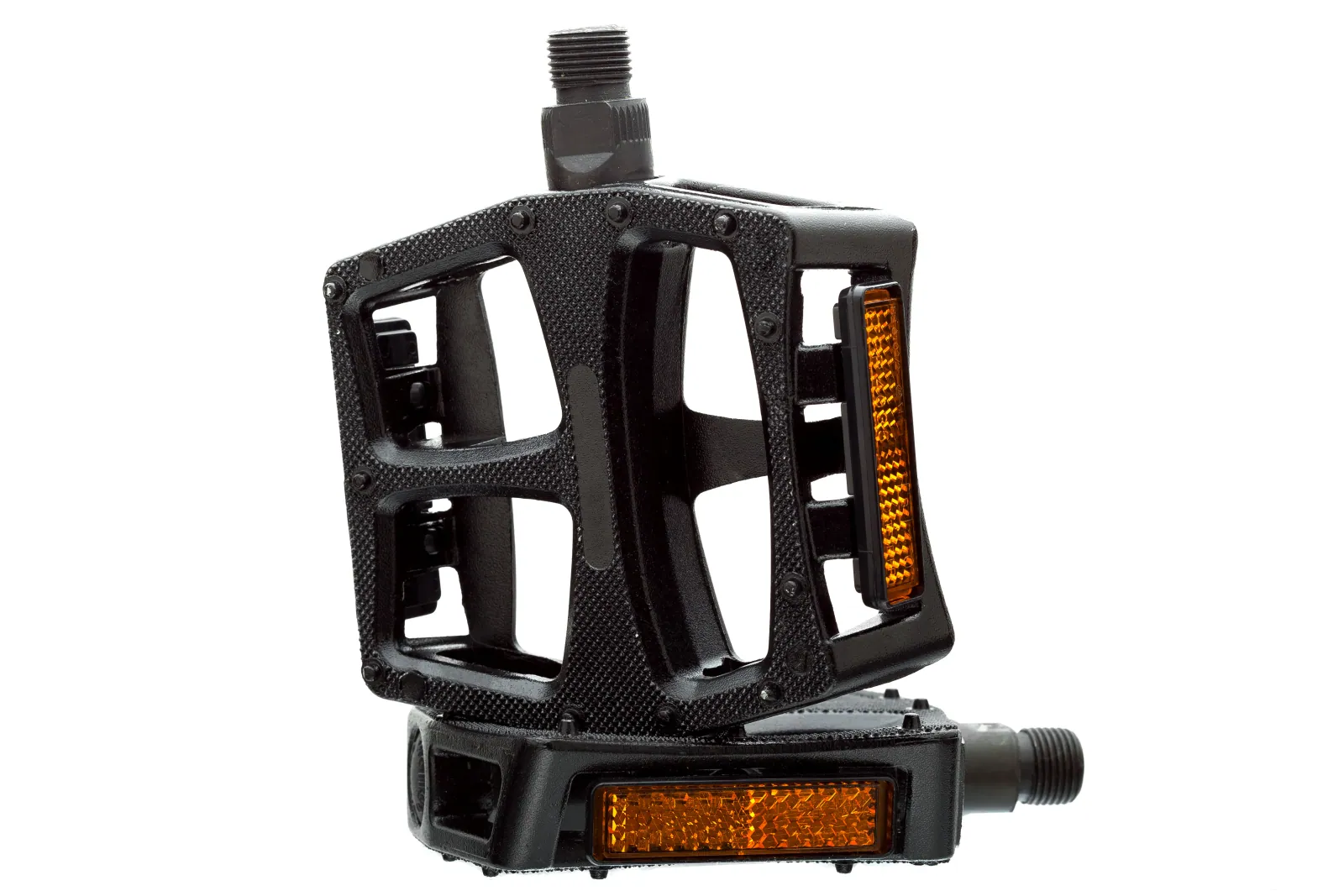
Ryden Alloy Flat Pedals are lightweight 6061-T6 aluminum platform pedals for city, fitness, gravel and light-trail riding, with a 102 × 96 mm low-profile platform, replaceable steel pins for moderate grip, a chromoly spindle and sealed bearing with bushing. Standard 9/16" thread.
- ✓ 6061-T6 aluminum body, anodized
- ✓ 102 × 96 mm low-profile platform
- ✓ 32 replaceable steel pins per pair
- ✓ Chromoly spindle, 9/16" × 20 TPI
- ✓ Sealed cartridge bearing + bushing
- ✓ Approx. 350–390 g per pair
Lightweight performance. Everyday versatility. Reliable control.
6061-T6 alloy with an anodized finish.
Eight low-profile steel pins per face, replaceable one at a time.
About 17–19 mm thick, keeping the foot close to the axle.
Standard 9/16" thread for most adult cranksets.
Cartridge bearing and bushing for smooth rotation.
Cycling pedals are one of the primary contact points between the rider and bicycle. Every pedal stroke depends on a stable connection between the rider's shoes, pedal platform, spindle, and crankset.
A quality flat pedal should provide enough grip to maintain confidence while allowing the rider to reposition or remove a foot whenever necessary. The Ryden Alloy Flat Pedals are developed around these requirements.
Their aluminum platform provides a broad and stable surface beneath the rider's shoes, while replaceable traction pins help reduce unwanted foot movement during acceleration, climbing, cornering, and uneven riding conditions.
Unlike highly aggressive mountain-bike pedals, which often use long metal pins designed to penetrate soft MTB shoe rubber, the Ryden Alloy Flat Pedals use a more moderate traction arrangement intended for varied riding environments.
This makes them particularly suitable for cyclists who alternate between:
- •Urban commuting
- •Fitness training
- •Recreational road cycling
- •Gravel paths
- •Light trails
- •Weekend cycling
- •Everyday transportation
The aluminum body provides structural support without excessive weight, while the chromoly spindle transfers pedaling loads into the crankset. Internally, protected bearings support smooth pedal rotation with relatively little routine maintenance.
The result is a versatile flat pedal that combines the practical convenience of conventional platform pedals with the durability and premium appearance of aluminum construction.
Ryden AlloyGrip Platform Architecture
The Ryden AlloyGrip platform design focuses on stable foot support, controlled traction, and lightweight construction.
- Wide Shoe Contact Area
- A broad platform distributes foot contact across a larger surface, helping improve support during everyday and recreational riding.
- Moderately Concave Geometry
- A slightly concave platform encourages the shoe to settle naturally toward the center of the pedal.
- Replaceable Traction Pins
- Steel traction pins provide additional grip while allowing damaged or worn pins to be replaced individually.
- Low-Profile Aluminum Body
- A relatively thin platform keeps the rider's foot close to the pedal spindle.
- Dual-Sided Contact Surface
- Both sides offer a usable traction surface, allowing riders to step onto the pedal without a specific engagement orientation.
- Protected Bearing System
- A sealed bearing and bushing arrangement supports smooth rotation and helps limit contamination.
Why Choose Aluminum Flat Pedals?
Flat pedals are available in several different materials.
Common examples include:
- •Plastic
- •Reinforced nylon composite
- •Aluminum alloy
- •Steel
Each material has its advantages. Aluminum pedals are particularly popular among cyclists seeking a balance between structural rigidity, durability, appearance, and weight. The Ryden Alloy Flat Pedals use aluminum construction to provide an upgrade from basic plastic platform pedals.
Advantages of Aluminum Construction:
- •Strong platform support
- •Relatively low weight
- •Corrosion resistance
- •Accurate manufacturing
- •Durable metal body
- •Premium exterior finish
- •Replaceable threaded traction pins
The aluminum platform is designed for everyday cycling rather than extreme downhill or freestyle impacts.
Precision-Finished Aluminum Alloy Body
The pedal body is specified in 6061-T6 aluminum alloy. This material is commonly used in bicycle components because it provides a practical combination of strength, corrosion resistance, and manufacturing flexibility. The design uses formed or machined aluminum construction with precision finishing around critical interfaces.
These areas include:
- •Spindle housing
- •Bearing seats
- •Traction pin locations
- •Platform edges
- •Support structures
Why 6061-T6 Aluminum?
6061-T6 aluminum is widely used in bicycle components.
Its useful characteristics include:
- Good Strength-to-Weight Balance
- The material supports relatively lightweight component designs without requiring an all-steel platform.
- Corrosion Resistance
- Aluminum naturally develops a protective oxide layer. An anodized finish can provide additional surface protection.
- Manufacturing Versatility
- The material can be shaped and machined to create detailed platform geometry.
- Structural Consistency
- When properly engineered and manufactured, aluminum provides reliable support for normal bicycle pedal loads.
- Attractive Finish
- Aluminum components can be finished in multiple anodized colors.
Wide Platform Design
The Ryden Alloy Flat Pedals feature a broad platform intended to support common adult cycling footwear.
Platform Dimensions:
102 × 96 mm. The platform provides more contact area than many narrow traditional metal-cage pedals.
This helps improve comfort and stability during:
- •Daily commuting
- •Fitness cycling
- •Recreational road riding
- •Light-trail riding
- •Extended casual rides
Why Platform Size Matters
A pedal that is too narrow may concentrate pressure beneath a small portion of the shoe. This may cause discomfort during longer rides, particularly when using relatively flexible footwear.
A wider platform can provide:
- •Better foot support
- •More stable positioning
- •Reduced pressure concentration
- •Easier pedal location after stopping
- •Improved control during standing pedaling
However, the ideal platform width depends on shoe size and rider preference. The Ryden Alloy Flat Pedals are designed as a versatile standard-size platform rather than an oversized gravity-MTB design.
Slightly Concave Platform Geometry
The Ryden Alloy Flat Pedals use a mildly concave platform profile. The contact surface is shaped so the shoe can settle naturally toward the central area of the pedal. This geometry works together with the traction pins to help maintain stable foot positioning.
Benefits:
- •Natural shoe placement
- •More consistent contact
- •Reduced unwanted sliding
- •Stable standing support
- •Improved pedal feel
Low-Profile Platform Construction
The pedal body has an approximate thickness of:
17–19 mm. This excludes the maximum height of the traction pins and localized spindle-housing sections. A lower-profile platform helps place the rider's foot closer to the pedal axle.
Potential Advantages:
- •More direct pedaling feel
- •Reduced unnecessary platform height
- •Compact appearance
- •Better clearance compared with unusually thick pedal designs
- •Stable foot support
Low Profile and Ground Clearance
Ground clearance can matter even for riders who do not regularly use technical mountain-bike trails.
Cyclists may encounter:
- •Raised curbs
- •Rough gravel
- •Uneven pavement
- •Tight turns
- •Small obstacles
A thinner pedal can offer slightly greater clearance than a thicker platform of otherwise equivalent dimensions.
However, pedal clearance also depends on:
- •Crank length
- •Bottom bracket height
- •Pedal width
- •Bicycle lean angle
- •Rider technique
A low-profile design cannot prevent every pedal strike.
Replaceable Steel Traction Pins
The Ryden Alloy Flat Pedals use a replaceable metal traction system.
Each pedal face includes:
8 steel traction pins.
This provides:
- •16 pins per pedal
- •32 pins per pair
The pins are positioned to increase shoe traction while maintaining a relatively comfortable platform for versatile cycling.
Why Replaceable Pins?
Traction pins experience wear through repeated contact with shoes and occasional contact with the ground.
Over time, pins may become:
- •Worn
- •Bent
- •Rounded
- •Damaged
- •Loose
- •Missing
Replaceable pins allow damaged traction elements to be serviced individually. This helps restore pedal grip without automatically replacing the entire pedal.
Moderate-Grip Pin Configuration
The Ryden Alloy Flat Pedals are designed with a less aggressive traction arrangement than the dedicated Ryden MTB Platform Pedals. The goal is to provide useful shoe grip without unnecessarily sharp or excessively long pins. The configuration favors relatively low-profile steel pins.
Benefits:
- •Consistent everyday traction
- •More comfortable casual use
- •Suitable for varied cycling environments
- •Less aggressive contact than many downhill-oriented designs
- •Replaceable wear components
Metal pins can still scratch skin or damage certain shoe soles.
Grip Pin Specifications
| Specification | Details |
|---|---|
| Pin Material | Steel |
| Pin Type | Replaceable Threaded |
| Pins per Face | 8 |
| Pins per Pedal | 16 |
| Pins per Pair | 32 |
| Pin Placement | Perimeter and Contact Zones |
| Pin Exposure | Low-Profile / Moderate Grip |
| Pin Replacement | Individual |
| Pin Finish | Corrosion-Resistant |
Why Moderate Grip Matters
Different cycling disciplines require different levels of pedal traction. For aggressive mountain biking, riders may prioritize maximum shoe retention over rough terrain. For city and recreational riding, a balance between grip and easy foot movement is often preferable. The Ryden Alloy Flat Pedals are designed for this middle ground.
They provide more pronounced traction than many basic smooth platform pedals without using a highly aggressive downhill-oriented pin arrangement.
Dual-Sided Flat Platform
Both sides of the Ryden Alloy Flat Pedals can be used for pedaling. The rider does not need to engage a cleat or rotate the pedal to expose a specific clipless mechanism.
This makes the pedals practical for:
- •Frequent stopping
- •Urban riding
- •Recreational cycling
- •Fitness riding
- •Gravel riding
- •Riders transitioning from basic pedals
Why Dual-Sided Pedals Are Convenient
At intersections or traffic lights, cyclists often remove one foot from the pedal. With a dual-sided flat pedal, the foot can be placed back onto either side. This allows riders to resume pedaling without a separate engagement procedure. For daily transportation, this simplicity is particularly valuable.
Chromoly-Steel Spindle
The pedal spindle forms the connection between the pedal body and crank arm. The Ryden Alloy Flat Pedals use a chromoly-steel spindle.
Chromoly steel is commonly used in performance bicycle pedals because it provides:
- •High strength
- •Good fatigue resistance
- •Resistance to bending
- •Durable threaded connections
- •Reliable structural support
Why Spindle Strength Matters
Every pedal stroke transfers force through the spindle.
The spindle experiences repeated loading caused by:
- •Seated pedaling
- •Standing pedaling
- •Acceleration
- •Climbing
- •Rider weight transfer
- •Road vibration
The chromoly spindle is intended to withstand normal riding loads within its intended use.
Sealed Bearing and Bushing System
The bearing system combines:
- •Sealed cartridge bearing
- •Low-friction bushing
- •Protective spindle seals
This arrangement allows the pedal body to rotate around the spindle while supporting normal rider loads.
Benefits:
- •Smooth rotation
- •Reduced internal friction
- •Protection against common contaminants
- •Low routine maintenance
- •Stable spindle support
Why Pedal Bearings Matter
A bicycle pedal should rotate smoothly as the crank moves through the pedaling cycle.
If the pedal bearings become damaged, the rider may notice:
- •Rough rotation
- •Grinding
- •Clicking
- •Excessive play
- •Resistance
- •Binding
A protected bearing system helps reduce contamination that can contribute to premature wear.
Smooth Rotation
The Ryden Alloy Flat Pedals are designed for consistent rotation during normal cycling.
Smooth operation depends on:
- •Bearing quality
- •Lubrication
- •Seal design
- •Spindle alignment
- •Bearing condition
- •Assembly quality
The pedal should rotate without excessive resistance, grinding, or abnormal movement.
Weather-Resistant Construction
Flat pedals encounter moisture and road contamination during normal riding.
The Ryden Alloy Flat Pedals are intended for use in typical conditions involving:
- •Light rain
- •Wet roads
- •Dust
- •Gravel
- •Road spray
- •Occasional mud
The anodized aluminum body provides corrosion resistance, while the sealed bearing system helps limit contamination. However, the pedals are not designed for prolonged submersion.
Open-Body Platform Construction
The platform uses openings between structural sections. These openings can provide several advantages.
- Reduced Weight
- Removing unnecessary material helps reduce platform mass.
- Water Drainage
- Open areas allow water to move through the platform.
- Dirt Clearance
- Small debris can escape rather than remaining trapped across the entire platform.
- Compact Appearance
- An open structure creates a lightweight, modern visual design. The pedal must still retain adequate structural reinforcement around the spindle and outer platform.
Anodized Surface Finish
The Ryden Alloy Flat Pedals feature an anodized aluminum finish.
Anodizing helps provide:
- •Surface corrosion resistance
- •Consistent appearance
- •Multiple color options
- •Additional surface protection
Normal riding may still cause scratches, scuffs, and finish wear.
Weight
Approximate weight: 350–390 grams per pair.
Actual weight may depend on:
- •Body manufacturing method
- •Platform geometry
- •Spindle design
- •Bearing components
- •Traction pin configuration
- •Structural reinforcement
The design prioritizes a practical balance of weight, durability, and everyday versatility.
Available Colors
- Stealth Black
- A versatile black anodized finish suitable for almost any bicycle.
- Precision Silver
- A metallic appearance suitable for traditional and modern builds.
- Graphite Gray
- A neutral finish for understated performance-oriented bicycles.
- Competition Red
- A red finish for riders seeking contrasting components.
- Electric Blue
- A blue finish suitable for custom cycling setups.
What's in the box
- •1 × Ryden Alloy Flat Pedal – Right
- •1 × Ryden Alloy Flat Pedal – Left
- •32 × Steel Traction Pins (Preinstalled)
- •1 × Installation & Maintenance Guide
Questions about this product (68)
A (Ryden team): They are designed primarily for hybrid cycling, fitness riding, commuting, recreational road cycling, gravel riding, and light trails.
Are these flat pedals?+
Yes. They are dual-sided flat platform pedals without a mechanical clipless engagement system.
What material is the pedal body made from?+
The body uses 6061-T6 aluminum alloy.
What material is the spindle made from?+
The spindle uses chromoly steel.
What is the platform size?+
Approximately 102 × 96 mm.
Are the pedals concave?+
Yes. The design uses a mildly concave platform to provide stable shoe contact.
Do the pedals have metal grip pins?+
Yes. They use replaceable steel traction pins.
How many grip pins are included?+
The design contains 8 pins per face and 32 pins per pair.
Are the grip pins replaceable?+
Yes. Worn or damaged pins can be replaced individually.
Are the pins adjustable?+
The standard design uses fixed-height replaceable pins.
Are these pedals suitable for commuting?+
Yes. Commuting is one of their primary intended applications, subject to applicable visibility requirements.
Can I use these pedals for fitness riding?+
Yes. The broad platform is designed to support fitness cycling with suitable footwear.
Will these pedals fit my hybrid bike?+
Yes, if the crankset uses standard 9/16-inch pedal threads.
Are they compatible with road bikes?+
Yes. Most modern road cranksets use standard 9/16-inch pedal threads.
Can I use them on a gravel bike?+
Yes. They are suitable for gravel riders who prefer flat pedals.
Are they compatible with mountain bikes?+
Yes for recreational and light-trail use. Dedicated MTB Platform Pedals are recommended for aggressive off-road terrain.
Can I use them on a touring bike?+
Yes. They are suitable for touring bicycles with compatible crank threads.
Are they suitable for single-speed bicycles?+
Yes. They can be used on compatible single-speed cranksets.
Can I use them on fixed-gear bicycles?+
They may fit compatible fixed-gear cranksets, but they do not provide mechanical foot retention. Riders must assess their control requirements and riding conditions.
Can I use them on an e-bike?+
They may be suitable for compatible e-city and e-hybrid bicycles; confirm load limits with us first.
What pedal thread size do they use?+
9/16" × 20 TPI.
Will they fit other brands’ cranksets?+
Most adult cranksets use the 9/16" × 20 TPI pedal thread these pedals have. Check your crank’s thread before you order.
Will they fit Ryden cranksets?+
They are intended for compatible Ryden cranksets using standard 9/16-inch pedal threads.
Do they fit children's bicycles?+
Only if the crankset uses 9/16-inch threads and the platform dimensions are suitable. Some children's bicycles use 1/2-inch pedal threads.
Can I install them on an older bicycle?+
Yes, if the crankset uses compatible threads and is in suitable condition.
Are these pedals double-sided?+
Yes. Both faces provide usable traction surfaces.
Do I need special cycling shoes?+
No. They can be used with suitable athletic or casual footwear.
Are dedicated cycling shoes better?+
Dedicated flat-pedal shoes may provide better support and traction, depending on their outsole design.
Do these pedals have sealed bearings?+
Yes. The design uses a sealed cartridge bearing and bushing arrangement.
How much do the pedals weigh?+
The approximate weight is 350–390 grams per pair.
Are aluminum pedals heavier than composite pedals?+
Not necessarily. Weight depends on the complete design, materials, spindle, bearings, and platform dimensions.
Are aluminum pedals stronger than plastic pedals?+
Aluminum can offer excellent rigidity and durability, but overall strength depends on engineering and manufacturing quality.
Are the pedals waterproof?+
They are intended for normal wet-weather cycling but not prolonged submersion.
Can I use them in rain?+
Yes. They are designed for normal all-weather cycling conditions.
Can I pressure wash the pedals?+
High-pressure washing directly around the spindle seals is not recommended.
Do the pedals have reflectors?+
The standard configuration does not include integrated reflectors. Riders should check local visibility requirements.
Are they suitable for night riding?+
They may be used at night when the bicycle meets applicable lighting and reflector requirements.
What is the benefit of the aluminum platform?+
It provides a durable, rigid shoe-contact structure with a premium finish and replaceable traction pins.
What is the advantage of the low-profile design?+
It places the foot relatively close to the pedal axle and reduces unnecessary pedal thickness.
Do metal pins improve grip?+
Yes. Metal traction pins can increase shoe contact and help reduce unwanted foot movement.
Can the pins damage shoes?+
They can mark or wear certain outsoles, especially softer footwear not designed for pinned pedals.
Can the pins injure my legs?+
Yes. Steel pins may scratch skin during accidental contact.
Can I use these pedals for downhill mountain biking?+
They are not designed for downhill racing. Use a dedicated downhill-capable pedal.
Are they suitable for BMX?+
They may fit compatible BMX cranksets, but the Ryden BMX Platform Pedals are more appropriate for freestyle applications.
How do I identify the right pedal?+
The right pedal is marked R and installs on the drive-side crank arm.
How do I identify the left pedal?+
The left pedal is marked L and installs on the non-drive-side crank arm.
Why does the left pedal tighten counterclockwise?+
The left pedal uses a reverse thread to help maintain secure engagement during normal pedaling.
Should I grease the spindle threads?+
Yes. A thin coating of suitable bicycle grease or anti-seize is generally recommended.
What installation torque should I use?+
Follow your crank manufacturer’s torque specification. Approximately 35–40 N·m is a common reference range for standard adult bicycle pedals.
Can I install the pedals myself?+
Yes, if you have the correct tools and understand the left and right pedal threading directions.
Why won't my pedal screw into the crank?+
Possible causes include: Wrong pedal side; Cross-threading; Incorrect thread size; Damaged crank threads; Misalignment. Stop installation if significant resistance occurs.
How do I clean the pedals?+
Use mild soap, clean water, and a soft brush.
How often should I inspect the grip pins?+
Inspect them periodically, particularly after rough rides or pedal strikes.
Can I replace only one damaged pin?+
Yes. Individual replacement is one of the maintenance features.
Why does my pedal feel loose?+
Possible causes include bearing wear, spindle damage, incorrect installation, or loose crank threads.
Why does my pedal make grinding noises?+
Grinding may indicate contamination, damaged bearings, or internal wear.
Can the pedals be used in winter?+
Yes, within normal operating conditions. Road salt and wet conditions may require more frequent cleaning and inspection.
How long should these pedals last?+
Service life depends on riding frequency, environmental exposure, impacts, maintenance, and installation quality rather than a fixed mileage interval.
When should I replace the pedals?+
Replace them if the body or spindle becomes structurally damaged or internal wear makes safe operation impossible.
What is the difference between these and Ryden Urban Flat Pedals?+
The Alloy Flat Pedals use an aluminum body and replaceable steel pins, while the Urban Flat Pedals use a composite body and molded traction features.
What is the difference between these and Ryden MTB Platform Pedals?+
The Alloy Flat Pedals use a smaller, more versatile platform and a moderate traction configuration. The MTB model is designed for more demanding off-road riding.
Are these pedals suitable for beginners?+
Yes. Flat pedals are practical for beginners because they do not require learning a clipless release mechanism.
Are the pedals sold individually?+
No. They are sold as a complete left and right pair.
Is the spindle included?+
Yes. Each pedal includes its integrated spindle assembly.
Are replacement pins included?+
The standard package contains preinstalled pins.
Does the product include installation tools?+
No. Installation tools are sold separately.
What warranty do these pedals have?+
A 1-year limited warranty against manufacturing defects. Wear from use, and damage from crashes, impacts, misuse or incorrect installation, aren’t covered.
Can I return them?+
Unused pedals in their original packaging can be returned within 30 days. Pedals that have been installed or ridden show installation wear and cannot be returned.
You might also like
Secure checkout
Encrypted card & PayPal payment
30-day returns
On unused items in original packaging
Brand-authentic
Quality-tested and warrantied
Worldwide shipping
Tracked delivery to 100+ countries