Ryden BMX Platform Pedals – High-Grip Reinforced Composite Flat Pedals for BMX Riding
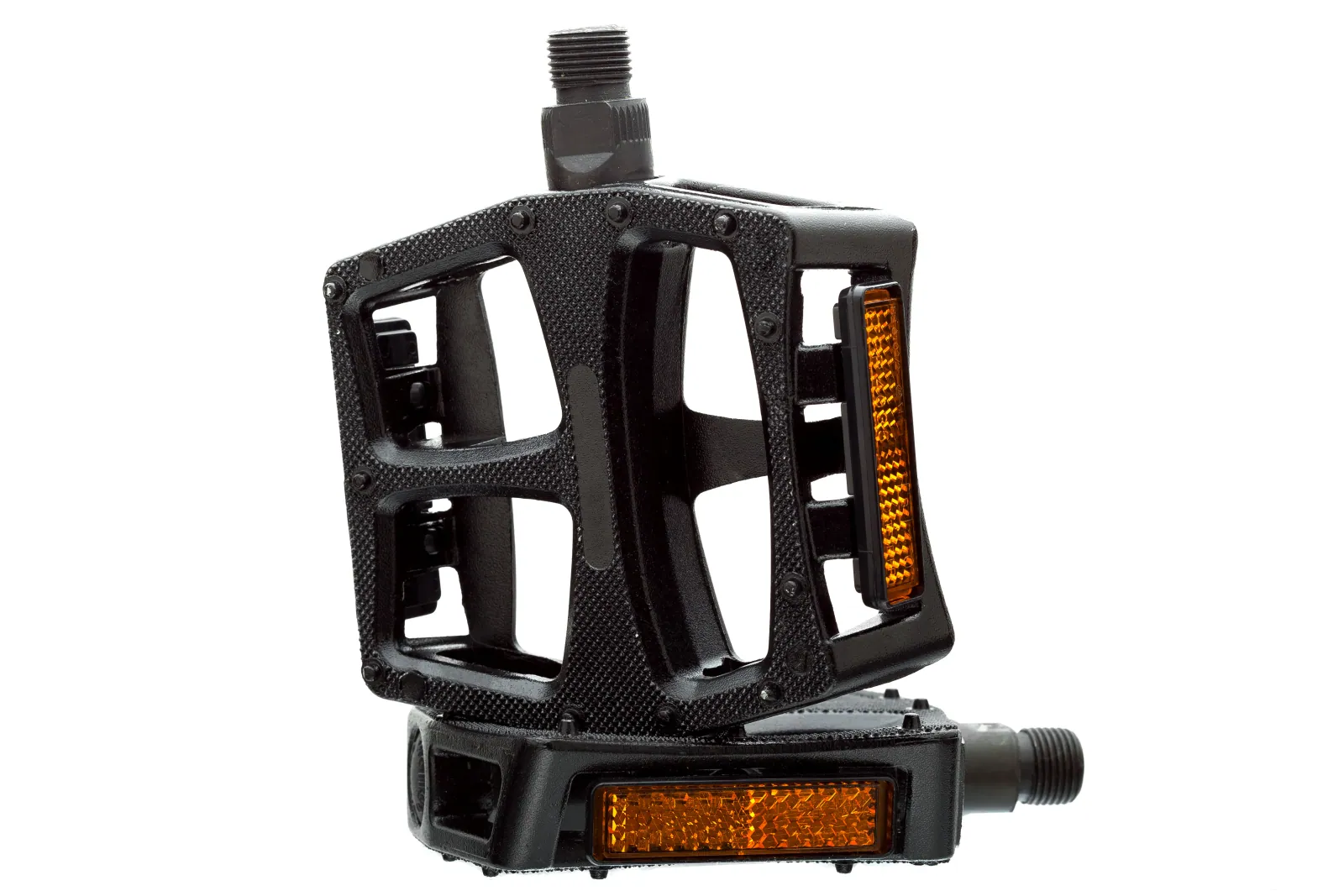
Ryden BMX Platform Pedals are high-grip composite flat pedals for freestyle, street, park and pump-track riding: a glass-fiber-reinforced nylon platform with 12 molded pins per face, a 4130 chromoly spindle and sealed bearing with bushing. In 9/16" or 1/2" thread.
9/16" suits two- and three-piece cranks; 1/2" suits one-piece cranks. They are not interchangeable.
- ✓ Reinforced nylon-composite BMX platform
- ✓ 105 × 100 mm, low-profile and concave
- ✓ 48 molded traction pins per pair
- ✓ 4130 chromoly spindle
- ✓ 9/16" or 1/2" thread
- ✓ Approx. 340–390 g per pair
Built for tricks. Designed for grip. Ready for every session.
A broad, reinforced composite platform for standing, jumps and tricks.
12 per face, with a micro-textured surface and no metal pin hardware.
About 18–20 mm, mildly concave.
A steel core for repeated pedaling and landing loads.
9/16" for two- and three-piece cranks, 1/2" for one-piece.
BMX riding places unique demands on bicycle pedals. Unlike conventional road cycling, where the rider's feet remain relatively stable during continuous pedaling, BMX riding involves frequent changes in balance, foot position, and body movement.
Riders may repeatedly:
- •Accelerate
- •Stand on the pedals
- •Jump
- •Land
- •Rotate the bicycle
- •Reposition their feet
- •Perform technical maneuvers
- •Ride ramps
- •Navigate street obstacles
During these movements, the pedals must provide stable foot support while allowing the rider to move freely. The Ryden BMX Platform Pedals are designed around these requirements. Their reinforced composite body provides a broad platform beneath the rider's shoes, while molded traction pins help resist unwanted foot movement.
The slightly concave pedal surface encourages the shoe to settle toward the center of the platform. A high-strength chromoly spindle forms the structural connection between the pedal and crank arm. Inside the pedal, protected bearings and a low-friction bushing allow smooth rotation while supporting normal riding loads.
The result is a simple, durable flat-pedal system designed for freestyle and recreational BMX applications.
Ryden StreetGrip BMX Platform Architecture
The Ryden StreetGrip design focuses on six essential characteristics.
- Wide Foot Contact
- The broad platform provides support for BMX shoes during standing riding, jumps, and technical maneuvers.
- Concave Platform Geometry
- A mildly concave surface helps the shoe settle naturally into the pedal.
- Molded Traction Pins
- Raised composite pins provide shoe traction without requiring sharp replaceable metal pins.
- Reinforced Composite Body
- A glass-fiber-reinforced nylon structure provides impact resistance while maintaining a relatively low weight.
- Chromoly-Steel Spindle
- A strong steel axle supports the pedal body through repeated pedaling and landing loads.
- Protected Bearing System
- Sealed bearing and bushing components allow smooth rotation while helping limit contamination.
Why BMX Pedals Are Different
BMX riding places different requirements on pedals than road, commuter, or conventional mountain-bike cycling.
BMX riders often prioritize:
- •Impact resistance
- •Secure shoe traction
- •Freedom to reposition feet
- •Compact pedal geometry
- •Low-profile construction
- •Durable spindle support
- •Practical replacement cost
The pedals must also tolerate repeated contact with urban riding environments.
Depending on the riding style, they may experience contact with:
- •Concrete
- •Wooden ramps
- •Metal ramp surfaces
- •Pavement
- •Dirt
- •Gravel
- •Ledges
The Ryden BMX Platform Pedals use a reinforced composite platform rather than the aluminum construction of the Ryden MTB Platform Pedals. This material choice is particularly suitable for freestyle riders who prefer a lightweight pedal with a durable molded body.
High-Strength Nylon-Composite Construction
The Ryden BMX Platform Pedals are specified with a glass-fiber-reinforced nylon-composite body. This material combines engineering-grade polymer with reinforcing fibers.
The resulting composite can provide a useful balance of:
- •Structural strength
- •Impact tolerance
- •Low weight
- •Corrosion resistance
- •Surface durability
- •Manufacturing consistency
The injection-molded construction allows the pedal's platform, structural ribs, traction features, and openings to be formed as an integrated component.
Why Composite Instead of Aluminum?
BMX riders use both composite and aluminum pedals. Each material offers different characteristics.
Reinforced Composite:
Potential advantages include:
- •Lower replacement cost
- •Reduced tendency to develop permanent metal dents
- •Useful impact tolerance
- •Lightweight construction
- •Integrated molded traction
- •Multiple color options
Composite surfaces may also slide differently against obstacles than aluminum surfaces.
Aluminum:
Potential advantages include:
- •High structural rigidity
- •Precision-machined geometry
- •Replaceable metal pin systems
- •Premium metallic finish
- •Strong threaded pin interfaces
For BMX street and freestyle applications, reinforced composite is a practical material choice. The material does not make the pedal indestructible. Severe impacts can still crack or damage the body.
BMX Street Riding Durability
Street BMX riding frequently involves obstacles such as:
- •Curbs
- •Ledges
- •Stairs
- •Rails
- •Banks
- •Concrete transitions
During these activities, the pedal may occasionally contact the riding surface. The Ryden composite body is intended to tolerate ordinary abrasion and incidental contact encountered during BMX riding. However, repeated intentional pedal grinding may rapidly wear the platform, reduce traction, or damage the spindle and bearing components.
The pedals should not be treated as a substitute for purpose-built BMX grind pegs.
Wide BMX Platform
The Ryden BMX Platform Pedals feature a broad shoe-contact surface.
- Platform Dimensions
- Approximately 105 × 100 mm. This platform is intended to provide sufficient room for a wide range of adult BMX shoe sizes.
Benefits:
- •Greater shoe contact area
- •More stable standing position
- •Easier foot placement
- •More predictable support during jumps
- •Improved comfort while pedaling
- •Practical support during repeated maneuvering
A wider platform may provide additional confidence when the rider is standing on the pedals.
Why Platform Width Matters
BMX riders frequently transfer body weight through their feet. During technical maneuvers, the pedal platform helps support the rider while they adjust their position. A pedal that is too narrow may concentrate pressure beneath a smaller area of the shoe. A broad platform can distribute contact across more of the sole.
However, platform size should remain appropriate for the rider's shoes and riding preferences. An excessively wide pedal may increase exposure to obstacles. The Ryden BMX Platform Pedals are designed as a standard adult BMX platform rather than an oversized downhill-style pedal.
Concave Platform Geometry
The design uses a slightly concave platform. The central contact area sits subtly lower relative to the outer traction features. This helps create a natural resting position for the shoe.
Benefits:
- •Stable foot placement
- •Consistent shoe contact
- •Reduced unwanted sliding
- •More predictable platform feel
The actual grip depends on shoe rubber, sole pattern, riding technique, and environmental conditions.
Low-Profile BMX Platform
The Ryden BMX Platform Pedals use a compact body profile.
Body Thickness:
Approximately 18–20 mm. This measurement excludes the height of the molded grip pins and any localized spindle-housing bulge.
A low-profile design can provide:
- •A closer foot-to-axle position
- •More direct pedal feel
- •Reduced unnecessary platform height
- •Compact pedal appearance
- •Improved clearance compared with unusually thick platforms
Why Low Profile Matters in BMX
BMX riders often maneuver the bicycle around obstacles while maintaining a standing position. A relatively thin pedal can help reduce unnecessary bulk beneath the shoe. It may also provide a more connected pedal feel during technical maneuvers.
However, ground clearance depends on several factors, including crank length, bottom bracket height, pedal width, and riding technique. A low-profile design cannot eliminate pedal strikes.
Molded Traction Pin System
The Ryden BMX Platform Pedals use molded composite traction pins integrated into the pedal body.
The configuration includes:
12 pins per pedal face.
With both sides usable, this provides:
- •24 molded pins per pedal
- •48 molded pins per pair
These traction points help increase friction and mechanical engagement with suitable rubber shoe soles.
Why Molded Pins?
Molded pins are common on BMX composite pedals. Unlike replaceable steel traction pins, they are formed directly into the pedal platform.
Advantages include:
- •Simpler construction
- •No individual pin screws
- •No loose metal pin hardware
- •Reduced maintenance complexity
- •Less aggressive contact than many sharp metal pins
However, molded pins gradually wear through normal use and cannot generally be replaced individually.
Molded Pins vs Metal Pins
Molded Composite Pins:
Best suited for:
- •Street BMX
- •Park BMX
- •Recreational freestyle
- •Riders preferring composite pedals
Characteristics:
- •Integrated into the pedal body
- •No separate pin fasteners
- •Generally less aggressive than metal pins
- •Wear gradually with the platform
Replaceable Metal Pins:
Often preferred for:
- •Aggressive MTB
- •Downhill riding
- •Some BMX race applications
- •Riders prioritizing very strong shoe traction
Characteristics:
- •High traction with suitable shoes
- •Replaceable when damaged
- •Potentially sharper contact points
- •More maintenance
The Ryden BMX Platform Pedals use molded composite pins to prioritize practical freestyle performance.
Micro-Textured Contact Surface
In addition to molded pins, the Ryden BMX Platform Pedals use a micro-textured platform surface. The small surface features create additional contact between the pedal body and the shoe outsole. This helps supplement the grip provided by the raised pins.
The combined traction system includes:
- •Molded grip pins
- •Textured surface sections
- •Slightly concave profile
- •Broad platform support
Together, these features are intended to provide dependable shoe contact during normal BMX riding.
Grip Without Clipless Engagement
The Ryden BMX Platform Pedals do not mechanically attach the shoes to the bicycle. Instead, grip comes from the interaction between the platform and the shoe.
This allows riders to:
- •Reposition their feet
- •Remove a foot quickly
- •Adjust balance
- •Step off the pedals immediately
- •Practice technical skills without unclipping
For many freestyle BMX riders, this freedom is an important characteristic. However, flat pedals do not prevent every possible foot slip.
Dual-Sided Pedal Design
Both sides of the Ryden BMX Platform Pedals feature usable traction surfaces. The rider can place a foot onto either side without rotating the pedal into a specific engagement position.
Advantages:
- •Quick foot placement
- •Easier foot repositioning
- •No cleat engagement
- •Convenient BMX riding
- •Simple everyday operation
Open-Body Construction
The pedal platform includes openings between reinforced structural sections. These openings reduce unnecessary material and provide space for debris to escape.
The design can help limit buildup of:
- •Dirt
- •Dust
- •Mud
- •Small debris
- •Water
The open-body construction also contributes to the pedal's lightweight design.
Rounded External Edges
BMX pedals may occasionally contact the rider's legs or surrounding obstacles. The Ryden platform uses rounded external corners and shaped edges. This helps avoid unnecessarily sharp body features. However, the molded traction pins still create raised contact points that may scratch skin during accidental contact.
Protective riding equipment is recommended for BMX riding.
4130 Chromoly-Steel Spindle
The pedal spindle provides the structural connection between the pedal body and the crank arm. The Ryden BMX Platform Pedals are specified with a 4130 chromoly-steel spindle.
Chromoly steel is commonly used in BMX components because it provides:
- •High strength
- •Good fatigue resistance
- •Durable threaded interfaces
- •Resistance to bending
- •Reliable structural support
The spindle supports the pedal during normal pedaling and rider weight transfer.
Why a Strong Spindle Matters
During BMX riding, the pedal spindle experiences repeated loads.
These may occur during:
- •Acceleration
- •Standing pedaling
- •Jumps
- •Landings
- •Pump-track riding
- •Technical maneuvers
A damaged or bent spindle can affect pedal rotation and rider stability. The Ryden BMX Platform Pedals use a chromoly spindle to provide a robust structural core.
Sealed Bearing and Bushing System
The Ryden BMX Platform Pedals use a combination of:
- •Sealed cartridge bearing
- •Low-friction internal bushing
- •Protective spindle seals
This arrangement supports smooth rotation while keeping the pedal body relatively compact.
Benefits:
- •Smooth pedal movement
- •Reduced internal friction
- •Protection against common contaminants
- •Low routine maintenance
- •Consistent spindle support
Why BMX Pedal Bearings Matter
A pedal must rotate around the spindle while supporting the rider.
Damaged bearings may cause:
- •Grinding
- •Rough rotation
- •Side-to-side play
- •Binding
- •Clicking
- •Unwanted movement
The protected Ryden bearing arrangement is intended to provide dependable rotation under normal BMX riding conditions.
Environmental Protection
BMX riders may encounter:
- •Rain
- •Dust
- •Dirt
- •Mud
- •Wet pavement
- •Park debris
The sealed bearing and spindle system helps reduce contamination. However, the pedals are not intended for prolonged submersion or direct high-pressure washing around the bearings.
Weight
Approximate weight: 340–390 grams per pair.
Weight depends on:
- •Composite body design
- •Spindle configuration
- •Bearing construction
- •Reinforcement geometry
- •Platform dimensions
The pedal is intended to provide a practical balance of strength and weight for BMX use.
Available Colors
- Stealth Black
- A versatile black composite finish.
- Street White
- A clean white finish for BMX builds with contrasting colors.
- Competition Red
- A red finish for custom BMX builds.
- Electric Blue
- A blue option for riders looking to match their bicycle components.
- Smoke Gray
- A neutral gray finish for understated BMX setups.
What's in the box
- •1 × Ryden BMX Platform Pedal – Right
- •1 × Ryden BMX Platform Pedal – Left
- •1 × Installation & Maintenance Guide
Questions about this product (59)
A (Ryden team): They are designed primarily for freestyle BMX, street riding, skatepark use, pump tracks, and recreational BMX applications.
Are these flat pedals?+
Yes. They are flat platform pedals without clipless engagement.
What material is the body made from?+
The body uses glass-fiber-reinforced nylon composite.
What material is the spindle made from?+
The spindle uses 4130 chromoly steel.
What is the platform size?+
Approximately 105 × 100 mm.
Are the pedals concave?+
Yes. The design uses a mildly concave platform.
Do the pedals have grip pins?+
Yes. They use molded composite traction pins.
How many grip pins are included?+
The design includes 12 pins per face, totaling 48 molded pins across the pair.
Are the pins replaceable?+
No. The molded pins are integrated into the composite body.
Why use molded pins instead of metal pins?+
Molded pins provide practical traction without requiring separate metal pin hardware. They are also common in freestyle-oriented composite BMX pedals.
Can molded pins wear down?+
Yes. They gradually wear through normal riding and abrasion.
What happens when the pins wear out?+
When traction becomes inadequate because of severe pin wear, the pedal should be replaced.
Are these pedals suitable for street BMX?+
Yes. Street BMX is one of the primary intended applications.
Are they suitable for skatepark riding?+
Yes, within its intended use.
Can I use them for BMX racing?+
Yes for compatible flat-pedal racing applications, subject to the relevant competition rules.
Are they suitable for dirt jumping?+
They are intended for compatible recreational dirt-jump use; confirm load limits with us first.
Can I use them on a pump track?+
Yes. They are suitable for compatible pump-track BMX bicycles.
Are they compatible with three-piece BMX cranksets?+
The 9/16-inch version is intended for compatible three-piece BMX cranksets.
Are they compatible with two-piece BMX cranksets?+
Yes, if the crankset uses 9/16-inch pedal threads.
Are they compatible with one-piece BMX cranksets?+
The separate 1/2-inch version is intended for compatible one-piece cranksets.
What thread sizes are available?+
9/16" × 20 TPI and 1/2" × 20 TPI.
Are 9/16-inch and 1/2-inch pedals interchangeable?+
No. The correct spindle thread must match the crankset.
Which thread size is more common on modern BMX bikes?+
9/16-inch is common on modern BMX bikes using two-piece or three-piece cranks.
Which thread size is common on older BMX bikes?+
Some older BMX bicycles with one-piece cranksets use 1/2-inch threads.
Do the pedals have sealed bearings?+
Yes. The design uses a sealed bearing and bushing arrangement.
How much do the pedals weigh?+
The approximate weight is 340–390 grams per pair.
Do I need special BMX shoes?+
No. They can be used with suitable rubber-soled footwear, although dedicated BMX or skate-style shoes are recommended.
Are skate shoes compatible?+
Yes. Many skate-style shoes provide a suitable sole for composite BMX pedals.
Can I use regular athletic shoes?+
Yes, provided they offer adequate grip and support for the intended riding activity.
Are the pedals double-sided?+
Yes. Both faces provide usable traction surfaces.
Do I need to clip into them?+
No. They do not use a cleat system.
Are composite pedals weaker than aluminum pedals?+
Not necessarily. Strength depends on the material formulation, structural design, and manufacturing quality.
Can composite pedals crack?+
Yes. Severe impacts or excessive loads may damage the body.
Are these pedals suitable for grinding?+
The composite body may tolerate incidental surface contact, but repeated intentional grinding can accelerate wear and is not a use they are designed for.
What is the benefit of a low-profile design?+
It reduces unnecessary pedal thickness and can provide a more direct foot-to-pedal feel.
Do the pedals have reflectors?+
The standard BMX configuration does not include integrated reflectors.
Can I use them on public roads?+
They may be used on public roads where legally compliant, but additional reflectors or visibility equipment may be required depending on local regulations.
Can I install the pedals myself?+
Yes, if you have the correct tools and understand pedal threading.
Which pedal goes on the right side?+
The pedal marked R installs on the right or drive-side crank.
Which pedal goes on the left side?+
The pedal marked L installs on the left or non-drive-side crank.
Why does the left pedal tighten counterclockwise?+
The left pedal uses a reverse thread, which helps maintain secure attachment during normal pedaling.
Should I grease the spindle threads?+
Yes. A small amount of suitable bicycle grease or anti-seize is generally recommended.
Why won't my pedal thread into the crank?+
Possible causes include an incorrect pedal side, incompatible thread size, damaged crank threads, or cross-threading.
Can I force the pedal if it feels tight?+
No. Stop installation and inspect the thread alignment.
Can I use these pedals in rain?+
Yes. They are intended for normal wet-weather BMX riding.
Are the pedals waterproof?+
They are weather-resistant but not designed for prolonged submersion.
Can I pressure wash the pedals?+
High-pressure washing around the bearing seals is not recommended.
How do I clean the pedals?+
Use mild soap, water, and a soft brush.
What causes pedal grinding?+
Grinding may indicate contamination, damaged bearings, or internal wear.
What causes excessive pedal play?+
Possible causes include worn bearings, bushing damage, spindle wear, or structural problems.
How long should BMX pedals last?+
Service life depends on riding style, impacts, contamination, and maintenance rather than a fixed mileage interval.
When should I replace them?+
Replace the pedals if the platform becomes cracked, the spindle bends, structural integrity is compromised, or grip becomes inadequate.
Can beginners use these pedals?+
Yes. Flat pedals are practical for riders learning BMX because they do not require mechanical unclipping.
Are they suitable for children?+
Only if the spindle size, platform dimensions, and product rating are appropriate for the child and bicycle.
Do these pedals improve BMX control?+
The broad platform and traction features are intended to provide stable shoe contact, but rider control also depends on technique and footwear.
Can I use these on a mountain bike?+
They may fit compatible cranksets, but the Ryden MTB Platform Pedals are designed more specifically for off-road mountain biking.
What is the difference between these and Ryden MTB Platform Pedals?+
The BMX model uses a reinforced composite body and molded pins, while the MTB model uses an aluminum body and replaceable metal pins.
What warranty do these pedals have?+
A 1-year limited warranty against manufacturing defects. Wear from use, and damage from crashes, impacts, misuse or incorrect installation, aren’t covered.
Can I return them?+
Unused pedals in their original packaging can be returned within 30 days. Pedals that have been installed or ridden show installation wear and cannot be returned.
You might also like
Secure checkout
Encrypted card & PayPal payment
30-day returns
On unused items in original packaging
Brand-authentic
Quality-tested and warrantied
Worldwide shipping
Tracked delivery to 100+ countries