Ryden Composite Flat Pedals – Lightweight High-Grip Nylon Platform Pedals for MTB, Gravel & Everyday Cycling
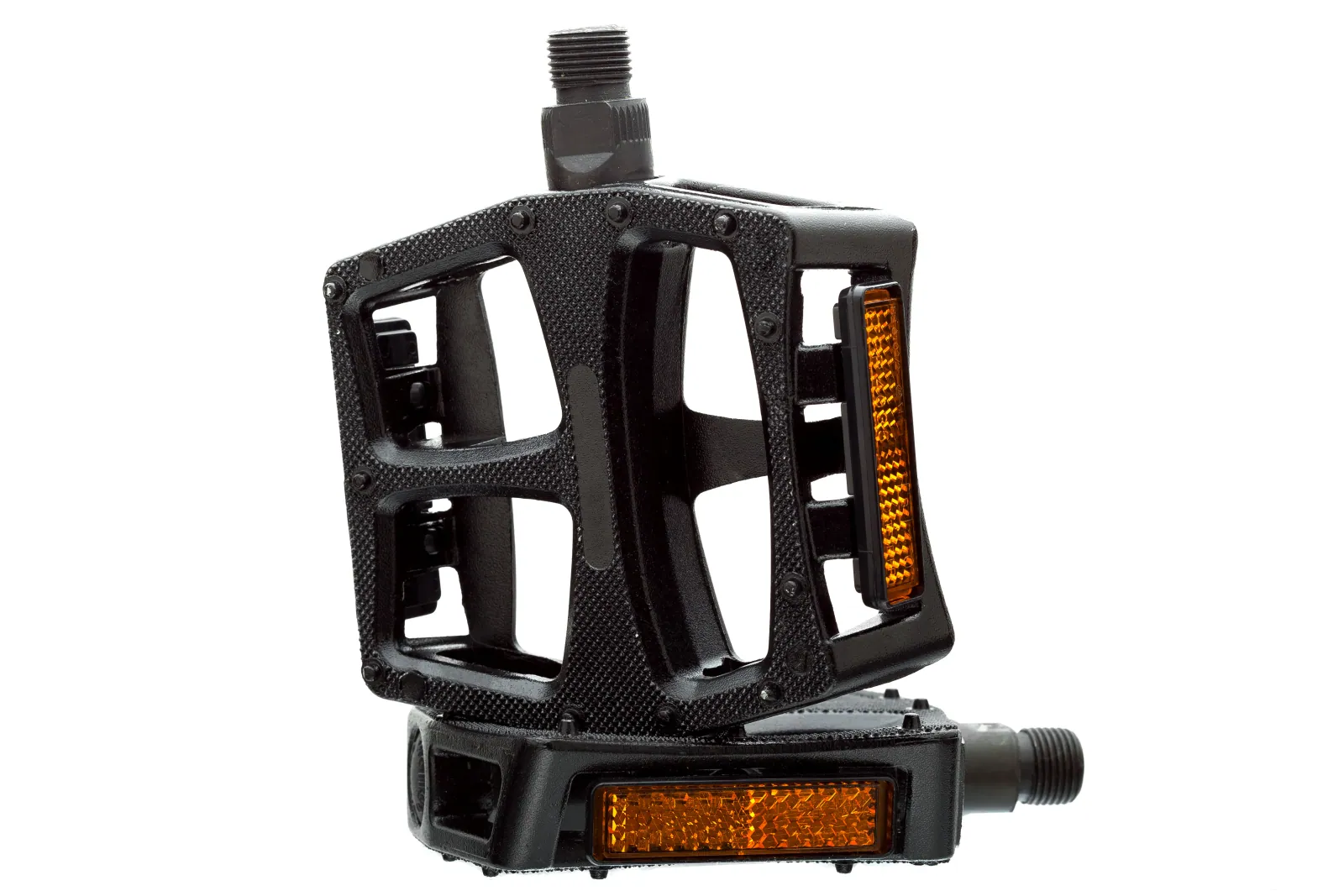
Ryden Composite Flat Pedals are high-grip platform pedals for mountain, gravel, hybrid and everyday riding: a glass-fiber-reinforced nylon body, 105 × 100 mm concave platform, replaceable steel pins, chromoly spindle and sealed bearing with bushing. Standard 9/16" thread.
- ✓ Glass-fiber-reinforced nylon body
- ✓ 105 × 100 mm concave platform
- ✓ 36 replaceable steel pins per pair
- ✓ Chromoly spindle, 9/16" × 20 TPI
- ✓ Sealed cartridge bearing + bushing
- ✓ Approx. 330–380 g per pair
Lightweight by design. Secure underfoot. Ready for every ride.
Glass-fiber-reinforced nylon for support at a relatively low weight.
About 105 × 100 mm, mildly concave, usable on both sides.
Nine steel pins per face, replaceable one at a time.
Standard 9/16" thread for most adult cranksets.
Cartridge bearing and bushing for smooth, low-maintenance rotation.
Every bicycle ride begins with a connection between the rider's feet and the pedals. Whether cycling through city streets, climbing a gravel road, exploring a forest trail, or riding recreationally, the pedals must provide a stable platform that allows the rider to apply force and maintain control.
The Ryden Composite Flat Pedals are designed around these essential requirements. Their reinforced nylon-composite platform provides a broad contact area beneath the rider's shoes, while replaceable steel traction pins help reduce unwanted foot movement during pedaling and rough-surface riding.
The slightly concave profile encourages the shoe to settle naturally toward the center of the platform. Unlike traditional narrow pedals, the wide body supports a larger portion of the shoe, helping distribute pressure and provide a more stable pedaling experience.
The composite construction provides a practical alternative to aluminum. It offers useful impact tolerance, corrosion resistance, and manufacturing flexibility without requiring a fully machined metal platform. At the center of each pedal, a chromoly-steel spindle forms the structural connection with the crankset.
Protected bearings and a low-friction bushing support smooth pedal rotation while helping limit contamination from moisture, dirt, and road debris.
The result is a versatile flat pedal designed to offer:
- •Stable foot support
- •Reliable shoe traction
- •Smooth rotation
- •Low maintenance
- •Practical serviceability
- •Broad bicycle compatibility
- •Accessible performance-oriented construction
The Ryden Composite Flat Pedals are intended for cyclists who want a durable upgrade from basic platform pedals without moving to a specialized downhill or racing pedal system.
Ryden FlexGrip Composite Platform Architecture
The Ryden FlexGrip platform design combines six key characteristics.
- Reinforced Composite Construction
- A glass-fiber-reinforced nylon body provides structural support while maintaining relatively low weight.
- Wide Contact Platform
- The approximately 105 × 100 mm platform supports a broad area beneath the rider's shoe.
- Concave Platform Geometry
- A mildly recessed center encourages consistent foot positioning.
- Replaceable Steel Traction Pins
- Threaded metal pins provide grip with compatible rubber-soled footwear and can be individually replaced when worn or damaged.
- Low-Profile Body
- A compact platform places the rider's foot relatively close to the spindle.
- Protected Rotational System
- A sealed bearing and bushing arrangement provides smooth pedal rotation with reduced exposure to contaminants.
Why Choose Composite Flat Pedals?
Bicycle flat pedals are commonly manufactured from:
- •Plastic
- •Reinforced nylon composite
- •Aluminum alloy
- •Steel
Basic plastic pedals can be inexpensive and practical for everyday cycling. High-performance aluminum pedals may offer rigid platforms, premium finishing, and sophisticated traction systems. Reinforced composite pedals provide an attractive middle ground.
They can deliver a wide contact platform, durable spindle, and replaceable traction pins without requiring an expensive aluminum body. The Ryden Composite Flat Pedals are developed around this balance.
Glass-Fiber-Reinforced Nylon Construction
The pedal body uses glass-fiber-reinforced nylon composite. This material combines an engineering polymer with reinforcing fibers. The reinforcement helps improve selected mechanical properties compared with many unreinforced plastics.
Potential advantages include:
- •Good strength-to-weight balance
- •Useful impact resistance
- •Reduced corrosion concerns
- •Flexible platform shaping
- •Integrated reinforcement ribs
- •Durable molded construction
- •Competitive manufacturing cost
Why Glass-Fiber Reinforcement Matters
An ordinary plastic pedal and an engineering-grade reinforced composite pedal are not necessarily equivalent. Glass fibers are incorporated into the polymer to improve selected mechanical properties.
Depending on the formulation, reinforcement may improve:
- •Rigidity
- •Dimensional stability
- •Structural strength
- •Resistance to deformation
- •Durability under repeated loading
The finished pedal's strength still depends on its complete design, molding quality, spindle support, and manufacturing tolerances.
Injection-Molded Composite Body
The Ryden Composite Flat Pedals use an injection-molded platform body. Injection molding allows complex features to be manufactured as part of one integrated structure.
These features may include:
- •Reinforcement ribs
- •Open platform sections
- •Spindle housing supports
- •Traction pin mounts
- •Exterior corner geometry
- •Surface texture
- •Brand detailing
This approach supports efficient manufacturing and consistent platform dimensions.
Composite vs Conventional Plastic
The term composite describes a material containing multiple constituents. For this product, the composite combines nylon polymer with glass-fiber reinforcement. Compared with a basic unreinforced plastic pedal, the composite design is intended to provide a more robust structural platform.
However, not every composite pedal is stronger than every conventional plastic pedal. Actual performance depends on the selected materials and engineering.
Composite vs Aluminum Platform Pedals
Both composite and aluminum pedals can provide reliable cycling performance.
Composite Pedals:
Potential advantages:
- •Competitive weight
- •Lower manufacturing cost
- •Useful impact tolerance
- •Corrosion-resistant body
- •Flexible color options
- •Durable molded construction
- •Accessible replacement cost
Aluminum Pedals:
Potential advantages:
- •High structural rigidity
- •Precision-machined body features
- •Premium metallic finishing
- •Durable threaded pin interfaces
- •Thin platform possibilities
The Ryden Composite Flat Pedals are intended for riders who prioritize value, grip, and versatility. The Ryden Alloy Flat Pedals remain the alternative for cyclists who specifically prefer a metal platform.
Wide Platform Design
The Ryden Composite Flat Pedals feature a broad platform intended to provide stable support beneath common adult cycling shoes.
- Dimensions
- 105 × 100 mm. The platform balances contact area with practical bicycle clearance. It is suitable for a wide variety of recreational and performance-oriented flat-pedal applications.
Benefits of a Wide Platform:
A wider pedal can provide:
- •More shoe contact
- •Improved stability
- •Reduced pressure concentration
- •Consistent foot placement
- •Comfortable standing support
- •Easier pedal location after stopping
These characteristics are particularly useful when cycling on uneven terrain or spending extended periods standing on the pedals.
Slightly Concave Platform Geometry
The Ryden Composite Flat Pedals use a mildly concave platform profile. This means the central shoe-contact area sits subtly lower relative to surrounding traction points. The shape encourages the shoe to settle naturally toward the center of the pedal.
Potential Benefits:
- •More stable foot placement
- •Better shoe contact
- •Reduced unwanted movement
- •Consistent platform feel
- •Greater confidence on uneven surfaces
Low-Profile Platform
The body thickness is approximately:
17–19 mm. This excludes protruding grip pins and localized spindle-housing sections. A low-profile platform helps position the rider's shoe close to the pedal axle.
Benefits:
- •Direct pedal feel
- •Compact body design
- •Reduced unnecessary platform height
- •Improved clearance compared with very thick platform pedals
- •Stable foot support
Ground clearance also depends on crank length, bottom bracket height, suspension position, pedal width, and riding technique.
Replaceable Steel Traction Pins
The Ryden Composite Flat Pedals use a system of replaceable steel traction pins.
Each pedal face contains:
9 steel traction pins.
Because both sides provide a usable platform:
- •18 pins per pedal
- •36 pins per pair
The pins are distributed across the platform to help maintain contact with suitable rubber shoe soles.
Why Steel Traction Pins?:
Pedal grip is particularly important when riding on:
- •Uneven gravel
- •Rough roads
- •Light trails
- •Wet pavement
- •Rocky paths
- •Loose surfaces
Raised steel pins provide mechanical contact points that can help resist unwanted shoe movement. They are designed to work with suitable rubber outsoles.
- Replaceable Pin Benefits
- Traction pins gradually wear through use. Common causes include shoe abrasion, pedal strikes, ground contact, rock impacts, and corrosion. The replaceable-pin system allows individual damaged or worn pins to be changed, helping extend pedal service life.
Composite Bodies With Metal Pins
A reinforced composite pedal can use threaded metal traction pins when designed with appropriate pin mounts. The Ryden Composite Flat Pedals have reinforced pin-mounting locations. These locations must be engineered to support the pin threads without excessive cracking or stripping.
Grip Pin Specifications
| Specification | Details |
|---|---|
| Pin Material | Steel |
| Pin Type | Replaceable Threaded |
| Pins per Face | 9 |
| Pins per Pedal | 18 |
| Pins per Pair | 36 |
| Pin Placement | Perimeter / Contact Areas |
| Pin Profile | Moderate-to-High Grip |
| Replacement | Individual |
| Pin Finish | Corrosion-Resistant |
Dual-Sided Platform Design
Both sides of the Ryden Composite Flat Pedals have usable traction surfaces. Riders do not need to rotate the pedal into a specific orientation before placing a foot on it.
Benefits:
- •Easy foot placement
- •Quick starts
- •Convenient stopping
- •No cleat engagement
- •Flexible foot positioning
- •Practical recreational cycling
High-Strength Chromoly-Steel Spindle
The spindle forms the structural connection between the pedal and crank arm. The Ryden Composite Flat Pedals use a chromoly-steel spindle.
Chromoly steel is commonly used in bicycle components because it offers:
- •High strength
- •Good fatigue resistance
- •Resistance to bending
- •Durable threads
- •Reliable mechanical support
The spindle must support repeated loads from seated pedaling, standing pedaling, climbing, acceleration, and rough surfaces.
Sealed Bearing and Bushing System
The Ryden Composite Flat Pedals use a combination of:
- •Sealed cartridge bearing
- •Low-friction bushing
- •Protective spindle seals
The bearing system allows the body to rotate around the spindle while supporting normal riding loads.
Benefits:
- •Smooth rotation
- •Reduced friction
- •Protection from common contaminants
- •Low routine maintenance
- •Consistent spindle support
Damaged bearings can cause grinding, rough rotation, excessive play, clicking, binding, and increased resistance.
Environmental Protection
The Ryden Composite Flat Pedals are intended for normal cycling conditions involving:
- •Rain
- •Road spray
- •Dust
- •Gravel
- •Light mud
- •Everyday dirt
The composite body is corrosion-resistant, while the protected bearing system helps reduce environmental contamination. However, the pedals are not designed for prolonged submersion or direct high-pressure washing around the bearings.
Open-Body Design
The platform includes openings between reinforced structural sections.
These openings support:
- •Weight reduction
- •Water drainage
- •Mud clearance
- •Debris removal
- •An efficient platform structure
The central spindle housing and load-bearing ribs remain reinforced to support normal riding loads.
Available Colors
- Stealth Black
- A versatile matte-black composite finish suitable for road, gravel, hybrid, and mountain bicycles.
- Graphite Gray
- A neutral gray finish that complements modern frames and components.
- Electric Blue
- A bold blue option for custom cycling builds.
- Trail Red
- A bright red option for riders looking for contrasting component colors.
- Forest Green
- An earthy green finish suited to adventure, gravel, and trail bicycles.
Weight
Approximate weight: 330–380 grams per pair.
Actual weight may vary depending on:
- •Composite material formulation
- •Glass-fiber reinforcement percentage
- •Platform dimensions
- •Internal structural ribs
- •Spindle design
- •Bearing and bushing configuration
- •Steel traction pins
The Ryden Composite Flat Pedals prioritize a balance of lightweight construction, grip, durability, and affordability rather than achieving the lowest possible weight. For riders comparing pedals, the weight of the complete pair—including spindles, pins, and bearing assemblies—is the most useful comparison.
What's in the box
- •1 × Ryden Composite Flat Pedal – Right
- •1 × Ryden Composite Flat Pedal – Left
- •36 × Steel Traction Pins (Preinstalled)
- •1 × Installation & Maintenance Guide
Questions about this product (72)
A (Ryden team): They are designed primarily for recreational mountain biking, gravel cycling, hybrid riding, adventure cycling, and everyday recreational use.
Are these flat pedals?+
Yes. They are dual-sided flat platform pedals without clipless engagement.
What material is the body made from?+
The body uses glass-fiber-reinforced nylon composite.
What is glass-fiber-reinforced nylon?+
It is an engineering polymer reinforced with glass fibers to improve selected structural properties.
Are composite pedals durable?+
Properly engineered composite pedals can provide good durability for their intended riding conditions. Actual strength depends on the complete product design and manufacturing quality.
Are composite pedals stronger than regular plastic pedals?+
Reinforced composites can offer improved mechanical properties compared with many unreinforced plastics, although actual performance depends on the specific materials and design.
Are composite pedals better than aluminum pedals?+
Neither material is universally better. Composite and aluminum offer different advantages in weight, manufacturing, rigidity, impact behavior, and cost.
What is the platform size?+
The platform measures approximately 105 × 100 mm.
Are the pedals concave?+
Yes. The design uses a slightly concave platform to support stable foot positioning.
What is the pedal body thickness?+
Approximately 17–19 mm, excluding grip-pin height and local spindle-housing features.
Do the pedals have steel grip pins?+
Yes. They use replaceable steel traction pins.
How many pins are included?+
The design has nine pins per face, totaling 36 pins per pair.
Can individual grip pins be replaced?+
Yes. The system allows individual pin replacement.
Are the pins adjustable?+
The standard design uses fixed-height replacement pins.
Can the steel pins damage shoes?+
Yes. Metal traction pins can mark or wear certain shoe soles, particularly footwear not designed for pinned pedals.
Can the pins scratch my legs?+
Yes. Raised metal pins can scratch skin during accidental contact.
What material is the spindle made from?+
The spindle uses high-strength chromoly steel.
What pedal thread size do they use?+
9/16" × 20 TPI.
Will they fit my mountain bike?+
Yes, if your crankset uses compatible 9/16-inch pedal threads and your riding is within the pedals’ intended use.
Will they fit other brands’ cranksets?+
Most adult cranksets use the 9/16" × 20 TPI pedal thread these pedals have. Check your crank’s thread before you order.
Are they compatible with Ryden cranksets?+
They are intended for compatible Ryden cranksets using 9/16-inch pedal threads.
Can I use them on a gravel bike?+
Yes. Gravel riding is one of their primary intended applications.
Can I use them on a hybrid bicycle?+
Yes. They are well suited to hybrid and recreational cycling.
Can I use them on a road bike?+
Yes, where the crankset uses compatible pedal threads.
Can I use them on a touring bike?+
Yes. They are suitable for touring riders who prefer flat pedals.
Are they suitable for commuting?+
Yes, although riders should check local reflector and visibility requirements.
Can I use them for mountain-bike trails?+
Yes, for general and recreational MTB riding. More aggressive terrain may require a more specialized MTB pedal.
Are they suitable for downhill mountain biking?+
The standard model is not designed for professional downhill racing.
Can I use them for enduro riding?+
The model is focused on general trail and recreational riding.
Are the pedals suitable for bikepacking?+
Yes. They are designed for mixed-surface adventure riding.
Are they suitable for e-bikes?+
Potentially, provided the crank threads match and the pedal suits the e-bike’s loads (confirm with us first).
Do they fit children's bicycles?+
Only if the bicycle has 9/16-inch pedal threads and the platform size is appropriate. Some children's bicycles use 1/2-inch threads.
Are the pedals double-sided?+
Yes. Both faces provide a usable platform.
Do I need clipless cycling shoes?+
No. These pedals do not use cleats or a clipless engagement mechanism.
Can I wear ordinary athletic shoes?+
Yes, provided they offer adequate sole grip and support.
Are dedicated MTB shoes recommended?+
Yes, particularly for rough trails, because suitable flat-pedal MTB shoes may provide better traction and support.
What type of bearings do the pedals use?+
The design uses a sealed cartridge bearing and low-friction bushing arrangement.
How much do the pedals weigh?+
The approximate weight is 330–380 grams per pair.
Are they waterproof?+
They are intended for normal wet-weather cycling but not prolonged submersion.
Can I ride them in mud?+
Yes. They are suitable for normal muddy riding conditions within their intended use.
Can I pressure wash the pedals?+
Avoid directing high-pressure water into the spindle and bearing seals.
Do they have reflectors?+
The standard configuration does not include integrated reflectors.
Can I use them for night riding?+
Yes, provided the bicycle complies with applicable lighting and reflector requirements.
Can I install the pedals myself?+
Yes, if you have the correct tools and understand pedal thread directions and tightening requirements.
Which pedal goes on the right side?+
The pedal marked R installs on the drive-side crank arm.
Which pedal goes on the left side?+
The pedal marked L installs on the non-drive-side crank arm.
Why does the left pedal tighten counterclockwise?+
The left pedal uses a reverse thread, which is part of the standard bicycle pedal interface.
Should I grease the pedal threads?+
Yes. A thin coating of suitable bicycle grease or anti-seize is generally recommended.
What installation torque should I use?+
Follow your crank manufacturer’s torque specification. Around 35–40 N·m is a common reference for adult bicycle pedals, but your crank manufacturer’s figure takes priority.
Why won't my pedal thread into the crank?+
Possible causes include: Incorrect pedal side; Incompatible thread size; Cross-threading; Damaged crank threads; Misalignment. Stop installation if significant resistance occurs.
Can I force the pedal into the crank?+
No. Forcing the spindle may permanently damage the crank threads.
How do I clean the pedals?+
Use mild soap, water, and a soft brush. Remove dirt from the platform openings and pin locations.
How often should I inspect the grip pins?+
Inspect them periodically, particularly after rough rides, pedal strikes, or heavy contamination.
Can I replace only one damaged pin?+
Yes. Individual pin replacement is part of the design.
What causes rough pedal rotation?+
Possible causes include contamination, worn bearings, damaged seals, or internal component wear.
Why does my pedal feel loose?+
Potential causes include bearing wear, bushing damage, spindle wear, or incorrect installation.
What should I do after a hard pedal strike?+
Inspect the body for cracks, the spindle for bending, and the bearings for abnormal movement before continuing to ride.
Can composite pedals crack?+
Yes. Severe impacts or excessive loads can damage composite materials.
Do the composite bodies rust?+
The composite bodies do not rust, but exposed steel components may corrode if not maintained properly.
Are composite pedals suitable for winter riding?+
They can be used in normal winter cycling conditions. Road salt, moisture, and dirt may require more frequent cleaning and inspection.
How long should these pedals last?+
Service life depends on riding frequency, impacts, environmental exposure, bearing wear, and maintenance. There is no universal replacement mileage.
When should I replace the pedals?+
Replace them if the body becomes structurally damaged, the spindle bends, or internal wear makes safe operation impossible.
Are these pedals suitable for beginners?+
Yes. Flat pedals are practical for beginners because they do not require mechanical unclipping. Riders should still be aware that steel grip pins can be sharp.
What is the difference between Composite and Urban Flat Pedals?+
The Composite model uses replaceable steel pins and is intended for varied road and off-road riding, while the Urban model prioritizes commuting comfort and molded traction.
What is the difference between Composite and Alloy Flat Pedals?+
The Composite model uses a reinforced nylon body, while the Alloy model uses aluminum construction. Both have replaceable steel pins.
What is the difference between Composite and MTB Platform Pedals?+
The Composite model emphasizes affordable, versatile performance, while the MTB Platform model uses a larger aluminum platform and a more specialized off-road design.
Are the pedals sold individually?+
No. They are sold as a complete left and right pair.
Are the spindles included?+
Yes. Each pedal comes with its integrated spindle assembly.
Are spare pins included?+
The standard package includes preinstalled pins.
Do installation tools come in the package?+
No. Installation tools are sold separately.
What warranty do these pedals have?+
A 1-year limited warranty against manufacturing defects. Wear from use, and damage from crashes, impacts, misuse or incorrect installation, aren’t covered.
Can I return them?+
Unused pedals in their original packaging can be returned within 30 days. Pedals that have been installed or ridden show installation wear and cannot be returned.
You might also like
Secure checkout
Encrypted card & PayPal payment
30-day returns
On unused items in original packaging
Brand-authentic
Quality-tested and warrantied
Worldwide shipping
Tracked delivery to 100+ countries