Ryden MTB Platform Pedals – Wide-Grip Aluminum Flat Pedals for Trail & Mountain Biking
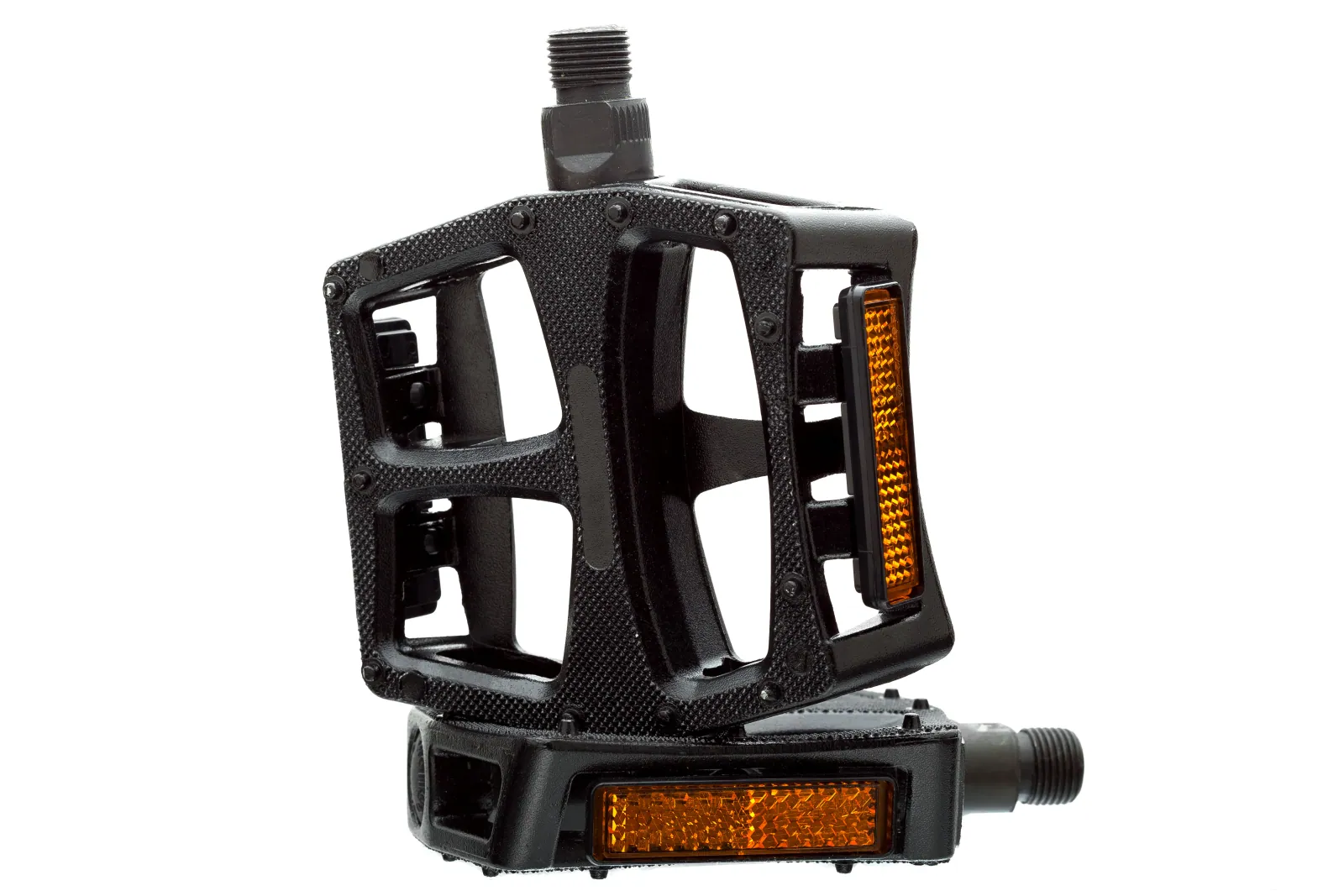
Ryden MTB Platform Pedals are wide, high-grip flat pedals for trail and mountain biking: a CNC-machined 6061-T6 aluminum platform of 110 × 105 mm, 40 replaceable steel pins per pair, a chromoly spindle and sealed bearing with bushing. Standard 9/16" thread.
- ✓ 110 × 105 mm concave MTB platform
- ✓ CNC-machined 6061-T6 aluminum
- ✓ 40 replaceable steel pins per pair
- ✓ Chromoly spindle, 9/16" × 20 TPI
- ✓ Sealed cartridge bearing + bushing
- ✓ Approx. 390–440 g per pair
Maximum contact. Reliable traction. Complete trail control.
About 110 × 105 mm, mildly concave and usable on both sides.
10 replaceable pins per face.
CNC-machined 6061-T6 aluminum, anodized.
An open body lets water, mud and small debris escape.
Standard 9/16" thread, with a sealed bearing and bushing.
Mountain biking demands a dependable connection between the rider's feet and the bicycle.
Unlike smooth road surfaces, mountain-bike trails frequently involve:
- •Loose rocks
- •Roots
- •Mud
- •Gravel
- •Uneven ground
- •Sudden drops
- •Repeated impacts
- •Rapid changes in body position
During these conditions, maintaining consistent foot contact with the pedals is essential. The Ryden MTB Platform Pedals are designed around this requirement. Their broad aluminum platform provides a stable area beneath the rider's shoes, while strategically positioned metal traction pins help grip the outsole.
The slightly concave pedal shape encourages the foot to settle naturally toward the center of the platform. A durable chromoly-steel spindle supports the pedal body, while sealed bearings provide smooth rotation during repeated pedaling cycles.
Unlike clipless pedals, the Ryden MTB Platform Pedals do not mechanically attach the rider's shoes to the bicycle.
Instead, they rely on:
- •Platform geometry
- •Metal traction pins
- •Shoe sole friction
- •Rider foot positioning
- •Appropriate riding technique
This allows riders to reposition their feet quickly or remove a foot from the pedal when navigating technical terrain. For mountain bikers who prefer the freedom and simplicity of flat pedals, the Ryden MTB Platform Pedals offer a practical balance of grip, control, structural durability, and serviceability.
Ryden TrailGrip Platform Architecture
The Ryden TrailGrip platform design combines several structural and traction features developed around mountain-bike use.
- Wide Foot Contact Area
- A broad platform provides approximately 110 × 105 mm of foot support. This helps distribute pressure and provides space for different shoe sizes.
- Concave Platform Geometry
- The pedal surface is designed with a mild concave profile to encourage stable foot placement.
- Replaceable Steel Traction Pins
- Threaded metal pins provide additional mechanical grip against compatible shoe rubber.
- Open-Body Construction
- Strategically positioned openings allow mud and debris to escape rather than accumulate across the entire platform.
- Reinforced Aluminum Structure
- Structural ribs and a strong central spindle housing help support repeated pedaling loads.
- Low-Profile Design
- A relatively thin platform helps position the rider's foot close to the pedal axle.
Wide MTB Platform
The platform is one of the most important features of a flat pedal. A narrow pedal may support only a limited section of the rider's shoe.
This can lead to:
- •Concentrated pressure
- •Reduced stability
- •Inconsistent foot positioning
- •Unwanted movement during rough riding
The Ryden MTB Platform Pedals use a broad contact area intended to provide stable support.
- Platform Dimensions
- Approximately 110 × 105 mm. The generous dimensions are designed to accommodate most adult MTB shoes.
Benefits:
- •Greater shoe contact area
- •Better stability on uneven terrain
- •More predictable foot positioning
- •Improved support during standing pedaling
- •Easier pedal location after removing a foot
- •Greater confidence during technical riding
Why Platform Size Matters for Mountain Biking
During technical riding, mountain bikers frequently stand on the pedals while moving their weight around the bicycle.
The feet help control:
- •Bicycle balance
- •Body positioning
- •Weight distribution
- •Cornering
- •Jump preparation
- •Descending stability
A broad pedal provides a larger contact area between the shoe and the bicycle. This can make the rider feel more supported, especially during sustained standing efforts. However, the ideal pedal size depends on shoe size and personal preference.
An excessively wide pedal may be unnecessary for riders with small feet and may increase exposure to rock strikes. The Ryden MTB Platform Pedals are designed as a standard-to-large adult platform.
Concave Platform Design
The Ryden MTB Platform Pedals use a slightly concave platform profile. A concave pedal has a central contact area that sits subtly lower than the surrounding outer traction points. This encourages the shoe to settle into the pedal rather than feeling perched above a completely flat surface.
Benefits:
- •More stable foot positioning
- •Improved shoe contact
- •Greater confidence during rough riding
- •Reduced unwanted foot movement
- •Consistent engagement with traction pins
The effect depends on the rider's shoe outsole and the distribution of the pedal's traction points.
Replaceable Steel Traction Pins
One of the defining features of the Ryden MTB Platform Pedals is the metal grip-pin system. The design uses 10 replaceable steel pins on each pedal face. Because both sides are usable, each pedal contains 20 traction pins.
- Total Grip Pins
- 40 pins per pair. The pins are positioned to provide grip across the platform while leaving open areas for debris clearance.
Why Metal Pins Matter
Conventional plastic platform pedals often rely on molded surface features. These features provide useful grip for urban riding, but they may offer less traction on technical MTB terrain. Steel traction pins create more pronounced contact points against suitable rubber shoe soles.
This helps reduce unwanted shoe movement during:
- •Rapid acceleration
- •Standing climbing
- •Rough descents
- •Cornering
- •Riding over roots
- •Repeated trail vibration
The result is a more secure contact interface compared with many simple flat pedals lacking metal traction pins.
Replaceable Pin Design
Traction pins experience regular wear because they are exposed to:
- •Rocks
- •Ground contact
- •Abrasion
- •Shoe movement
- •Trail debris
Over time, pins may become:
- •Worn
- •Bent
- •Damaged
- •Rounded
- •Missing
The Ryden MTB Platform Pedals use replaceable threaded pins so damaged grip elements can be serviced without replacing the entire pedal.
Benefits:
- •Extended usable pedal life
- •Replaceable damaged traction points
- •Easier maintenance
- •Consistent grip restoration
- •Lower replacement cost compared with replacing complete pedals
Grip Pin Configuration
| Feature | Details |
|---|---|
| Pin Material | Steel |
| Pin Type | Threaded / Replaceable |
| Pins per Face | 10 |
| Pins per Pedal | 20 |
| Pins per Pair | 40 |
| Pin Placement | Perimeter and support zones |
| Replacement | Individual pins |
| Pin Finish | Corrosion-resistant finish |
Dual-Sided Platform
The pedals have usable traction surfaces on both sides. Unlike road clipless pedals, riders do not need to orient the pedal before stepping on it. This provides several advantages.
- Immediate Foot Placement
- The rider can place a foot onto either pedal face.
- Faster Repositioning
- Foot placement can be adjusted without disengaging a mechanical cleat system.
- Simpler Riding
- No clip-in mechanism or release tension adjustment is required.
- Practical Trail Use
- Riders can remove a foot during difficult terrain and place it back onto the pedal quickly.
CNC-Machined Aluminum Alloy Body
The Ryden MTB Platform Pedals are specified with a 6061-T6 aluminum alloy platform body.
Aluminum alloy is widely used in performance bicycle pedals because it offers a useful balance of:
- •Structural strength
- •Low weight
- •Corrosion resistance
- •Machining accuracy
- •Durability
The platform includes reinforced sections around the spindle housing and pedal perimeter.
Why Aluminum Instead of Composite?
Both aluminum and reinforced composite can be suitable for MTB pedals.
Aluminum Pedals:
Potential advantages include:
- •Strong structural construction
- •Accurate machining
- •Rigid support
- •Durable threaded pin locations
- •Premium metal finish
- •Thin platform possibilities
Composite Pedals:
Potential advantages include:
- •Lower cost
- •Good impact tolerance in suitable designs
- •Corrosion-resistant bodies
- •Flexible color options
- •Competitive weight
The Ryden MTB Platform Pedals use an aluminum design to position them as a durable, performance-oriented alternative to basic composite pedals.
Reinforced Pedal Body
A mountain-bike pedal must support repeated loading across the platform.
The Ryden design uses reinforcement around critical areas such as:
- •Spindle housing
- •Outer platform edges
- •Pin mounting locations
- •Internal support ribs
These areas experience loads generated by the rider's feet and contact with trail obstacles. The structural design is intended to provide dependable performance during normal MTB applications.
Low-Profile Platform Construction
A low-profile pedal reduces the vertical distance between the rider's foot and the pedal spindle.
The Ryden MTB Platform Pedals use an approximate body thickness of:
16–18 mm. This excludes the maximum height of the traction pins and any local spindle-housing bulge.
Potential Benefits:
- •More direct pedal feel
- •Lower foot position
- •Improved ground clearance compared with thicker pedal designs
- •Reduced unnecessary platform height
Pedal Thickness and Ground Clearance
Ground clearance matters when riding over rocks, roots, and uneven surfaces. A thick pedal may be more likely to contact obstacles during certain crank positions. A thinner platform can help provide additional clearance relative to an otherwise equivalent thicker pedal.
However, pedal strikes also depend on:
- •Bottom bracket height
- •Crank length
- •Suspension sag
- •Rider technique
- •Trail terrain
- •Pedal width
A low-profile pedal reduces one contributing factor but cannot eliminate pedal strikes.
Chromoly-Steel Spindle
The spindle forms the central structural connection between the pedal and crank arm. The Ryden MTB Platform Pedals use a chromoly-steel spindle.
Chromoly steel is commonly used in bicycle pedal axles because it provides:
- •High strength
- •Good fatigue resistance
- •Resistance to bending
- •Durable threaded interfaces
- •Reliable structural support
The spindle must withstand repeated loads from:
- •Pedaling
- •Standing
- •Acceleration
- •Climbing
- •Rider weight transfer
- •Trail vibration
Sealed Bearing and Bushing System
The Ryden MTB Platform Pedals use a combination of:
- •Sealed cartridge bearing
- •Low-friction bushing
- •Protective spindle seals
This arrangement provides smooth rotation while supporting the spindle under load.
Benefits:
- •Low rotational resistance
- •Smooth pedaling
- •Protection from contamination
- •Low routine maintenance
- •Practical servicing
The sealed system is intended for normal off-road environmental exposure.
Why MTB Pedal Bearings Need Protection
Mountain-bike pedals are exposed to dirt and water near the ground.
Contaminants may reach the pedal spindle area during:
- •Muddy riding
- •Wet trails
- •River crossings
- •Bicycle cleaning
- •Rain
- •Dusty conditions
If contaminants enter the bearing system, they can degrade lubricant and increase internal wear. The Ryden bearing and seal arrangement is designed to reduce these risks.
Low-Friction Rotation
A bicycle pedal must rotate smoothly around its spindle. This allows the platform to follow the rider's foot position during the pedal stroke.
The Ryden bearing system is intended to provide:
- •Predictable rotation
- •Minimal unwanted friction
- •Stable spindle support
- •Reliable long-term operation
A properly functioning pedal should rotate without grinding, binding, or excessive lateral play.
Open-Body Mud Clearance
Mud can accumulate on MTB pedals, particularly in wet conditions. The Ryden MTB Platform Pedals use an open-body platform construction with spaces between reinforced structural sections.
These openings help provide pathways for:
- •Water
- •Mud
- •Dirt
- •Small debris
This can reduce excessive buildup across the pedal platform. However, heavy mud may still accumulate around the traction pins and shoe contact points.
Why Mud Clearance Matters
Mud between the shoe and pedal can reduce effective traction. An open platform helps reduce the amount of material trapped against the shoe. Regular cleaning is still necessary after especially muddy rides.
Weight
Approximate weight: 390–440 grams per pair.
The weight depends on:
- •Platform machining
- •Spindle design
- •Bearing configuration
- •Pin quantity
- •Structural reinforcement
- •Materials
The design prioritizes reliable support and grip while maintaining a competitive weight for an aluminum MTB platform pedal.
Available Colors
- Stealth Black
- A neutral black anodized finish suitable for nearly any MTB frame color.
- Precision Silver
- A clean metallic finish for traditional and performance-oriented builds.
- Trail Red
- A red anodized option for riders seeking a contrasting component color.
- Electric Blue
- A blue anodized finish for custom MTB setups.
What's in the box
- •1 × Ryden MTB Platform Pedal – Right
- •1 × Ryden MTB Platform Pedal – Left
- •40 × Steel Traction Pins (Preinstalled)
- •1 × Installation & Maintenance Guide
Questions about this product (60)
A (Ryden team): They are designed primarily for mountain biking, trail riding, cross-country cycling, all-mountain riding, and off-road adventure applications.
Are these flat pedals?+
Yes. They are flat platform pedals without a mechanical clipless engagement mechanism.
What material is the pedal body made from?+
The pedal body uses CNC-machined 6061-T6 aluminum alloy.
What material is the spindle made from?+
The spindle is specified in high-strength chromoly steel.
What is the platform size?+
Approximately 110 × 105 mm.
Are the pedals concave?+
Yes. The platform uses a slightly concave profile intended to provide stable foot positioning.
Do the pedals have metal grip pins?+
Yes. The design uses replaceable steel traction pins.
How many pins are included?+
The design includes 10 pins per pedal face, totaling 40 pins across the pair.
Are the grip pins replaceable?+
Yes. Individual damaged or worn pins can be replaced using compatible replacement parts.
Can I adjust the pin height?+
Pin height is determined by the selected pin design. The standard configuration is not intended to be adjusted beyond its design limits.
Can I use these pedals without special shoes?+
Yes. They work with suitable regular footwear, although dedicated flat-pedal MTB shoes are recommended for technical riding.
Are they compatible with clipless cycling shoes?+
They do not provide clipless engagement. Some cycling shoes may be used as ordinary footwear on flat pedals, but traction and comfort may be poor.
Will they fit my mountain bike?+
Yes, if your crankset uses standard 9/16-inch pedal threads and the pedals suit your riding.
What thread size do they use?+
9/16" × 20 TPI.
Will they fit other brands’ cranksets?+
Most adult cranksets use the 9/16" × 20 TPI pedal thread these pedals have. Check your crank’s thread before you order.
Are they compatible with Ryden MTB cranksets?+
They are intended for compatible Ryden MTB 1× and 2× cranksets using standard 9/16-inch pedal threads.
Can I use them on a hardtail mountain bike?+
Yes. Hardtail MTBs are one of the primary applications.
Can I use them on a full-suspension mountain bike?+
Yes, where the crankset uses the correct pedal thread and the riding application falls within its intended use.
Are they suitable for cross-country riding?+
Yes. They are suitable for XC riders who prefer flat pedals.
Are they suitable for trail riding?+
Yes. Trail riding is one of the primary intended applications.
Can I use them for downhill racing?+
The standard model is not designed for professional downhill racing.
Can I use them on a gravel bike?+
Yes, provided the crankset has compatible pedal threads.
Are these pedals suitable for e-MTB?+
They may be suitable for compatible e-MTB applications; confirm load limits with us first.
Are they double-sided?+
Yes. Both pedal faces provide a usable grip platform.
Do I have to clip into these pedals?+
No. There is no clipless engagement mechanism.
What is the difference between flat and clipless pedals?+
Flat pedals support the shoe through friction and traction pins. Clipless pedals mechanically retain a compatible cleat attached to the cycling shoe.
Do metal pins improve grip?+
Yes. Metal traction pins can improve shoe retention against suitable rubber outsoles.
Can the pins damage my shoes?+
Aggressive metal pins can wear or mark certain shoe soles, especially if the footwear is not designed for flat-pedal mountain biking.
Are metal pins dangerous?+
They can scratch or injure skin during accidental contact. Handle the pedals carefully.
What is the benefit of a concave platform?+
A concave shape can help the shoe settle naturally into the pedal, improving the feeling of stability.
Why is the platform wide?+
A wide platform offers greater shoe support and can reduce concentrated pressure under the foot.
Are the pedals waterproof?+
They are designed for normal wet-weather off-road use but are not intended for prolonged submersion.
Can I ride in muddy conditions?+
Yes. The open-body platform and sealed bearing design are intended for normal muddy trail conditions.
Do the pedals have sealed bearings?+
Yes. The design uses a sealed cartridge bearing and low-friction bushing arrangement.
Can the bearings be serviced?+
The model uses a serviceable internal bearing and spindle system.
How much do the pedals weigh?+
The approximate weight is 390–440 grams per pair.
Are they heavier than composite pedals?+
They may be heavier than some composite alternatives, depending on their construction.
Do the pedals include reflectors?+
The standard MTB configuration does not include integrated reflectors.
Can I install them myself?+
Yes, if you have the correct tools and understand left/right pedal threading.
Which pedal goes on the right side?+
The pedal marked R installs on the drive-side/right crank.
Which pedal goes on the left side?+
The pedal marked L installs on the non-drive-side/left crank.
Why does the left pedal tighten counterclockwise?+
The left pedal uses a reverse thread, which helps it remain secure during normal pedaling.
Should I grease the threads?+
Yes. A suitable bicycle grease or anti-seize compound is generally recommended.
What installation torque should I use?+
Follow your crank manufacturer’s torque specification. Approximately 40 N·m is a common reference value for standard bicycle pedals.
Why won't my pedal screw into the crank?+
Possible causes include: Incorrect pedal side; Cross-threading; Incompatible thread size; Damaged crank threads; Improper alignment. Stop installation if significant resistance occurs.
Can I use these on a children's bike?+
Only if the crankset uses 9/16-inch pedal threads and the platform size is suitable for the rider. Some children's bicycles use 1/2-inch pedal threads.
How do I clean the pedals?+
Use mild soap, water, and a soft brush. Remove mud from the pins and platform openings.
Can I pressure wash the pedals?+
Avoid directing high-pressure water into the spindle and bearing seals.
How often should I inspect the grip pins?+
Inspect them periodically, particularly after rock strikes or aggressive off-road rides.
What if a grip pin becomes loose?+
Stop and secure or replace it using the replacement procedure.
Can I replace only one damaged pin?+
Yes. Individual pin replacement is one of the intended maintenance features.
Why does my pedal feel loose?+
Possible causes include bearing wear, spindle damage, incorrect installation, or loose crank threads.
Why does my pedal grind when rotating?+
Grinding may indicate contamination or bearing damage.
Can I use these pedals in winter?+
They can be used in normal cold-weather riding conditions. Snow, ice, and salt exposure may require more frequent inspection and cleaning.
Do flat pedals improve technical riding?+
They can make foot removal and repositioning easier, which some riders prefer when learning technical skills. Performance still depends on technique and equipment setup.
Are the pedals suitable for beginners?+
Yes. Riders do not need to learn a clipless engagement or release mechanism. However, beginners should be aware that metal pins can be sharp.
What is the difference between these and Ryden Urban Flat Pedals?+
The MTB model uses a metal-pin grip system and an aluminum platform designed for off-road riding, while the Urban model is designed primarily for commuting and casual use.
When should I replace the pedals?+
Replace them if the platform, spindle, or other safety-critical components become damaged or excessively worn.
What warranty do these pedals have?+
A 1-year limited warranty against manufacturing defects. Wear from use, and damage from crashes, impacts, misuse or incorrect installation, aren’t covered.
Can I return them?+
Unused pedals in their original packaging can be returned within 30 days. Pedals that have been installed or ridden show installation wear and cannot be returned.
You might also like
Secure checkout
Encrypted card & PayPal payment
30-day returns
On unused items in original packaging
Brand-authentic
Quality-tested and warrantied
Worldwide shipping
Tracked delivery to 100+ countries