Wholesale Bicycle Bag and Storage Suppliers: bags that survive the route, not just the showroom.
Wholesale bicycle bag and storage suppliers for bike shops and retailers worldwide. We supply wholesale saddle bags, wholesale frame bags, wholesale handlebar bags, wholesale pannier bags and wholesale bicycle panniers, wholesale bikepacking bags, and wholesale cycling backpacks. Wholesale waterproof bike bags and water-resistant options across the range. Wholesale commuter bike bags and wholesale touring bike bags. Wholesale rear rack bags and wholesale trunk bags. From 100 units per SKU on volume bags, with lower MOQs on bikepacking specialty SKUs.
- Wholesale saddle + frame + handlebar + pannier + bikepacking bags
- Water-resistant to fully wholesale waterproof bike bags
- Klick-Fix, QL2, universal attachment
- Capacity measured volumetrically
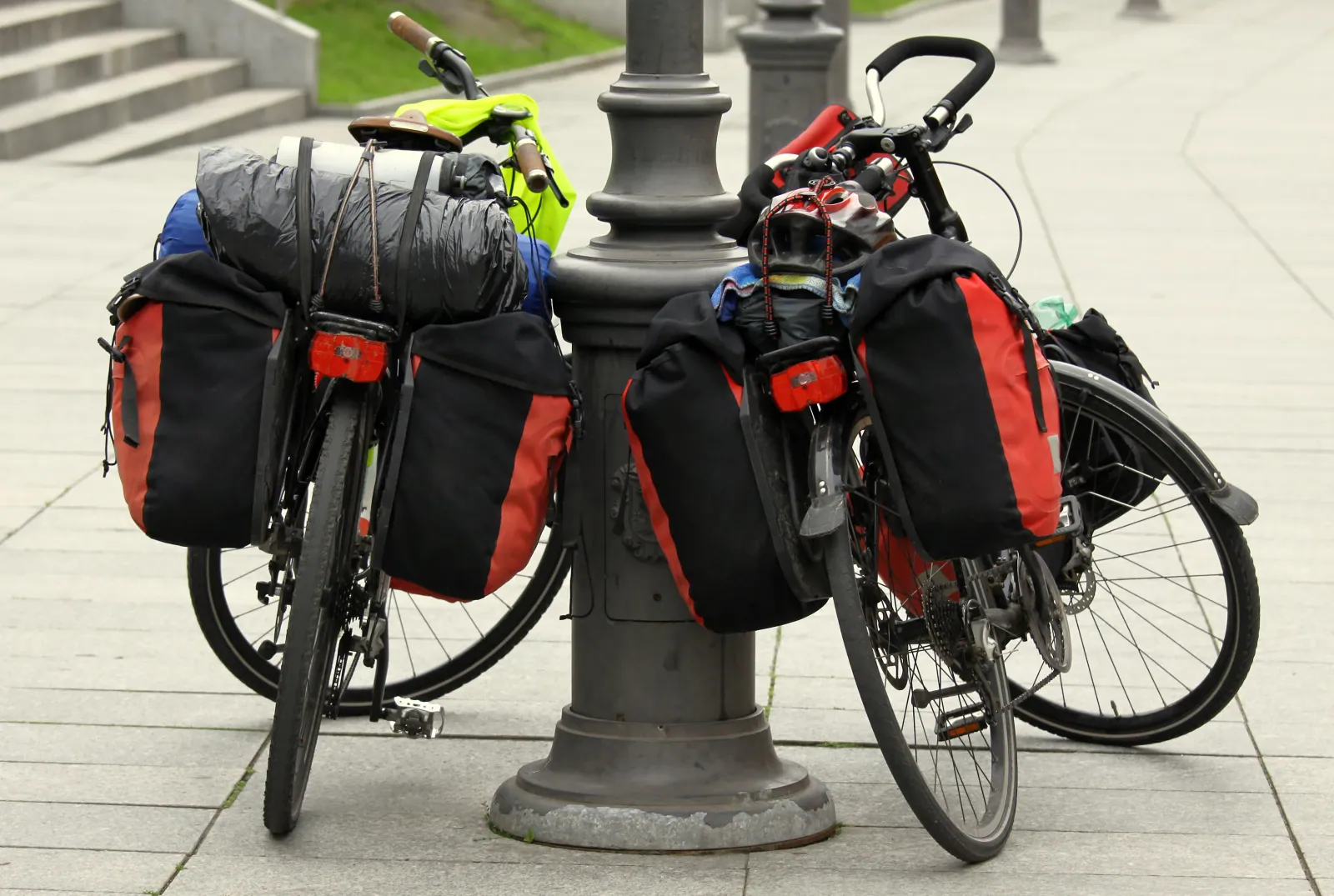
What we supply.
Seven sub-categories of wholesale bicycle bags covering commuter, touring, bikepacking, and everyday cycling. Whether you are a bicycle bag supplier for bike shops stocking wholesale commuter bike bags or a bicycle bag supplier for dealers building a wholesale bikepacking bags range, we’ve structured the range around the bike-attachment point (where the bag mounts on the bike) and the use case (what the bag carries and for how long), because those are the practical buyer-evaluation dimensions.
Wholesale saddle bags
0.3L–1.5L · Saddle rail clip or strap-on velcro attachment · Water-resistant on most SKUs, fully waterproof bike bags on selected SKUs
For tools, spare tubes, multi-tools, and ride essentials. The everyday wholesale bicycle bag your shop sells with most bike purchases.
Wholesale frame bags
Wholesale top tube bags (small, ride-accessible) · Frame-triangle bags (bikepacking-grade, frame-geometry-specific) · Down-tube bags (less common)
Bags mounted inside the frame triangle, on the top tube, or along the down tube. Top-tube bags for snacks and phones; frame-triangle for serious carrying.
Wholesale handlebar bags
Commuter (smaller, with map pocket or phone window) · Touring and bikepacking (larger, sustained-load designed) · Mounting brackets or strap systems
Front-mounted wholesale handlebar bags for commuter, touring, and bikepacking use. Mounting bracket vs strap system named per SKU.
Wholesale pannier bags and wholesale bicycle panniers
15L commuter (single) to 50L touring (per pair) · Klick-Fix, QL2/QL2.1, or universal hook-and-strap attachment · Water-resistant and fully waterproof bike bags options · Wholesale rear rack bags and wholesale trunk bags
The volume commuter-and-tour category. Wholesale bicycle rack bags with rack compatibility (rail diameter, attachment-point spacing) named per SKU.
Wholesale bikepacking bags and systems
Seatpost-mounted wholesale bikepacking bags · Frame-triangle bags sized per frame geometry · Handlebar harness systems · Accessory pouches
Built for off-road vibration, weather exposure, and multi-day use. Bikepacking specialty retailers should confirm specific bag-and-frame compatibility at quote stage.
Wholesale cycling backpacks
Frame-clearance shaping · Ventilated back panels · Cycling-jersey-compatible carrying · Reflective features on most SKUs
Wholesale commuter bike bags for riders carrying laptops, work gear, and daily essentials. Distinct from general-use backpacks (outside scope) and from hydration packs (covered on the bottles and hydration page).
Storage accessories and rack pairings
Rack mounts · Dry bags that pair with wholesale bicycle panniers · Rain covers · Rack pads for cargo bikes · Wholesale bicycle baskets and wholesale bike baskets where regional supply supports it
Cross-references the workshop consumables page for rack-mounting hardware and bolts (the structural mounting bolts live there; bag-specific accessories live here). Wholesale bike storage racks, wholesale bicycle wall mounts, and wholesale bicycle floor stands are household-furniture-adjacent categories outside our launch scope.
A B2B bicycle bag supplier that names waterproofing honestly and attachment systems clearly.
Waterproofing named at the level it actually performs
Every wholesale bicycle bag SKU names waterproofing status accurately: water-resistant (handles rain for typical commutes, not designed for sustained submersion or heavy rain), highly water-resistant (handles sustained rain, taped seams, but not designed for submersion), or fully waterproof (welded seams, roll-top closures, designed for sustained rain and brief submersion). As an international bicycle bag supplier and global bicycle bag supplier, the honest distinction matters because "water-resistant" claims often mean very different things across suppliers.
Wholesale pricing on a high-margin accessory category
Direct-from-supplier wholesale bicycle bag prices on a category that carries better retail margin than most cycling accessory categories. Wholesale bike bags carry structurally strong margin because customers shop bags on features (capacity, attachment, weather protection) more than on price. Tier pricing improves as your volume grows.
Ryden-branded range + your-brand private label
We supply Ryden-branded wholesale bicycle bags; brand-name bags are quoted case by case. For bicycle bag wholesalers and bicycle bag distributors, custom bicycle bags wholesale and private label bicycle bags are commercially strong for entry and mid-tier products: customers shopping commuter and saddle bags compare features more than brands. Bikepacking specialty bags rely more on brand credibility and are commercially mixed for private label.
Attachment systems documented per SKU
Attachment systems vary across brands and product lines: Klick-Fix, QL2, Ortlieb-compatible rail clips, proprietary mount systems, strap-on velcro, saddle rail clips. We document the attachment system per wholesale bicycle bag SKU so shops can verify compatibility with their customer’s existing rack or attachment setup.
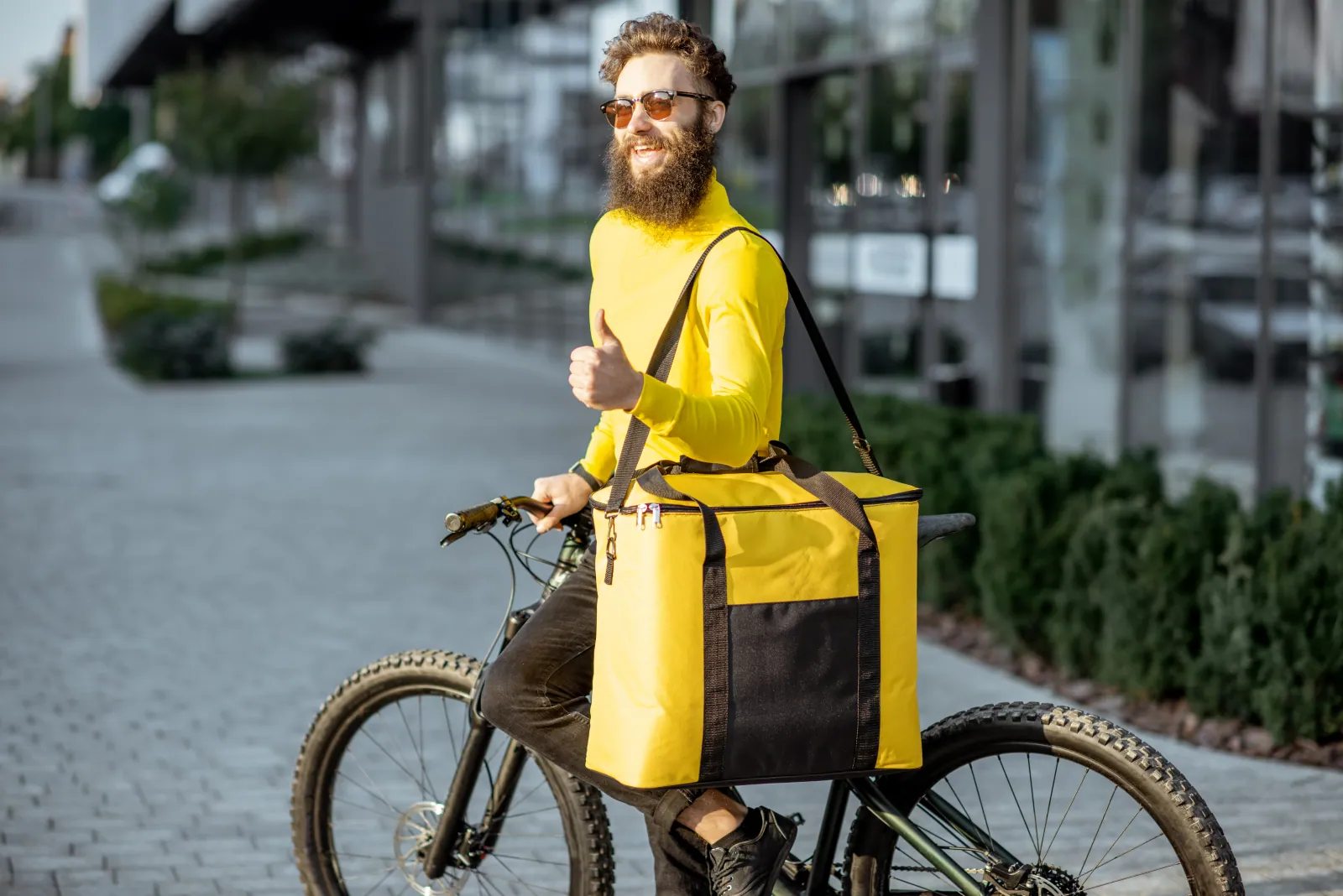
Your brand on the bag a customer carries to work every day.
Wholesale bicycle bags are one of the strongest private-label categories in the cycling accessory catalog, with two distinct paths within the category. Custom bicycle bags wholesale and private label bicycle bags work for wholesale saddle bags, basic wholesale pannier bags, wholesale commuter bike bags, and wholesale cycling backpacks, where customers shop on capacity, attachment system, and price rather than on brand. Your shop’s branded saddle bag or commuter pannier becomes a routine purchase customers associate with your shop over time.
We extend volume private label across wholesale saddle bags, basic wholesale pannier bags, wholesale commuter handlebar bags, and wholesale cycling backpacks at 200 units per SKU on commuter panniers, saddle bags, and handlebar bags (150 per SKU on cycling-specific backpacks), with 3 weeks to first sample and 2–3 months from sample approval. Wholesale bikepacking bags are honestly outside private-label scope at launch: bikepacking buyers rely heavily on brand credibility (Apidura, Revelate, Ortlieb, Topeak Cargo Cage carry rating credibility built over years), and a launch-stage private label range doesn’t easily compete in that buyer audience. The operational reasoning: bikepacking-grade attachment systems, materials, and warranty support require specialty engineering and customer-service depth we’d rather invest in properly than launch under-prepared.
Enquire about private-label bagsWholesale bicycle bag specs that determine whether a bag actually performs.
Bags are subject to performance claims that often don’t survive real-use testing. A pannier marketed as “fully waterproof” may have non-welded seams that leak in sustained rain; a handlebar bag rated for “all-weather use” may not handle the vibration of off-road riding; a saddle bag claimed to fit “all saddles” may not fit saddle rails on certain frame and saddle combinations. Wholesale buyers learn to evaluate bags on real-performance specifications. The specs that matter:
Waterproofing levels and what they actually mean
The bag industry uses several waterproofing terms with overlapping meanings. We use these definitions consistently across our range: water-resistant (handles light rain and brief weather exposure; not designed for sustained rain or submersion; typical of saddle bags, commuter bags, and entry-level panniers). Highly water-resistant (handles sustained rain for hours; taped seams; not designed for submersion; typical of higher-tier commuter panniers and most cycling backpacks). Fully waterproof (welded or heat-sealed seams; roll-top closures or sealed zippers; handles sustained heavy rain and brief submersion such as during stream crossings on bikepacking; typical of bikepacking-grade bags and top-tier touring panniers). We name the waterproofing level per wholesale bicycle bag SKU based on real testing rather than marketing language.
Materials and construction
Bag materials affect water resistance, abrasion resistance, weight, and durability. Common materials: nylon (polyamide) in various weights and coatings; durable, common across wholesale commuter bike bags and wholesale saddle bags. Ripstop nylon; nylon with reinforcing threads that resist tearing, common in wholesale bikepacking bags where weight matters and the bags see abrasion. Cordura; a heavier-duty nylon with high abrasion resistance, common in wholesale commuter bike bags and wholesale touring bike bags. TPU-coated nylon or TPU laminate; the typical material for wholesale waterproof bike bags, with welded seams forming a watertight enclosure. EVA foam or padded materials; used in laptop and electronics compartments. We name primary material per wholesale bicycle bag SKU.
Capacity and how it’s measured
Wholesale bicycle bag capacity is stated in liters (L). Measurement methods vary across the industry; we use the volumetric measurement (the actual interior volume measured by filling with water or beads) rather than the stretched-or-loaded capacity some suppliers claim. A 25L wholesale pannier bag from us holds genuinely close to 25L of contents; some competitor “25L” panniers hold closer to 18–20L when measured similarly. Capacity named per SKU.
Attachment systems
Bag attachment to the bike is the most common point of failure in real use. Common attachment systems: Klick-Fix (German rail-mount system, widely compatible with German and European rack brands). QL2 / QL2.1 (Ortlieb’s quick-release system, widely compatible). Universal hook-and-strap (standard hooks fitting most rack rails plus bottom-strap stabilization; works on most racks but provides less secure attachment than dedicated systems). Velcro and strap-on (common on saddle bags, frame bags, and bikepacking bags; doesn’t require specific bike compatibility but requires correct strap placement for security). Magnetic (rare, used on some commuter handlebar bags). Wholesale pannier bags name rack compatibility (rail diameter, attachment-point spacing); wholesale saddle bags name saddle rail clip compatibility. Per-SKU attachment system named explicitly.
Rack compatibility for panniers
Panniers must fit the rack they attach to. The rack-attachment dimensions vary: rail diameter (most standard panniers fit 8–16mm rack rails), rack tube diameter (some systems require specific diameters), and attachment-point spacing (some panniers require specific distances between attachment points). A pannier “fits standard racks” usually means most rear-mount racks; a pannier “fits Klick-Fix racks” means specifically Klick-Fix-equipped racks. Per-SKU rack compatibility named.
Mounting hardware and bolts
Bag mounting hardware (the hooks, brackets, screws that secure the bag to the bike) is typically supplied with the bag. Replacement hardware is available for service. Larger rack-mounting systems often require specific bolts; the workshop consumables page covers general rack-mounting hardware.
Bikepacking-specific considerations
Wholesale bikepacking bags face vibration, weight load, and weather exposure beyond what commuter bags handle. Specific considerations: seatpost-mounted bags must handle vibration without working loose; frame-triangle bags must fit the specific frame geometry (not all frames have the same triangle dimensions); handlebar harness systems must hold weight without affecting steering. Bikepacking buyers evaluate these factors at a depth beyond commuter bag buyers; per-SKU bikepacking compatibility and considerations named.
Cycling-specific backpack design considerations
A backpack designed for cycling differs from a general backpack in several ways: shaped to clear the rider’s back at all cycling positions, ventilated back panel that allows airflow, often with reflective strips for visibility, sometimes with helmet-attachment loops, sometimes with rain cover included. Per-SKU cycling-specific design features named.
Reflective and visibility features
Many bags include reflective strips, reflective panels, or attachment points for additional reflectives. This is particularly important for commuter bags carried by riders in low-light or evening conditions. Reflective coverage per SKU named.
Smart bags with integrated GPS tracking or connectivity features are outside scope at launch; engineering and warranty depth beyond launch capacity. Bags with integrated speakers, lights, or other electronics are outside scope. Bags marketed as “convertible” between cycling and non-cycling use (laptop bags that double as panniers, for example) are limited in our range because the design compromises often fail in both use cases. Wholesale bike storage racks, wholesale bicycle wall mounts, and wholesale bicycle floor stands are household-furniture-adjacent categories outside scope.
Wholesale bicycle bags ship larger; shape preservation matters.
Shape preservation in transit
Wholesale bicycle bags ship larger per box than most accessory categories because of bag volume and the need to ship them with shape preservation. A crumpled wholesale bike bag arriving in a customer’s hands looks like damaged product even if it’s actually fine. Per-SKU freight is moderate; small reorders move by parcel courier, larger orders by pallet. Wholesale bikepacking bags often ship as multi-bag packs that consolidate into larger shipments efficiently. For bicycle bag distributors ordering bulk bicycle bags, international freight from the origin port is transparently quoted per shipment alongside your initial quote.
Packing matches retail tier
Wholesale bicycle bags ship retail-ready or workshop-bulk. Retail-ready packaging where they’re sold through to end customers (boxed individually with the bag, mounting hardware, instructions, and warranty card). Workshop-bulk packing is available for shops with display setups that don’t need retail packaging on every unit. Wholesale bikepacking bags often include mounting straps and accessories that ship within the bag itself rather than as separate items.
Installation is a 5–10 minute operation
Bag installation at the customer-bike level is typically a 5–10 minute workshop operation. Wholesale pannier bags fit to existing racks; wholesale handlebar bags fit to handlebars with mounting brackets; wholesale saddle bags fit to saddle rails with clips. Mounting hardware that comes with the bag is sufficient for most installations. Replacement mounting hardware (attachment clips, brackets, replacement straps) is available for service.
Tell us what your shop needs.
We’ll come back within 2 business days with honest numbers: unit cost at your volume, MOQ per SKU, lead time, freight estimate, and waterproofing and attachment system confirmation per SKU. No generic wholesale bicycle bag prices; every quote reflects your volume, destination, and bag type mix.
From quote to delivery.
- 1
You enquire
Quote request submitted with your shop type, sub-categories of interest, capacity ranges, waterproofing needs, and attachment system preferences.
- 2
We reply with real numbers
Within 2 business days: unit cost at your volume, MOQ per SKU, lead time, freight estimate, waterproofing confirmation, and attachment system compatibility for each SKU. Your quote is your wholesale bicycle bag catalog for that order.
- 3
Sample if private label or first stocking order
Approve physical samples before any full production for custom bicycle bags wholesale or private label bicycle bags, or sample SKUs from the catalog if you’re stocking a new range and want to verify waterproofing performance and attachment compatibility before committing. Nothing goes to a full run until you sign off.
- 4
Order, deposit, production or pick
Order confirmed. Stock catalog items dispatch in around 2 weeks. Private label runs to confirmed production lead time. We keep you updated on every order by email or WhatsApp.
- 5
Freight, customs, delivery
Shipped on agreed Incoterms with appropriate documentation. Small reorders move by parcel courier, larger by pallet.
What buyers actually ask about wholesale bicycle bags.
What’s the difference between water-resistant, highly water-resistant, and fully waterproof wholesale bicycle bags?
Water-resistant: handles light rain and brief weather exposure; not designed for sustained rain or submersion. Highly water-resistant: handles sustained rain for hours; taped seams; not designed for submersion. Fully waterproof wholesale waterproof bike bags: welded or heat-sealed seams; roll-top closures or sealed zippers; handles sustained heavy rain and brief submersion. The terms differ in real-use performance, and we name the level per wholesale bicycle bag SKU based on real testing rather than marketing language.
What attachment systems do your wholesale pannier bags use?
Klick-Fix, QL2 / QL2.1 Ortlieb-compatible, and universal hook-and-strap systems across the range. The specific attachment system per wholesale bicycle pannier SKU is named in the SKU description. Wholesale rear rack bags and wholesale bicycle rack bags name rack compatibility (rail diameter, attachment spacing): a pannier "fits standard racks" usually means most rear-mount racks; a pannier "fits Klick-Fix racks" means specifically Klick-Fix-equipped racks.
Are your wholesale bicycle bag capacity measurements accurate?
Yes. We use volumetric measurement (actual interior volume) rather than stretched-or-loaded capacity. A 25L wholesale pannier bag from us holds genuinely close to 25L of contents; some competitor "25L" panniers hold closer to 18–20L when measured similarly.
Do you supply wholesale bikepacking bags?
Yes, but with honest scope. Wholesale bikepacking bags include seatpost-mounted bags, frame-triangle bags sized for specific frame geometries, handlebar harness systems, and accessory pouches. The bikepacking range at launch covers common frame sizes and use cases; bikepacking specialty retailers should confirm specific bag-and-frame compatibility at quote stage.
Do you supply wholesale cycling backpacks distinct from general backpacks?
Yes. Wholesale cycling backpacks are shaped for frame clearance at riding positions, have ventilated back panels, often include reflective features, and are designed for daily cycling use. They’re distinct from general-use backpacks (outside our scope) and from hydration packs (covered on the bottles and hydration page).
What materials do your wholesale bicycle bags use?
Common materials across the range: nylon, ripstop nylon (bikepacking applications), Cordura (commuter and touring panniers), TPU-coated nylon or TPU laminate (wholesale waterproof bike bags), EVA foam (laptop and electronics compartments). Primary material named per wholesale bicycle bag SKU.
What’s the warranty on wholesale bicycle bags?
Bags carry 12 months of manufacturing-defect coverage on materials, stitching, attachment hardware, and (for waterproof bags) seam integrity. Wear, UV fading, and normal abrasion are not covered. Customer damage from puncture, cuts, or exposure beyond bag design is not covered.
Do you supply replacement mounting hardware for wholesale bicycle bags?
Yes. Replacement clips, brackets, straps, and mounting hardware are available as separate consumables for wholesale pannier bags, wholesale handlebar bags, and wholesale saddle bags.
Do you supply bike racks?
Briefly, as a paired product with panniers. Standard rear racks and front racks for pannier compatibility, plus structural rack pads for cargo bikes. Larger rack inventories and specialty rack systems are not yet a major focus of our supply at launch.
Do you supply wholesale bicycle baskets and wholesale bike baskets?
Where regional supply supports it. Wholesale bicycle baskets and wholesale bike baskets for commuter and city bike applications are available on selected SKUs. Confirmed per region at quote stage.
Do you supply wholesale bike storage racks, wholesale bicycle wall mounts, or wholesale bicycle floor stands?
Not at launch. Wholesale bike storage racks, wholesale bicycle wall mounts, and wholesale bicycle floor stands (wall hooks, indoor stands, garage hangers) are household-furniture-adjacent categories outside our wholesale bicycle accessory scope.
Can you supply wholesale bicycle bags for cycling clubs and event branding?
Yes. Custom bicycle bags wholesale for cycling clubs, charity events, and corporate accounts are available similarly to bottles custom branding. Quote stage confirms artwork process, MOQ, and lead times for custom branding.
Do you supply smart bags with GPS or connectivity?
Not at launch. Smart bags require engineering and warranty depth beyond what we can supply at launch volumes.
Can you supply a starter wholesale bicycle bag inventory for a new shop?
Yes. Quote stage confirms a starter inventory based on your customer mix (wholesale commuter bike bags, wholesale touring bike bags, wholesale bikepacking bags, general, e-bike) and your service capability.
What is the MOQ for wholesale bicycle bags?
MOQ is 100 units per SKU on volume bags, with lower MOQs on bikepacking specialty SKUs. Custom bicycle bags wholesale and private label bicycle bags run from 200 units per SKU on commuter panniers, saddle bags, and handlebar bags (150 per SKU on cycling-specific backpacks). Confirmed per category at quote stage.
How do I open a bicycle bag wholesale account?
Two paths. Single-category quotes do not require an account. Apply for a bicycle bag wholesale account when you want ongoing supply, access to the full wholesale bicycle bag catalog, and tier pricing. The application takes 2 business days.
Do you offer a wholesale bicycle bag catalog?
We do not publish a static wholesale bicycle bag catalog or bike bag wholesale catalog with fixed prices, because wholesale bicycle bag prices vary by volume, destination, bag type, and waterproofing level. Your quote is your catalog.
Can I get custom bicycle bags wholesale or private label bicycle bags?
Yes. Custom bicycle bags wholesale and private label bicycle bags across wholesale saddle bags, basic wholesale pannier bags, wholesale commuter bike bags, and wholesale cycling backpacks, with 3 weeks to first sample and 2–3 months from sample approval. Wholesale bikepacking bags are outside private-label scope; bikepacking brand credibility cannot be matched at launch.
Stock the categories that pair with wholesale bicycle bags.
The cross-link pattern reflects the genuine commuter-and-touring attachment pattern. Lights and locks pair with bags as the commuter accessory set; bottles and workshop consumables pair as the broader infrastructure.
Ready to stock wholesale bicycle bags that survive the route?
Wholesale saddle bags, wholesale frame bags, wholesale handlebar bags, wholesale pannier bags, wholesale bikepacking bags, and wholesale cycling backpacks. Waterproofing named honestly. Attachment systems documented per SKU. Whether you need wholesale commuter bike bags, wholesale touring bike bags, or wholesale waterproof bike bags, your quote covers it. Reply within 2 business days.