Wholesale Bike Pump Suppliers: pumps across workshop, home, road, MTB, tubeless, and mini pump categories.
Wholesale bike pump suppliers for workshops and shops worldwide. We supply wholesale floor pumps with digital and analog gauges, wholesale mini bike pumps for frame mounting, wholesale high pressure bike pumps for road, wholesale mountain bike pumps for high-volume inflation, wholesale tubeless bike pumps for tire seating, and wholesale CO2 inflators and wholesale bicycle inflators. Wholesale bike pumps with gauge across workshop and home tiers. Wholesale Presta valve pumps, wholesale Schrader valve pumps, and wholesale dual valve bike pumps. Wholesale portable bike pumps and wholesale compact bike pumps. From 25 units per SKU.
- Workshop + home + road + MTB + tubeless + mini + CO2
- Wholesale bike pumps with gauge, digital and analog
- DG freight handled for wholesale CO2 inflators
- From 25 units per SKU
What we supply.
Eight sub-categories of wholesale bike pumps and wholesale bicycle pumps. Whether you are a bike pump supplier for bike shops stocking wholesale floor pumps for workshop service or a bike pump supplier for dealers building retail-resale inventory, we cover both buyer audiences with sub-category framing matched to the actual use case, workshops shop primarily on pump durability, gauge accuracy, and high-cycle service life; retail shops shop primarily on customer-friendly features, price tier, and retail merchandising appeal.
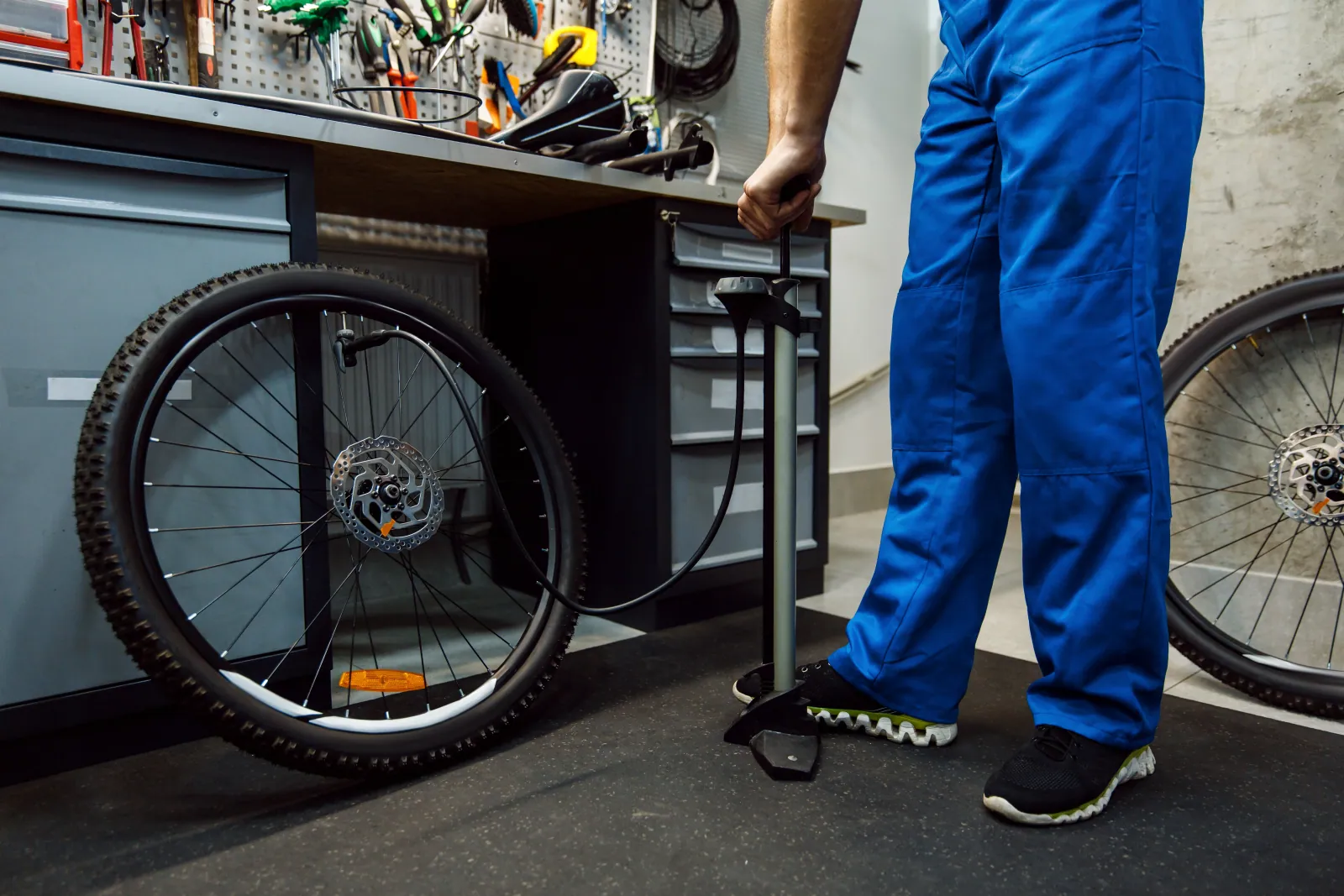
Wholesale floor pumps, workshop, analog gauge
Heavy-duty steel barrel wholesale floor pumps · Large analog gauges (2.5"–3.5" face) for fast reading · Durable handle and base · Premium wholesale dual valve bike pump heads · Wholesale bike pumps with gauge built for daily high-frequency service
The volume workshop wholesale bicycle pump category.
Wholesale floor pumps, workshop, digital gauge
Precision digital gauge to 0.1 psi · Wholesale bike pumps with gauge for wholesale road bike pumps pressure precision and tubeless seating · Battery-powered display (typical life 1–2 years) · Premium tier above analog wholesale floor pumps
Where exact pressure matters for performance or tubeless tire seating.
Wholesale floor pumps, home
Consumer-grade wholesale floor pumps · Smaller analog gauges · Colour and styling for retail merchandising · Lower price point for lower service frequency
The volume retail-resale wholesale bicycle pump category for home use.
Wholesale high pressure bike pumps
Wholesale road bike pumps with barrel and seal designs optimized for 160+ psi · Often a smaller gauge face for road-pressure precision · Wholesale high pressure bike pumps for workshop and home tiers
For the maximum pressures some road tires require.
Wholesale mountain bike pumps, high-volume
Larger barrel diameter wholesale mountain bike pumps moving more air per stroke at lower max pressure (typically 60–100 psi) · Often dual-mode (high-pressure / high-volume)
Reach the working pressure of wide tires faster with fewer strokes.
Wholesale dual valve bike pumps, Presta/Schrader
Wholesale Presta valve pumps (road, high-end MTB) and wholesale Schrader valve pumps (entry MTB, BMX, kids, many e-bikes) in one head · Smart heads auto-detect and seal · Wholesale dual valve bike pumps fitting both valve systems without manual swap
The convenience standard for shops serving customers with mixed valve types.
Wholesale tubeless bike pumps
Wholesale tubeless bike pumps with a high-pressure charging chamber that releases a burst to seat tubeless tires · Pump body, chamber gauge, and release mechanism · Workshop and home tiers
Workshop-essential for shops doing tubeless installations regularly.
Wholesale mini bike pumps and wholesale CO2 inflators
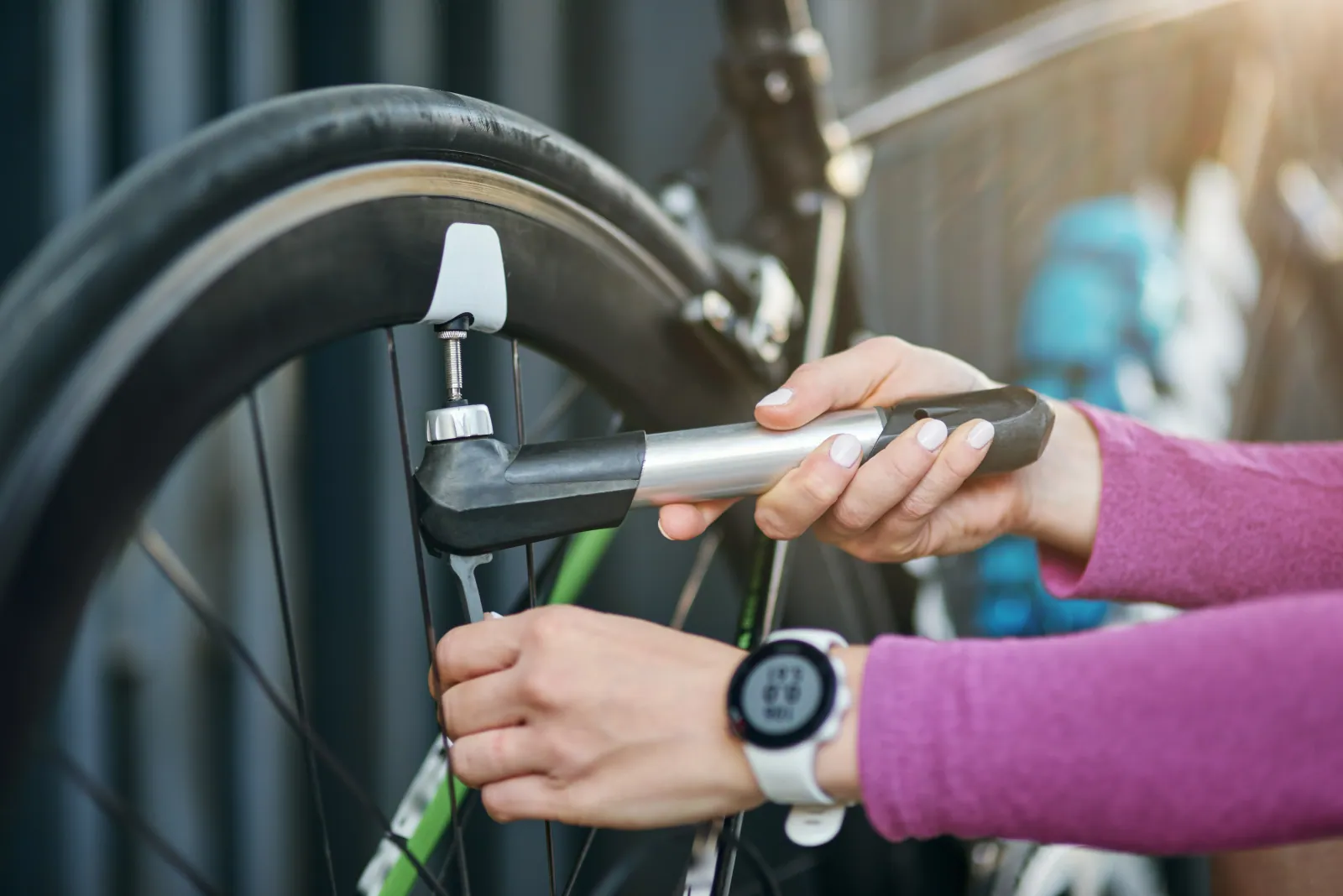
Wholesale mini bike pumps (wholesale portable bike pumps and wholesale compact bike pumps) for frame mounting · Wholesale hand bike pumps across high-pressure road, high-volume MTB, and mid-volume balanced designs · Wholesale CO2 inflators and wholesale bicycle inflators with 12g/16g/20–25g cartridges · Cartridges ship as UN 2037 dangerous goods or are sourced locally
Roadside-emergency inflation; both CO2 options confirmed at quote stage.
A B2B bike pump supplier covering both workshop and retail-resale buyer needs.
Workshop and retail-resale under one supplier
Wholesale floor pumps for shops' own service operations alongside retail-tier home pumps for customer resale, sourced through one wholesale supplier relationship. As an international bike pump supplier and global bike pump supplier, one quote, consolidated shipments, and one set of payment terms across the full wholesale bike pump range, rather than juggling multiple suppliers across the pump category.
Wholesale pricing on a strong-attachment-rate category
Direct-from-supplier wholesale bike pump prices on a category with strong retail margin and strong workshop-service attachment. Pumps sell at retail with margin (customers don't shop them on price), and workshops use pumps daily, both audiences buy at meaningful volume across the year. Tier pricing improves as your volume grows.
Ryden-branded range + private label bike pumps
We supply Ryden-branded wholesale bike pumps; brand-name pumps are quoted case by case. Custom bike pumps wholesale and private label bike pumps are viable on volume wholesale floor pumps and wholesale mini bike pumps, customers shop on performance, gauge accuracy, and price more than on brand in those sub-categories. Premium digital-gauge and wholesale tubeless bike pumps rely more on brand credibility; we're honest about where each path works.
DG freight handling for wholesale CO2 inflators
Wholesale CO2 inflators ship with UN 2037 compressed-gas cartridges that require dangerous-goods freight declarations (IATA for air, IMDG for ocean). Most accessory wholesalers avoid this category to skip the DG paperwork. We handle IATA/IMDG declarations, restricted-carrier routing, and DG-compliant packaging as standard for cartridge orders, which means wholesale CO2 inflators are genuinely available rather than nominally listed. An inflator-without-cartridges option is available to avoid DG freight entirely.
Branded pumps across the categories where the commercial logic works.
Pumps are a strong private-label category at the volume tier, with mixed viability at the premium end. The honest framing: customers buying volume floor pumps (home floor pumps for retail resale, basic workshop pumps for shop service operations) shop on performance, gauge accuracy, and price more than on brand, these work well for private label. Customers buying premium workshop pumps (digital-gauge precision pumps, tubeless burst pumps) often shop heavily on brand credibility built around precision (Topeak, Lezyne, Park Tool, Silca equivalents), a launch-stage private-label premium tier struggles to compete with established brands in this audience.
We extend custom bike pumps wholesale and private label bike pumps across wholesale floor pumps with analog gauges (entry and mid-tier), home wholesale floor pumps (the volume retail-resale category), wholesale dual valve bike pumps, wholesale high pressure bike pumps (entry and mid-tier), wholesale mountain bike pumps (entry and mid-tier), and wholesale mini bike pumps (across the road/MTB/balanced range), at 25 units per SKU with 3-week sample turnaround and 2–3 months from sample sign-off. Premium digital-gauge workshop pumps, wholesale tubeless bike pumps, and premium-brand mini pumps are outside private-label scope at launch; brand-name options are quoted case by case. Wholesale CO2 inflators are also limited for private label at launch, engineering depth on CO2 valve systems and cartridge compatibility requires established supplier relationships.
Enquire about private-label pumpsSpecs that determine whether a wholesale bike pump performs, reads accurately, and lasts.
Pumps are evaluated on a specific set of pressure capability, gauge accuracy, valve compatibility, and construction variables that matter differently across workshop and home use cases. The specs that matter:
Maximum pressure rating
Pumps are rated for maximum pressure (the highest pressure the pump can reach). Common ranges: 160+ psi for wholesale high pressure bike pumps and wholesale road bike pumps, 100–160 psi for general-purpose pumps, and 60–100 psi for wholesale mountain bike pumps. The pump's maximum rating should comfortably exceed the highest pressure the user will pump, pumping at maximum rated pressure repeatedly stresses seals and shortens pump life. Maximum pressure is named per wholesale bike pump SKU.
Gauge type and accuracy, analog versus digital
Pump gauges read tire pressure during pumping. Analog gauges use a mechanical needle on a scaled dial (face sizes typically 2"–3.5" diameter, larger face is easier to read); they read instantaneously, need no batteries, and are typically ±2–5% accurate depending on quality. Digital gauges use electronic pressure sensors with digital displays, typically ±0.1–0.5 psi or better (substantially better than analog), useful for wholesale tubeless bike pumps where pressure precision affects seating, and for wholesale road bike pumps customers where exact pressure matters. Digital gauges are battery-powered (typical life 1–2 years, with auto-off to extend it) and at a higher price tier. Wholesale bike pumps with gauge are named per SKU for type, accuracy, and face size.
Gauge accuracy and calibration
Gauge accuracy varies by type and quality tier. Workshop-grade wholesale bike pumps with gauge using premium analog gauges achieve about ±2% accuracy; digital gauges achieve ±0.5 psi or better; consumer-grade pumps may run ±2–5% or wider. Premium digital gauges may include calibration adjustment for users who verify against a reference standard. Accuracy is named per wholesale bike pump SKU.
Gauge face size
Analog gauge face diameter affects readability during pumping. Workshop pumps typically use 3"–3.5" faces (large, clear, readable from a standing position); home pumps typically use 2"–2.5" faces; high-pressure road pumps sometimes use smaller faces optimized for the road-pressure range (showing 80–160 psi in detail). Face size is named per SKU.
Valve compatibility, Presta, Schrader, and combination heads
Presta valves are slim, threaded stems used on road bikes and high-end MTB (sealed by an internal pin the rider unthreads). Schrader valves are wider, automotive-style valves used on most entry-tier MTB, BMX, kids’ bikes, and many e-bikes. The pump head must fit the valve type, via one of three approaches: single-head wholesale Presta valve pumps or wholesale Schrader valve pumps (lighter, fits one type), switchable dual-head (a reversible internal seal the user manually swaps), or wholesale dual valve bike pumps with smart auto-detect heads (seal around either valve without manual swap, the convenience standard for mixed-valve shops). The approach is named per wholesale bicycle pump SKU.
Pump head security, clamp versus thread-on
Clamp heads (lever-actuated, snap onto the valve) give fast on/off and are the volume standard for floor pumps. Thread-on heads (screw onto the valve) give more secure attachment with less valve-damage risk, used on some premium pumps and most mini pumps. Hose-extended heads (on a flexible hose rather than the barrel) ease access to low-profile rims and recessed valves. The head type is named per SKU.
Barrel construction, material and durability
Workshop pumps typically use steel barrels (heavier, more durable, longer service life). Home pumps often use aluminium barrels (lighter, less expensive). Mini pumps use lightweight aluminium or composite construction to minimize carry weight. Barrel material is named per SKU.
Stroke volume, air moved per stroke
Pumps move air per stroke. High-volume pumps (MTB-oriented) move more air per stroke at lower maximum pressure; high-pressure pumps (road-oriented) move less air per stroke but reach higher maximum pressures; dual-mode pumps switch between modes by user action. Stroke characteristics are named per SKU.
Base design and stability
Floor pumps require stable bases that don't tip during pumping. Wider bases provide more stability but take more floor space; workshop pumps typically use heavier, wider bases, and some include foot pegs the user steps on for additional stability. Base design is named per SKU.
Handle design and ergonomics
Handles vary in shape, material, and length. T-handles (the traditional design) provide good leverage; foam-wrapped handles add grip comfort during sustained pumping; workshop pumps often use larger handles for two-hand operation during high-frequency service. Handle design is named per SKU.
Hose length and flexibility
Hose length affects valve accessibility. Longer hoses (60–90cm) ease access to recessed valves on low-profile rims and to bikes in repair stands; shorter hoses (30–50cm) keep the pump compact. Workshop pumps typically use longer hoses. Hose length is named per SKU.
Tubeless burst pump charging chamber capacity
Wholesale tubeless bike pumps include a separate charging chamber the user fills with high-pressure air before releasing for tire seating. Chamber capacity is measured in litres or psi-capacity; larger chambers seat wider rims and tires more reliably. Workshop wholesale tubeless bike pumps typically have 2–3L charging chambers; home-tier versions have smaller chambers. Chamber capacity is named per SKU.
Mini pump pressure-volume ratio
Wholesale mini bike pumps and wholesale portable bike pumps balance pressure capability against pumping effort and total inflation time. Road-focused mini pumps (high-pressure) use a smaller chamber per stroke, reach 100+ psi, and take more strokes, compact for jersey-pocket or saddle-bag carry. MTB-focused mini pumps (high-volume) use a larger chamber per stroke, reach 40–60 psi, and take fewer strokes, physically larger. Balanced mid-volume designs split the difference for mixed use. The ratio is named per wholesale hand bike pumps SKU.
CO2 inflator cartridge compatibility
Wholesale CO2 inflators use threaded or non-threaded cartridges in sizes 12g (small, partial road inflation), 16g (standard for road, partial for wider tires), and 20–25g (for MTB and wider road tires). The inflator design must match the cartridge type. Wholesale bicycle inflators are named per SKU for cartridge type and compatibility.
Dangerous-goods freight handling for CO2 cartridges
CO2 cartridges classify as UN 2037 compressed gas under international dangerous-goods regulations. Air freight requires IATA declarations and shipper certification; ocean freight requires IMDG declarations. Shipments must use restricted carrier networks accepting DG freight, and packaging must meet DG requirements (UN-certified inner packaging, outer packaging with hazard labels). Order quantities affect classification, small quantities may qualify for limited-quantity exceptions; large quantities require full DG handling. We handle DG declarations as standard for cartridge orders; the quote stage confirms freight options and surcharges per market.
Track pumps (specialty velodrome pumps) are limited at launch, narrow buyer audience. Electric / automatic pumps (electric tire inflators) are outside scope at launch, engineering depth and warranty requirements beyond launch capacity. Industrial compressor systems for high-volume shop installations are outside our cycling-specific scope. Wholesale foot bike pumps sit outside our cycling-specific scope at launch. Highly specialty pumps for fat bikes (very high volume, very low pressure) are limited at launch.
Wholesale bike pump freight varies by sub-category, with DG for CO2.
Freight: ranges from light to moderate, plus DG for CO2
Wholesale bike pump freight ranges widely. Wholesale mini bike pumps ship light and small; wholesale floor pumps ship moderate-to-large depending on barrel size and base design; workshop pumps with metal bases and large gauge assemblies ship at the heavier end. Per-SKU freight ranges from low (mini pumps, parcel courier) to moderate (floor pumps) to higher (tubeless burst pumps and workshop pumps, often pallet for larger orders). Wholesale CO2 inflators trigger dangerous-goods handling, UN 2037 classification, IATA or IMDG declarations, restricted carriers, DG-compliant packaging, and DG surcharges. The inflator-without-cartridges option avoids DG freight entirely, many buyers prefer "inflator device only" SKUs with cartridges sourced locally; we offer both. International freight from the origin port is quoted per shipment.
Packing: retail-ready, with DG-certified packaging for cartridges
Wholesale bike pumps ship in retail-ready packaging where they're sold through to end customers. Workshop wholesale floor pumps ship in larger boxes with protective foam around the gauge assembly; home wholesale floor pumps ship in retail-merchandising-friendly packaging for floor display; wholesale mini bike pumps ship in compact retail packaging with mounting hardware where applicable. Wholesale CO2 inflators with cartridges ship in DG-certified inner packaging with appropriate outer packaging, hazard labels, and shipping documentation. Workshop-bulk packing is available for shops with display setups.
Workshop service: service-light, with real consumables
Wholesale bicycle pumps are mostly service-light, but a few notes matter. Gauge-accuracy verification is workshop best practice, periodically checking the pump gauge against a known-accurate reference confirms it hasn’t drifted. Pump-head seal replacement is occasional service for heavily used pumps; head seals wear and lose grip on valves over time. Pump-hose replacement is occasional, hoses can develop pinhole leaks after years of use. CO2 inflator seal inspection is best practice, the seal between inflator and cartridge can wear and cause venting before tire engagement. We supply replacement pump heads, seals, and hoses as service consumables on selected wholesale bicycle pump SKUs.
Tell us what your shop needs.
We'll come back within 2 business days, Mon–Fri with honest numbers: unit cost at your volume, MOQ per SKU, lead time, freight estimate including DG handling where applicable, and gauge-accuracy verification. No generic wholesale bike pump prices; every quote reflects your volume, destination, and sub-category mix.
From quote to delivery.
- 1
You enquire
Quote request submitted with your shop type, sub-categories of interest, primary use, gauge preference, and CO2 handling preference where applicable.
- 2
We reply with real numbers and DG details
Within 2 business days, Mon–Fri: unit cost at your volume, MOQ per SKU, lead time, freight estimate including DG surcharges for CO2 cartridge orders where applicable, and gauge-accuracy verification per SKU. Your quote is your wholesale bike pump catalog and bicycle pump wholesale catalog for that order.
- 3
Sample if private label or first stocking
Approve physical samples before any full production for custom bike pumps wholesale or private label bike pumps, or sample SKUs from the range if you’re stocking for the first time and want to verify pump performance, gauge accuracy, and build quality before committing.
- 4
Order, deposit, production or pick
Order confirmed. Stock items dispatch from our supplier on the agreed schedule. Private label runs to the confirmed production lead time. We keep you updated on every order by email or WhatsApp.
- 5
DG freight, customs, delivery
Shipped on agreed Incoterms with DG declarations and packaging handled for any wholesale CO2 inflators with cartridges. Parcel courier for small reorders; pallet for bulk; CO2 cartridge orders ship via DG-compliant carrier networks.
What buyers actually ask about wholesale bike pumps.
Do you supply both workshop-grade and home-tier wholesale floor pumps?
Yes. Workshop wholesale floor pumps (heavy-duty construction, large gauges, designed for daily high-frequency service) and home wholesale floor pumps (lighter construction, retail-friendly styling, lower price point) are both stocked. Both wholesale bicycle pump tiers are available, so workshop buyers stocking their own service operations and bike shops sourcing retail inventory find appropriate SKUs.
Do your wholesale floor pumps include digital gauge options?
Yes. Premium wholesale bike pumps with gauge featuring digital gauges (typically ±0.5 psi or better) are stocked alongside analog-gauge workshop pumps. Digital gauges matter for wholesale tubeless bike pumps where pressure precision affects seating, and for wholesale road bike pumps customers where exact pressure affects performance.
What's the difference between Presta and Schrader valves, and do your pumps fit both?
Presta valves are slim, threaded valves used on road bikes and high-end MTB. Schrader valves are wider, automotive-style valves used on most entry-tier MTB, BMX, kids’ bikes, and many e-bikes. Wholesale dual valve bike pumps auto-fit both: most of our floor pumps use smart dual-head designs (automatically fit both without manual swap) or switchable dual-head designs (manual swap between configurations). Wholesale Presta valve pumps and wholesale Schrader valve pumps are also available as single-head, and mini pump heads are named per SKU.
Do you supply wholesale tubeless bike pumps for tire seating?
Yes. Wholesale tubeless bike pumps with high-pressure charging chambers are stocked across workshop and home tiers. Chamber capacity ranges from 2–3L (workshop) to smaller chambers (home). Essential for shops doing tubeless installations regularly.
Do you supply wholesale high pressure bike pumps for 160+ psi tire pressures?
Yes. Wholesale high pressure bike pumps and wholesale road bike pumps with barrel and seal designs optimized for road pressures are stocked at workshop and home tiers. Most reach 160–200 psi maximum rating, comfortably exceeding the working pressure of any standard road tire.
Do you supply wholesale CO2 inflators?
Yes. Wholesale CO2 inflators and wholesale bicycle inflators with 12g, 16g, and 20–25g cartridge compatibility are stocked at launch, available with cartridges (dangerous-goods freight handled) or as inflator devices only with cartridges sourced locally. Both options are confirmed at the quote stage.
Do you handle dangerous-goods freight for CO2 cartridges?
Yes. CO2 cartridges classify as UN 2037 compressed gas under international DG regulations. We handle IATA declarations for air freight, IMDG declarations for ocean freight, DG-compliant packaging with hazard labels, and DG-restricted carrier routing. The inflator-without-cartridges option is available to avoid DG entirely. Some markets have additional import restrictions on CO2 cartridges; the quote stage confirms restrictions and freight options per market.
Can you supply inflator devices without cartridges to avoid DG freight?
Yes. Many buyers prefer to source CO2 cartridges locally rather than handle DG freight on cartridge imports. We supply inflator devices on their own, with customers sourcing cartridges through their local distribution.
What gauge accuracy do your wholesale bike pumps with gauge provide?
Premium digital gauges achieve ±0.5 psi or better. Premium analog gauges on workshop pumps achieve approximately ±2% accuracy. Consumer-grade home pumps with standard analog gauges typically run ±2–5% tolerance. Accuracy is named per wholesale bike pump SKU.
Do you supply wholesale mini bike pumps for frame mounting?
Yes. Wholesale mini bike pumps and wholesale portable bike pumps across the road, MTB, and balanced spectrum, road-focused (high-pressure, smaller chamber, more strokes), MTB-focused (high-volume, larger chamber, fewer strokes), and mid-volume balanced designs. Wholesale compact bike pumps and wholesale hand bike pumps for roadside emergency inflation are named per SKU.
What materials are your pump barrels and bases made from?
Workshop pumps typically use steel barrels for durability under daily high-frequency use, often with cast metal or composite bases. Home pumps often use aluminium barrels with composite bases for lighter construction at lower price points. Mini pumps use lightweight aluminium or composite materials to minimize carry weight. Each is named per SKU.
Do you supply replacement pump heads, seals, and hoses for service work?
Yes. Replacement pump heads, head seals, and hoses are available as service consumables on selected wholesale bicycle pump SKUs for warranty and customer service work. Pump-head wear is the most common service issue for heavily used pumps; affordable replacement parts extend pump lifespan.
What is the warranty on wholesale bike pumps?
Manufacturing-defect coverage on barrel, gauge mechanism, pump head, base, and hose for 12 months, with gauge accuracy warranted within manufacturer specifications. Wear from normal use (hose flexibility loss, seal compression, gauge drift after extended use) is not covered. Customer damage from misuse or modification is not covered.
Can you supply custom bike pumps wholesale for cycling clubs and corporate events?
Yes, with practical scope. Custom branding on our standard wholesale bike pump range (adding logos to the barrel or base) is available at 100 units. Wholesale mini bike pumps and small floor pumps are commonly branded for cycling-club starter kits and corporate event giveaways; workshop pumps less so.
Can you supply a starter wholesale bike pump inventory for a new shop or workshop?
Yes. The quote stage confirms a starter inventory based on your shop type and target customer mix (retail focus, workshop service focus, or both) and the pump categories your customers genuinely buy.
What is the MOQ for wholesale bike pumps?
25 units per SKU across wholesale bike pumps. Custom bike pumps wholesale and private label bike pumps run from 25 units per SKU on the volume tiers. MOQ is confirmed per category at the quote stage.
How do I open a bike pump wholesale account?
Two paths. Single-category quotes do not require an account, request a quote and we respond with numbers. Apply for a bike pump wholesale account when you want ongoing supply, access to the full wholesale bike pump catalog, and tier pricing. Applications are reviewed within 2 business days, Mon–Fri.
Do you offer a wholesale bike pump catalog?
We do not publish a static wholesale bike pump catalog or bicycle pump wholesale catalog with fixed prices, because wholesale bike pump prices vary by volume, destination, gauge type, and CO2 handling. Your quote is your catalog, it names the SKUs, specs, and prices that apply to your order.
Can I get custom bike pumps wholesale or private label bike pumps?
Yes, on volume tiers. Custom bike pumps wholesale and private label bike pumps run across wholesale floor pumps (analog, entry and mid-tier), home wholesale floor pumps, wholesale dual valve bike pumps, wholesale high pressure bike pumps, wholesale mountain bike pumps, and wholesale mini bike pumps at 25 units per SKU. Premium digital-gauge workshop pumps, wholesale tubeless bike pumps, and wholesale CO2 inflators are outside private-label scope at launch; brand-name options are quoted case by case.
Do you supply electric or compressor-powered tire inflators?
Not at launch. Electric tire inflators require engineering and warranty depth beyond launch capacity. Industrial compressor systems for high-volume shop installations are outside our cycling-specific scope.
Stock the categories that pair with wholesale bike pumps.
The cross-link pattern here is the genuine workshop and service attachment for pump buyers, the tools, equipment, and tire categories pumps work alongside.
Ready to source wholesale bike pumps covering both workshop service and retail resale?
Wholesale floor pumps with digital and analog wholesale bike pumps with gauge, wholesale high pressure bike pumps, wholesale mountain bike pumps, wholesale tubeless bike pumps, wholesale mini bike pumps, and wholesale CO2 inflators with DG freight handled. Whether you need wholesale Presta valve pumps, wholesale Schrader valve pumps, wholesale dual valve bike pumps, or wholesale portable bike pumps, your quote covers it. Reply within 2 business days, Mon–Fri.