Wholesale Bicycle Chain and Cassette Suppliers: chains and cassettes, the drivetrain pair your workshop replaces together.
Wholesale bicycle chain and cassette suppliers for bike shops and workshops worldwide. We supply wholesale bicycle chains and wholesale bicycle cassettes across wholesale 8 speed bicycle chains through wholesale 12 speed bicycle chains and matching wholesale 8 speed cassettes through wholesale 12 speed cassettes. Shimano HG, Shimano Microspline, SRAM XD, SRAM XDR, and Campagnolo ecosystems. Wholesale bicycle drivetrain parts with chain-cassette pair pricing and standing-order arrangements built around the consumable reorder cycle. From 100 units per chain SKU (cassette MOQs vary by ecosystem and ratio range).
- Wholesale 8 to 12-speed bicycle chains and cassettes
- Shimano + SRAM + Campagnolo ecosystems
- Pair pricing on chain-cassette combinations
- Standing-order arrangements available
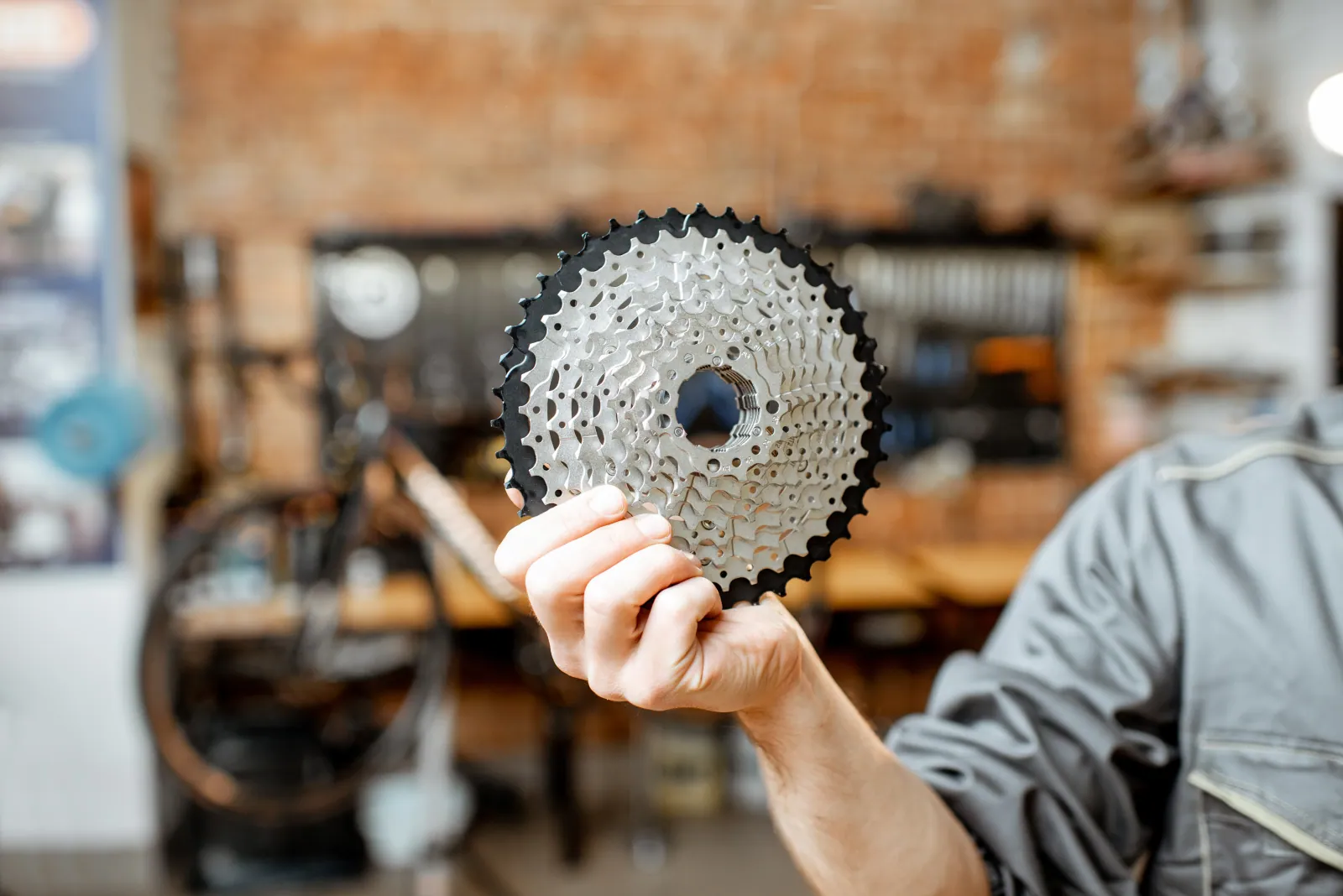
What we supply.
Two product categories that wear together, replaced together, and reorder together in any service-active workshop. Whether you are a bicycle chain supplier for bike shops or a bicycle cassette supplier for bike shops, we have structured our wholesale bicycle chain and wholesale bicycle cassette supply around the consumable reorder cadence rather than treating them as individual wholesale bicycle drivetrain parts: pair pricing, matched compatibility quoting, and standing-order arrangements that reflect the genuine drivetrain wear cycle.
Wholesale 8 and 9 speed bicycle chains
Volume wholesale bike chains for legacy and entry-trim drivetrains · Hollow-pin and solid-pin options · Cross-compatible across Shimano, SRAM, KMC · Quick-link masterlinks supplied
The category that covers older bike service work and entry-trim new bike fitments. Workshop-grade solid-pin remains the volume choice here.
Wholesale 10 speed bicycle chains
Wholesale bicycle chains across Shimano, SRAM, and KMC ecosystems · Hollow-pin on higher trim, solid-pin on workshop-grade · Quick-link masterlinks supplied
10-speed remains common on mid-trim wholesale road bike chains and wholesale mountain bike chains. Mid-volume reorder cadence for service-active workshops.
Wholesale 11 speed bicycle chains
Wholesale 11 speed bicycle chains across Shimano, SRAM (non-Flat-Top), KMC, and Connex ecosystems · Hollow-pin construction across most SKUs
The volume category for current-generation wholesale road bike chains and wholesale mountain bike chains. Largely cross-compatible at the same speed count across major brand ecosystems.
Wholesale 12 speed bicycle chains
Wholesale 12 speed bicycle chains across Shimano MTB, KMC, and Connex · SRAM Flat-Top (AXS road and T-Type MTB) chains not supplied · Flat-Top compatibility checked at quote stage because mixing 12-speed standards is the common quote-stage error
Flat-Top chains require Flat-Top-specific cassettes and chainrings. A Flat-Top chain doesn’t work on a standard 12-speed drivetrain, and vice versa.
Wholesale cassettes, Shimano HG ecosystem
Wholesale 8 speed cassettes through wholesale 11 speed cassettes for Shimano HG freehubs · Ratios from 11-28 to 11-50 depending on speed count · Hyperglide tooth profile
The volume freehub standard for wholesale road bike cassettes and most wholesale mountain bike cassettes through 11-speed. Ratios named per SKU; ratio range named by customer base in your quote.
Wholesale cassettes, Shimano Microspline ecosystem
Wholesale 12 speed cassettes for Shimano Microspline freehubs (Shimano 12-speed MTB standard) · Ratios from 10-45 to 10-51
Microspline-specific tooth profile. The Shimano 12-speed MTB cassette ecosystem; matches the 12-speed Shimano MTB drivetrains.
Wholesale cassettes, SRAM XD ecosystem
Wholesale bicycle cassettes for SRAM XD freehubs (SRAM 11-speed MTB and some 12-speed) · Ratios from 10-42 to 10-52 · XD-specific spline pattern
The volume SRAM MTB freehub standard. Wider ratios than Shimano HG accommodate 1x MTB drivetrains without front derailleurs.
Wholesale cassettes, SRAM XDR ecosystem
Wholesale bicycle cassettes for SRAM XDR freehubs (SRAM 12-speed AXS road and some MTB) · XDR is XD with a wider freehub body to accommodate the wider 12-speed road cassette
Wholesale road bike cassettes for the SRAM AXS ecosystem. XDR-specific freehub, different from XD despite the naming similarity; the wider body is the distinguishing dimension.
Wholesale cassettes, Campagnolo ecosystem
Wholesale bicycle cassettes for Campagnolo freehubs across the Campagnolo speed range · Distinct freehub spline pattern from Shimano and SRAM
Niche supply at launch volumes, confirmed per quote based on demand and your target market. Campagnolo is a smaller portion of our supply chain.
A B2B bicycle chain supplier and B2B bicycle cassette supplier that treats chains and cassettes as the consumable pair they are.
Pair pricing on chain-cassette combinations
Where you source wholesale bicycle chains and wholesale bicycle cassettes together on matched ecosystem and speed-count combinations, we structure quote pricing around the pair rather than each part separately. A workshop fitting a customer’s drivetrain replacement orders the pair; the wholesale bicycle chain prices and wholesale bicycle cassette prices acknowledge that pattern.
Standing-order arrangements for workshop reorder
Wholesale bicycle drivetrain parts reorders are predictable on a service-active workshop cycle: chains and cassettes wear together, replacement happens at workshop service intervals, and reorder cadence follows the shop’s customer base. Standing-order arrangements at agreed reorder intervals reduce the friction of repeat ordering for bicycle chain suppliers for bike shops and bicycle cassette suppliers for bike shops with consistent demand.
Ryden-branded range + your-brand private label
We supply Ryden-branded wholesale bicycle chains and wholesale bicycle cassettes; brand-name chains and cassettes (e.g. Shimano, SRAM) are quoted case by case. For bicycle chain wholesalers and bicycle cassette wholesalers, the Ryden range and private label give margin headroom on the highest-volume consumables in the drivetrain category, particularly on chains where customers don’t shop by brand the way they shop derailleurs by brand.
Ecosystem compatibility named per SKU
Every wholesale bicycle chain SKU names the speed count and ecosystem compatibility. Every wholesale bicycle cassette SKU names the freehub body, speed count, and ratio range. As an international bicycle chain supplier and international bicycle cassette supplier, a workshop manager confirms compatibility before placing the order rather than discovering it after.
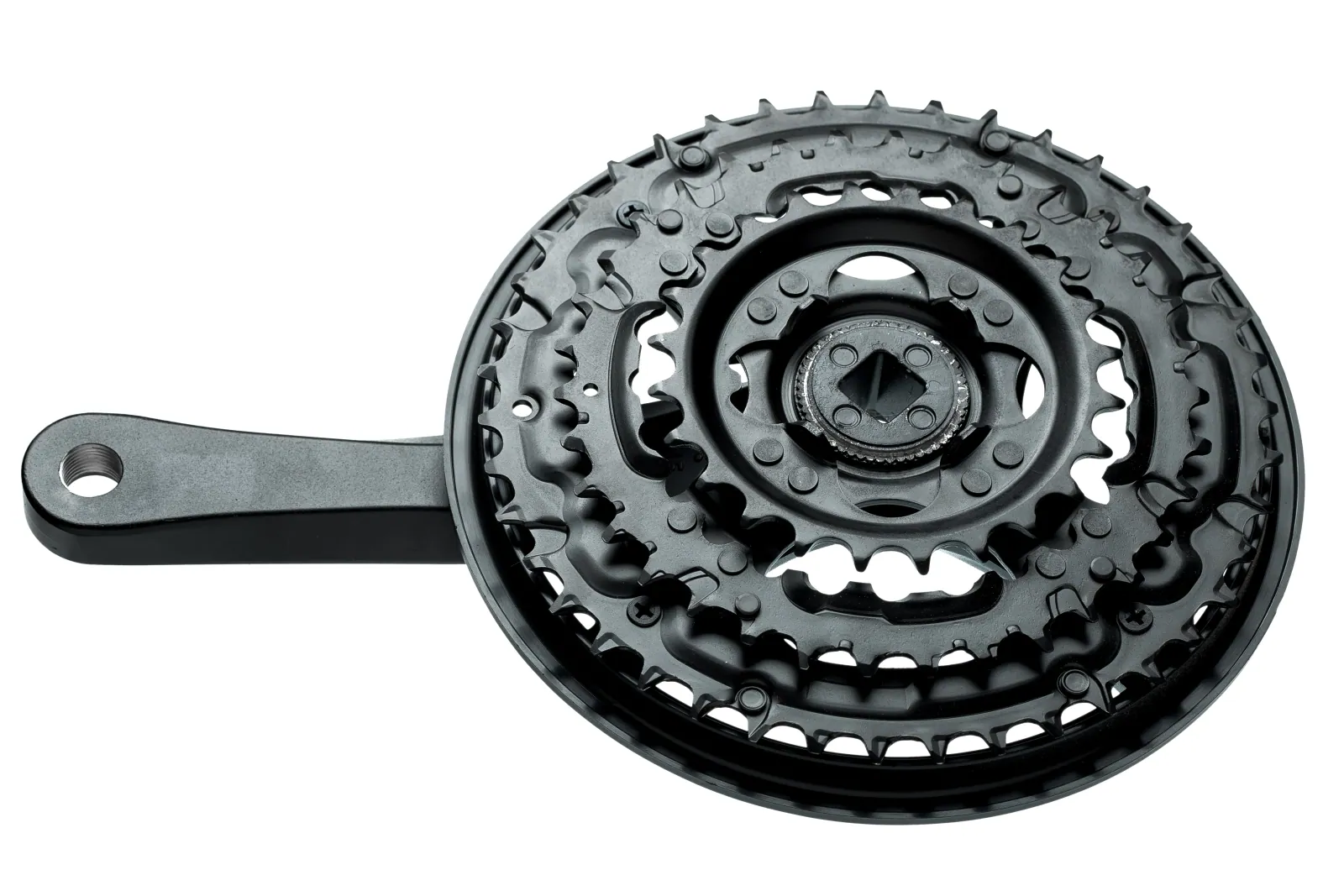
Your brand on the drivetrain consumables your shop replaces most.
Wholesale bicycle chains and wholesale bicycle cassettes are among the strongest private-label candidates in the parts catalog after brake pads and saddles, and for the same underlying reason: customers don’t shop these by brand the way they shop derailleurs and shifters by brand. A customer asking your workshop to fit a new chain doesn’t ask which brand of chain; they ask which chain fits their drivetrain and how long it lasts. Your shop’s branded chain on a customer’s bike for the second or third replacement cycle becomes the chain they ask for by your shop’s name.
We extend custom bicycle chains wholesale and custom bicycle cassettes wholesale at 300 units per chain SKU, with 3 weeks to first sample and 2–3 months from sample approval. Custom bicycle chains wholesale run across wholesale 8 speed bicycle chains through wholesale 12 speed bicycle chains; private-label wholesale bicycle cassettes run across Shimano HG and Shimano Microspline ecosystems at launch, with SRAM XD and XDR additions planned; ask about timing at quote stage.
Enquire about private-label chains and cassettesThe compatibility variables that determine fit, and the wear-pair logic that determines reorder.
Wholesale bicycle chains and wholesale bicycle cassettes are the wholesale bicycle drivetrain parts where compatibility and wear interact more than any other category. A wholesale bicycle chain that’s the wrong speed count doesn’t engage the cassette correctly; a wholesale bicycle cassette that fits the wrong freehub doesn’t mount; a worn chain ruins a fresh cassette by accelerating its wear. The specifications and wear logic together determine what a workshop orders.
Speed count
Wholesale bicycle chains and wholesale bicycle cassettes must match each other and the rest of the drivetrain. Wholesale 8 speed bicycle chains and wholesale 8 speed cassettes work with 8-speed shifters, derailleurs, and cranksets; wholesale 11 speed bicycle chains require wholesale 11 speed cassettes; wholesale 12 speed bicycle chains require wholesale 12 speed cassettes. Mixing speed counts across components produces shifting that doesn’t work, and at higher speed counts (11 and 12) the tolerances are tight enough that even minor mismatches degrade performance. Every chain and cassette SKU names its speed count explicitly.
Brand ecosystem and cross-compatibility (chains)
Wholesale bicycle chains are largely cross-compatible across major brand ecosystems at the same speed count. An 11-speed KMC chain works on a Shimano 11-speed drivetrain, on a SRAM 11-speed drivetrain (excluding SRAM Flat-Top systems), and on a Campagnolo 11-speed drivetrain. The exceptions matter: SRAM Flat-Top chains (used in SRAM AXS road and T-Type AXS MTB 12-speed systems) require the matching SRAM Flat-Top cassette and chainrings; a Flat-Top chain doesn’t work on a standard 12-speed drivetrain, and a standard 12-speed chain doesn’t work on a Flat-Top drivetrain. We don’t supply Flat-Top chains, and we check your drivetrain standard at quote stage to avoid the most common cross-compatibility error.
Freehub body compatibility (cassettes)
The freehub body on the rear wheel hub determines which wholesale bicycle cassettes will physically fit. Shimano HG is the volume freehub standard through 11-speed. Shimano Microspline is required for wholesale 12 speed cassettes in the Shimano MTB ecosystem. SRAM XD covers 11-speed SRAM MTB cassettes and some 12-speed. SRAM XDR covers 12-speed SRAM AXS road and some MTB cassettes (XDR is XD with a wider freehub body to accommodate the wider 12-speed road cassette). Campagnolo has its own freehub standard for Campagnolo cassettes. Every wholesale bicycle cassette SKU names the freehub body it fits.
Cassette ratio range
Wholesale bicycle cassette ratios are expressed as smallest cog to largest cog (for example, 11-28, 11-32, 11-34, 11-46, 10-50, 10-52). Smaller ratio range (11-28) is for road riding with relatively flat terrain; wider ratio range (11-34, 11-46) accommodates climbing and varied terrain; very wide ratio range (10-50, 10-52) is the MTB 1x12 standard for steep climbing without a front derailleur. The ratio range you stock as a bicycle cassette supplier for bike shops depends on your customer base. Each wholesale bicycle cassette SKU names its ratio range. Wholesale bicycle sprockets across the range.
Chain construction: hollow pin versus solid pin
Higher-trim wholesale bicycle chains use hollow-pin construction (the chain pins are drilled through, reducing weight). Workshop-grade wholesale bike chains use solid-pin construction (slightly heavier but more durable in extended use). Hollow-pin chains carry a small weight saving and a small price increase; solid-pin chains carry a small durability advantage. The choice is workshop-determined and the SKU spec sheet names which construction applies per chain.
Quick-link masterlinks
Modern chains include a quick-link masterlink that allows tool-free chain removal and refitment for service. SRAM and KMC chains include their respective quick-link systems; Shimano 11 and 12-speed chains use the Quick-Link masterlink. Each chain SKU ships with the appropriate masterlink. Replacement masterlinks are available as a separate consumable for shops that lose them during service.
Chain wear and cassette wear together (the pair logic)
Wholesale bicycle chains stretch with use: the pins and inner plates wear, lengthening the chain over thousands of kilometers. A stretched chain wears the cassette cogs by riding on them at a slightly different angle than the unworn chain did. The consequence: a fresh chain fitted to a worn cassette skips under load (because the cog teeth are shaped to the worn chain); a worn chain fitted to a fresh cassette wears the fresh cassette rapidly. The practical workshop rule: chain and cassette get replaced together once the chain reaches roughly 0.75% stretch. This is why wholesale bicycle chains and wholesale bicycle cassettes are a consumable pair and why pair pricing reflects how they actually reorder at bicycle chain suppliers for retailers and bicycle cassette suppliers for retailers.
Chain wear measurement tools
Chain wear is measured with a chain wear gauge (a specialized tool that fits between chain links to measure stretch). Most workshops measure customer chain wear at every service to determine whether the chain needs replacement; the workshop tools range carries chain wear gauges across the major standards. Customers without a wear gauge typically replace at fixed kilometer intervals or visible wear signs.
Electronic shifting groupset chains and cassettes are part of the broader electronic drivetrain category that’s outside our launch scope. Shimano Di2 12-speed cassettes (where they have specific Di2-only variants) are outside scope, and SRAM Flat-Top AXS chains and cassettes ship as part of the closed AXS supply chain, so we don’t supply them. Single-speed and fixed-gear chains and cogs are outside scope, so wholesale single speed bike chains sit outside what we supply at launch. Track-specific chains (used on velodrome track bikes with their own dimensional standards) are outside scope.
Dense to ship, simple to service.
Freight is the lowest per-SKU of any wholesale category we supply
Wholesale bicycle chains and wholesale bicycle cassettes ship dense relative to other drivetrain components. A box of chains takes a fraction of the freight footprint of cranksets or wheels; cassettes ship denser still. Per-SKU freight is among the lowest of any wholesale category we supply alongside pedals and cleats. For bicycle chain distributors and bicycle cassette distributors ordering bulk bicycle chains and bulk bicycle cassettes, the freight economics are the most favorable in our catalog. Small-volume reorders move by parcel courier for fast turnaround on workshop stockouts, particularly important for chain reorders when a service-active workshop runs out of a specific speed count and ecosystem combination. International freight from the origin port is quoted per shipment alongside your initial quote.
Retail-ready or workshop-bulk: choose at quote stage
Wholesale bicycle chains ship in retail-ready packaging where they’re sold through to customers (branded boxes with the masterlink, lubricant guidance, and installation notes) and in workshop-bulk packs (multiple chains without retail packaging) where the workshop fits them directly. Wholesale bicycle cassettes ship in retail-ready boxes or in workshop-bulk packs. Quote stage confirms packaging tier per SKU and tier.
Tool requirements split by chain ecosystem and cassette freehub
Wholesale bicycle chain installation requires a chain breaker tool to size the chain to the bike’s chainstay length, and a quick-link tool (or pliers) to engage the masterlink. Some quick-link standards require specific pliers (Shimano Quick-Link in particular has its own engagement procedure); we name the tool requirement per chain SKU. Wholesale bicycle cassette installation requires a cassette tool specific to the freehub standard (Shimano HG, Microspline, SRAM XD, XDR, Campagnolo each use distinct cassette removal tools) and a chain whip to hold the cassette while removing the lockring. The workshop tools range carries cassette tools across all the freehub standards we supply for. Cassette installation torque on the lockring is a standard specification (typically 40 Nm); we supply the torque chart per cassette SKU.
Tell us what your shop needs.
We’ll come back within 2 business days with honest numbers: unit cost at your volume, MOQ per SKU and per pair combination, lead time, freight estimate, and compatibility confirmation across the speed counts and freehub ecosystems you specified. No generic wholesale bicycle chain prices or wholesale bicycle cassette prices; every quote reflects your volume, destination, speed count, and ecosystem mix.
From quote to delivery.
- 1
You enquire
Quote request submitted with your shop type, sub-categories of interest, speed counts you service, brand ecosystems you stock, and pair-ordering preference.
- 2
We reply with real numbers
Within 2 business days: unit cost at your volume, MOQ per SKU and per pair combination, lead time, freight estimate, and compatibility confirmation across the speed counts and freehub ecosystems you specified. Your quote is your wholesale bicycle chain catalog and wholesale bicycle cassette catalog for that order.
- 3
Sample if private label or first stocking order
Approve physical samples before any full production for custom bicycle chains wholesale or custom bicycle cassettes wholesale, or sample SKUs from the catalog if you’re stocking a new ecosystem combination. Nothing goes to a full run until you sign off.
- 4
Order, deposit, production or pick
Order confirmed. Stock catalog items dispatch in around 2 weeks. Standing-order arrangements run on agreed reorder intervals. Private label runs to 2–3 months from sample approval. We keep you updated on every order by email or WhatsApp.
- 5
Freight, customs, delivery
Shipped on agreed Incoterms. Parcel courier for small reorders; pallet for bulk and standing-order arrangements.
What buyers actually ask about wholesale bicycle chains and cassettes.
Are wholesale bicycle chains cross-compatible across brand ecosystems at the same speed count?
Largely yes, with one major exception. An 11-speed KMC wholesale bicycle chain works on Shimano, SRAM (non-Flat-Top), and Campagnolo 11-speed drivetrains. The exception: SRAM Flat-Top chains (used in SRAM AXS road and SRAM T-Type AXS MTB 12-speed systems) require the matching SRAM Flat-Top cassette and chainrings. A Flat-Top chain doesn’t work on a standard 12-speed drivetrain, and a standard 12-speed chain doesn’t work on a Flat-Top drivetrain. This is the most common 12-speed quote-stage error. We don’t supply Flat-Top chains, and we check your drivetrain standard at quote stage to avoid it.
What freehub bodies do your wholesale bicycle cassettes fit?
Shimano HG (the volume standard through 11-speed), Shimano Microspline (wholesale 12 speed cassettes for Shimano MTB), SRAM XD (11-speed SRAM MTB and some 12-speed), SRAM XDR (12-speed SRAM AXS road and some MTB; XDR is XD with a wider freehub body), and Campagnolo. Each wholesale bicycle cassette SKU names the freehub body it fits explicitly.
What’s the wear cycle on a wholesale bicycle chain and cassette pair?
Wholesale bicycle chains typically reach replacement at 0.75% stretch, which corresponds to roughly 3,000–10,000 km depending on use, terrain, and rider weight. Wholesale bicycle cassettes typically last two to three chain replacement cycles if chains are replaced at proper wear intervals; if chains are run beyond wear and damage the cassette teeth, the cassette needs replacement with the chain. This is the consumable pair logic that justifies pair pricing.
What’s the difference between hollow-pin and solid-pin wholesale bicycle chains?
Hollow-pin wholesale bicycle chains have the chain pins drilled through, reducing weight by a small amount but adding a small price increase. Solid-pin wholesale bike chains are slightly heavier and slightly more durable in extended use. Higher-trim wholesale bicycle chains use hollow-pin construction; workshop-grade chains use solid-pin. The SKU spec sheet names which construction applies per chain.
Do you supply wholesale 12 speed bicycle chains and cassettes for Shimano?
Yes. Wholesale 12 speed bicycle chains for Shimano MTB and Shimano Microspline wholesale 12 speed cassettes, covering the Microspline-freehub MTB cassettes and the matching chains. Shimano 12-speed road (in the Shimano Di2 ecosystem) is outside scope per the drivetrain page note on electronic shifting.
Do you supply SRAM Flat-Top AXS wholesale bicycle chains and cassettes?
No. SRAM Flat-Top AXS chains and cassettes are part of the closed AXS supply chain, and we don’t supply them. Our 12-speed chains are standard (non-Flat-Top) chains, and we check your drivetrain standard at quote stage so a Flat-Top drivetrain isn’t quoted a chain that won’t fit. We supply Ryden-branded chains and cassettes; other brand-name parts are quoted case by case.
What’s the warranty on wholesale bicycle chains and cassettes?
12 months of manufacturing-defect coverage on both. Wholesale bicycle chains and wholesale bicycle cassettes are wear items; warranty doesn’t cover wear-related replacement, which is expected as part of the consumable use cycle. The honest answer: defect coverage yes, wear coverage no. Confirmed per SKU in your quote.
Can you supply standing-order arrangements on wholesale bicycle chain and cassette reorders?
Yes. Workshops with predictable reorder demand on specific ecosystem combinations (for example, quarterly reorder of 11-speed Shimano HG cassettes and matching chains) can set up standing-order arrangements at agreed intervals. Quote stage confirms the arrangement structure based on your reorder cadence and customer base.
Do you supply masterlinks separately for shops that lose them in service?
Yes. Replacement masterlinks across the wholesale bicycle chain ecosystems we supply are available as a separate consumable for bicycle chain suppliers for bike shops. A useful add-on for service-active workshops where masterlinks occasionally walk off during service.
Do you supply Campagnolo wholesale bicycle cassettes?
Yes, on a niche-supply basis at launch. Quote-stage confirmation depending on speed count and ratio requested. Campagnolo is a smaller portion of our supply chain at launch; we expand if demand develops in your market.
Do you supply track-specific chains and cogs (for velodrome track bikes)?
Not at launch. Track chains use distinct dimensional standards from road and MTB chains and have a closed supply chain at our launch volumes.
Do you supply wholesale single speed bike chains and cogs?
Not at launch. Wholesale single speed bike chains and fixed-gear drivetrain components are outside our launch scope; a separate enthusiast category to develop later.
Can you supply a starter wholesale bicycle chain and cassette inventory for a new shop?
Yes. Quote stage confirms a starter inventory based on your target customer mix (wholesale road bike chains and cassettes, wholesale mountain bike chains and cassettes, gravel, mixed) and your service capability. The order pattern field on the form flags this so the reply structures appropriately, since a sample-first starter quote looks different from an ongoing-reorder quote.
What is the MOQ for wholesale bicycle chains versus wholesale bicycle cassettes?
Wholesale bicycle chains and wholesale bicycle cassettes start from 100 units per chain SKU (cassette MOQs vary by ecosystem and ratio range). Custom bicycle chains wholesale and custom bicycle cassettes wholesale start from 300 units per chain SKU. Confirmed per category in your quote.
How do I open a bicycle chain or cassette wholesale account?
Two paths. Single-category quotes don’t require an account. Apply for a bicycle chain wholesale account or bicycle cassette wholesale account when you want ongoing supply, access to the full wholesale bicycle chain catalog and wholesale bicycle cassette catalog, and pair pricing. The application takes 2 business days. Most bicycle chain distributors and bicycle cassette distributors start with a single quote and apply after the first order.
Do you offer a wholesale bicycle chain catalog or wholesale bicycle cassette catalog?
We don’t publish static catalogs with fixed prices because wholesale bicycle chain prices and wholesale bicycle cassette prices vary by volume, destination, speed count, ecosystem, and pair combination. Your quote is your catalog.
Can I get custom bicycle chains wholesale or custom bicycle cassettes wholesale?
Yes. Custom bicycle chains wholesale run across wholesale 8 speed bicycle chains through wholesale 12 speed bicycle chains at 300 units per chain SKU. Custom bicycle cassettes wholesale cover Shimano HG and Microspline ecosystems at launch, with SRAM XD and XDR additions planned; ask about timing at quote stage. Allow 3 weeks to first sample and 2–3 months from sample approval.
What’s the relationship between this page and your drivetrain page?
This page goes deeper on the chain-and-cassette pair logic, the wear cycle, the Flat-Top compatibility detail, and the pair pricing and standing-order arrangements that workshop reorder volumes warrant. The drivetrain page covers the broader wholesale bicycle drivetrain parts category including derailleurs, shifters, cranksets, chainrings, and bottom brackets, which are different commercial categories from chains and cassettes (they aren’t consumable pair items). Both pages share the same operational supply chain; the differentiation is in commercial framing and category-specific depth.
Stock the rest of the drivetrain and the tools to service it.
Wholesale bicycle chain and wholesale bicycle cassette ordering pairs with the broader drivetrain range (this page deepens the pair logic; the drivetrain page covers the full category) and with the workshop tools that fit the consumable pair.
Ready to stock wholesale bicycle chains and cassettes as the consumable pair they are?
Pair pricing on matched ecosystem and speed-count combinations, standing-order arrangements on workshop reorder cycles, compatibility named per SKU. Whether you need wholesale 11 speed bicycle chains, wholesale 12 speed cassettes, wholesale road bike chains, or wholesale mountain bike cassettes, your quote covers it. Reply within 2 business days.