Wholesale Cycling Shoes Suppliers: shoes across road, MTB, gravel, and commuter cleat ecosystems.
Wholesale cycling shoes suppliers for shops worldwide. We supply wholesale road cycling shoes and wholesale road bike shoes (SPD-SL, Look Keo), wholesale mountain bike shoes and wholesale MTB shoes (wholesale SPD cycling shoes), gravel shoes, commuter shoes, wholesale waterproof cycling shoes for winter, wholesale flat pedal cycling shoes for BMX and downhill, and wholesale kids cycling shoes. Wholesale clipless cycling shoes and wholesale cycling shoes with cleats across the major cleat ecosystems. Wholesale mens cycling shoes, wholesale womens cycling shoes. EU sizing standardized. From 25 units per SKU.
- Road + MTB + gravel + commuter + winter + flat-pedal + kids
- Wholesale SPD cycling shoes + SPD-SL + Look Keo cleat compatibility
- EU sizing standardized across supplier base
- From 25 units per SKU
What we supply.
Seven sub-categories of wholesale cycling shoes. Whether you are a cycling shoe supplier for bike shops stocking wholesale road cycling shoes or a cycling shoe supplier for dealers building a wholesale MTB shoes range, we've structured the range around the cleat compatibility and intended riding profile each sub-category serves, because cleat compatibility is the central operational variable that determines which shoes fit which customer's pedal system.
Wholesale road cycling shoes
Wholesale road bike shoes with stiff carbon or composite soles for power transfer · Wholesale lightweight cycling shoes and wholesale breathable cycling shoes · Wholesale clipless cycling shoes with three-bolt cleat systems (SPD-SL and Look Keo) · Retention varies (Boa dial, ratchet, velcro)
The volume category for road specialty retailers.
Wholesale mountain bike shoes and wholesale MTB cycling shoes
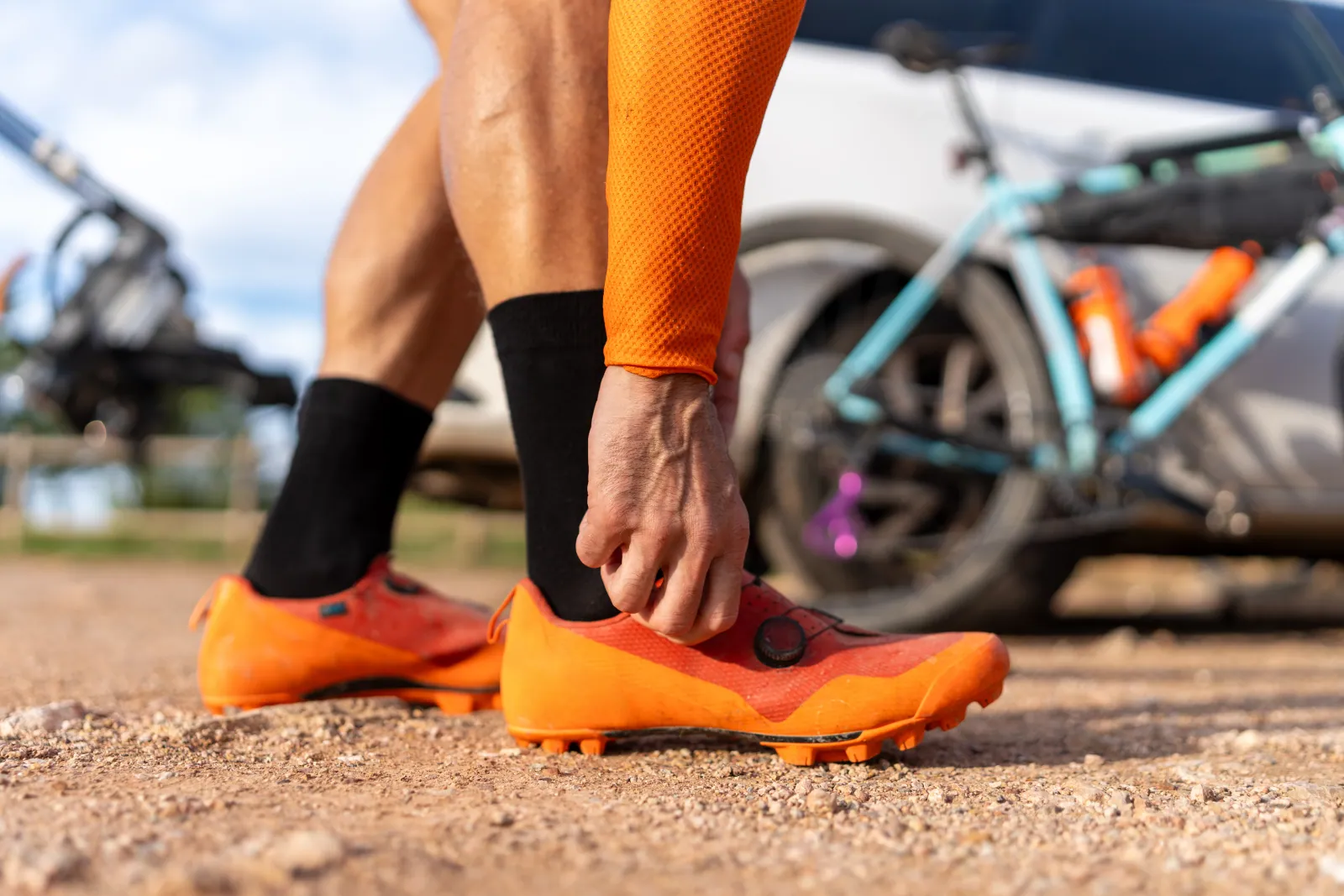
Wholesale MTB shoes with stiff soles for pedaling efficiency and lugged tread for walking rocky terrain · Wholesale SPD cycling shoes with two-bolt compatibility · Wholesale cycling shoes with cleats recessed for walkability
More rugged and durable than wholesale road cycling shoes; the volume category for MTB specialty retailers.
Gravel and adventure cycling shoes
Between wholesale road cycling shoes and wholesale MTB shoes in design, stiffer than typical MTB shoes for road-pace pedaling, with lugged tread for off-road walking · Two-bolt SPD compatibility (the gravel standard) · Wholesale breathable cycling shoes
Designed for longer rides across mixed road and off-road surfaces.
Commuter cycling shoes
Wholesale SPD cycling shoes with recessed cleats for comfortable walking on most SKUs · Weather-resistant uppers · More casual styling · Some wholesale flat pedal cycling shoes (no cleat)
Wholesale bike shoes for daily commuter use, on and off the bike.
Winter cycling boots
Insulated, wholesale waterproof cycling shoes and water-resistant construction · Two-bolt SPD compatibility on most SKUs · Windproof outer membranes · Heavier than typical shoes
Wholesale cycling shoes for sustained cold-weather riding; not appropriate for hot weather.
Wholesale flat pedal cycling shoes
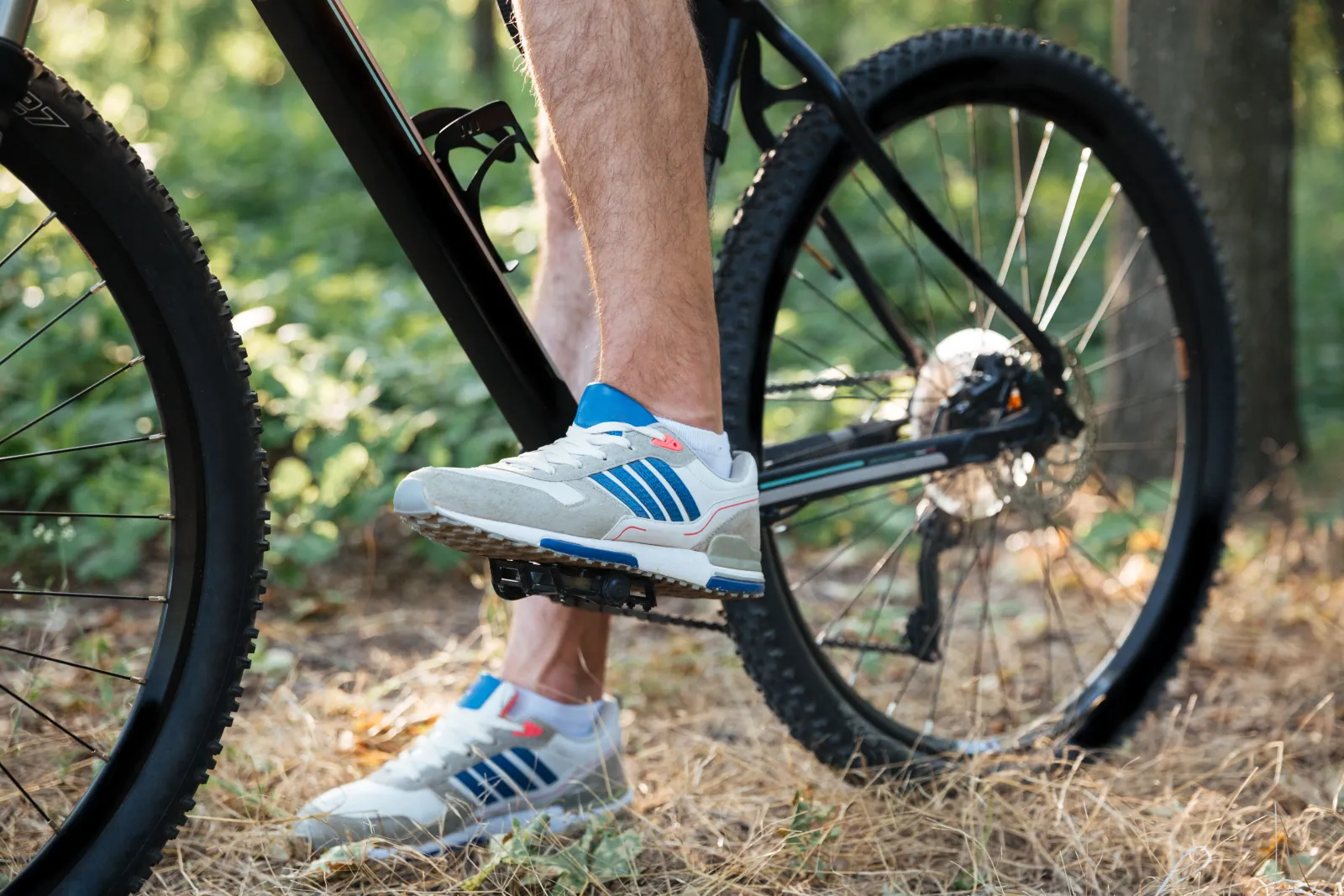
No clipless mechanism · Sticky rubber outsoles for grip on platform pedals with pins · More durable than performance wholesale cycling shoes
Wholesale flat pedal cycling shoes for BMX riders, downhill MTB riders, casual commuters, and any rider on flat pedals.
Wholesale kids cycling shoes
Age-graded sizes (toddler through pre-teen) · Wholesale kids cycling shoes with two-bolt SPD compatibility on most SKUs, plus flat-pedal-compatible options · Simpler retention (velcro, easy-on closures)
Easier on/off without parent assistance; matches the volume pedal ecosystem most kids’ bikes use.
A B2B cycling shoe supplier with cleat compatibility and sizing standardized across the range.
Cleat compatibility named per SKU
Every wholesale cycling shoe SKU names cleat compatibility explicitly, SPD-SL (three-bolt road), Look Keo (three-bolt road), SPD (two-bolt MTB, gravel, commuter), or flat-pedal (no cleat). Cleat compatibility determines whether the shoe works with the customer's pedal system; a road shoe with SPD-SL cleats can't engage MTB SPD pedals, and vice versa. As an international cycling shoe supplier and global cycling shoe supplier, naming compatibility per SKU avoids the discovery moment when the shoe arrives and doesn't fit the customer's pedals.
Wholesale pricing on a strong-margin category
Direct-from-supplier wholesale cycling shoe prices on a category with strong retail margin. Wholesale bike shoes carry good margin because customers shop on fit, cleat compatibility, retention system, and brand more than on price. Tier pricing improves as your volume grows.
Ryden-branded range + private label cycling shoes
We supply Ryden-branded wholesale cycling shoes; brand-name shoes are quoted case by case. For cycling shoe wholesalers and cycling shoe distributors, custom cycling shoes wholesale and private label cycling shoes are viable at entry and mid tier; premium performance wholesale cycling shoes rely heavily on brand credibility built over years (Shimano, Sidi, Specialized, Bont, Lake). We're honest about where each path works commercially.
Standardized EU sizing
Cycling shoe sizing varies wildly across suppliers, a size 43 from one supplier can fit closer to a 42 from another. We've standardized sizing across our supplier base using EU sizing, so a size 43 on one Ryden wholesale cycling shoe SKU fits the same foot as a size 43 on another. This reduces fit-related returns and simplifies your shop's customer recommendations.
Private label cycling shoes at entry and mid tier.
Cycling shoes are a mixed private-label category, similar to other safety-and-fit-critical apparel categories. The honest framing: customers shopping premium performance cycling shoes (the Shimano, Sidi, Specialized, Bont, Lake tier) typically shop heavily on brand credibility built over years of fit refinement, sole-technology development, and customer-ecosystem investment, a launch-stage private-label premium tier struggles to compete with established brands in this audience.
Customers shopping entry and mid-tier cycling shoes focus on cleat compatibility, basic fit, and price, these are commercially viable for private label. Custom cycling shoes wholesale and private label cycling shoes run across entry-tier wholesale road cycling shoes (SPD-SL), entry-tier wholesale MTB shoes (SPD), entry-tier gravel shoes, commuter shoes, basic wholesale flat pedal cycling shoes, and wholesale kids cycling shoes at 25 units per SKU, with 3-week sample turnaround and 2–3 months from sample sign-off. Premium performance wholesale cycling shoes at the carbon-sole, advanced-retention-system tier are outside private-label scope at launch; brand-name options are quoted case by case. Custom branding for cycling clubs and corporate accounts is available on existing wholesale bike shoes at 100 units (adding logos to the standard catalog).
Enquire about private-label cycling shoesSpecs that determine whether a wholesale cycling shoe fits, transfers power, and grips the pedal.
Wholesale cycling shoes are evaluated on a specific set of cleat compatibility, sole construction, retention, fit, and material variables. The specs that matter:
Cleat compatibility, the central technical variable
Cycling shoes attach to pedals via cleat systems, and different systems use different bolt patterns. Three-bolt systems, SPD-SL (Shimano road) and Look Keo (Look road), are used by road racing and performance road shoes; the larger cleat provides better power transfer at the cost of walking comfort (the cleat protrudes from the shoe). Two-bolt systems, SPD (Shimano MTB), the dominant MTB and commuter system, are used by MTB, gravel, commuter, and most walking-compatible shoes; the smaller cleat recesses into the sole for comfortable walking. Wholesale flat pedal cycling shoes have no cleat hardware, using a sticky rubber outsole for grip on platform pedal pins. Wholesale clipless cycling shoes and wholesale cycling shoes with cleats are named per SKU explicitly, a three-bolt SPD-SL shoe can’t engage MTB SPD pedals, and a two-bolt SPD shoe can’t engage road three-bolt cleats. Mismatch is a return scenario.
Sole construction and stiffness
Sole stiffness affects power transfer from the leg to the pedal; stiffer soles transfer power more efficiently but flex less for walking. Carbon soles are stiffest, lightest, and best for power transfer (premium performance road and MTB, the wholesale lightweight cycling shoes tier), at higher cost and less walking comfort. Composite soles (carbon- or glass-reinforced nylon) are mid-tier, a balance of cost and performance. Nylon soles are more flexible, more comfortable for walking, and lower cost (entry-tier and commuter shoes). Rubber/synthetic soles are used on wholesale flat pedal cycling shoes for grip on platform pedals. Sole material and stiffness are named per wholesale cycling shoe SKU.
Sole stiffness rating
Many manufacturers rate sole stiffness on a scale (often 1–12 or similar). Higher numbers indicate stiffer soles for better power transfer; lower numbers indicate more flexibility for walking. We name the stiffness rating per SKU where available.
Retention systems, Boa, ratchet, velcro, lace
Boa dial systems offer continuous fine adjustment via a dial with cable retention, the premium standard, with easy on/off and precise mid-ride adjustment (some shoes use two dials for fit precision). Ratchet straps offer stepped adjustment, common in mid-tier shoes, less precise than Boa but more secure than basic straps. Velcro straps are the simplest retention, common in entry-tier and wholesale kids cycling shoes. Laces are traditional, common in commuter and some classic-styled road shoes. Many shoes use combination systems (for example, a Boa dial at the top with a lower velcro strap). The retention system is named per wholesale bike shoes SKU.
Shoe upper, material and ventilation
Uppers vary by sub-category: synthetic mesh in wholesale breathable cycling shoes for road and warm-weather ventilation; microfiber synthetic leather for durability balanced with breathability; reinforced synthetic uppers in wholesale MTB shoes and gravel shoes for off-road durability; insulated and water-resistant uppers in wholesale waterproof cycling shoes for winter, with windproof outer membranes; and casual-styling uppers in commuter shoes (canvas, leather alternatives) for social use off the bike. Upper material and ventilation are named per wholesale cycling shoe SKU.
Insole and footbed
Most cycling shoes ship with a removable insole that can be replaced with a custom orthotic or aftermarket insole. Standard insoles vary in arch support, entry-tier shoes use basic flat insoles, mid-tier shoes include moderate arch support, and premium shoes include adjustable arch-support systems. Insole type is named per SKU.
Fit width, standard, narrow, wide
Most shoes are designed for a standard foot width; some manufacturers offer narrow and wide options. Customers with non-standard foot widths often struggle to find comfortable shoes, so stocking width variants is a meaningful differentiator. We name fit width per SKU where width options are available; standard width is the default.
EU sizing standardization
Our wholesale cycling shoes range uses EU sizing across all SKUs (size 35 through 48 typical for adult wholesale mens cycling shoes and wholesale womens cycling shoes; wholesale kids cycling shoes in their own age-graded sizing). Sizing is standardized across our supplier base, a size 43 in one Ryden SKU fits the same foot as a size 43 in another. Standard, narrow, and wide fit widths are available on selected SKUs, half-sizes on selected SKUs, and a per-SKU sizing chart with foot-length measurements is available.
Walkability and recessed cleats
Two-bolt SPD wholesale cycling shoes recess the cleat into the sole, allowing comfortable walking off the bike. Three-bolt SPD-SL and Look Keo cleats protrude from the sole, making walking awkward and noisy. Wholesale flat pedal cycling shoes walk normally. This is one of the main reasons commuter, gravel, MTB, and casual customers prefer two-bolt cleat shoes, walking compatibility matters when the rider stops at a coffee shop or walks across a parking lot.
Reflective accents
Commuter and some MTB shoes include reflective accents on the upper or heel for low-light visibility. Reflective features are named per SKU.
Winter shoe-specific features
Winter cycling boots include features specific to cold-weather use: insulation (light to heavy tiers), water-resistant or waterproof membranes, sealed seams on waterproof tiers, extended uppers covering the ankle, and sometimes integrated shoe covers for extreme conditions.
Triathlon-specific cycling shoes with rear pull tabs and rapid-entry retention are limited at launch, the supplier base is narrower and the buyer audience smaller. Specialty time-trial cycling shoes with extreme aerodynamic shapes are outside scope at launch. Shoe-and-pedal integrated systems (pre-bonded cleat-and-pedal combinations) are outside scope. Wholesale indoor cycling shoes are addressed through SPD-compatible road and MTB shoes rather than as a separate range. Specialty industrial or military cycling footwear is outside our launch scope.
Wholesale cycling shoes ship in individual shoeboxes.
Freight: individual shoeboxes at moderate volume per SKU
Wholesale cycling shoes ship in individual shoeboxes, moderate volume per SKU. Per-SKU freight is moderate; reorders move by parcel courier for smaller volumes and pallet for larger orders. Combining shoe orders with other apparel and accessory orders typically consolidates efficiently. For cycling shoe distributors ordering bulk cycling shoes, international freight from the origin port is transparently quoted per shipment.
Packing: retail-ready shoeboxes with the hardware kit included
Wholesale bike shoes ship in retail-ready shoeboxes where they're sold through to end customers (boxed with the shoes, a hardware kit including cleat bolts where applicable, insoles, sizing information, care instructions, and a warranty card). Workshop-bulk packing is available, but the individual shoeboxes typically ship as-is for retail-ready display. Shoes ship laid flat to maintain shape during transit.
Service: fit verification and cleat-compatibility check at the sale
Wholesale cycling shoe fitting is the most critical sale moment for the category, improper sizing leads to discomfort on long rides and dissatisfaction. Workshop staff should measure foot length, confirm width preference, have the customer try the shoe with cycling socks, verify fit in a cycling position, and confirm cleat compatibility with the customer's pedal system before final sale. Cleat installation is a separate workshop operation, typically performed at point of sale or as a paid service.
Tell us what your shop needs.
We'll come back with honest numbers within 2 business days, Mon–Fri: unit cost at your volume, MOQ per SKU and per size, lead time, freight estimate, and cleat-compatibility confirmation. No generic wholesale cycling shoe prices; every quote reflects your volume, destination, and sub-category mix.
From quote to delivery.
- 1
You enquire
Quote request submitted with your shop type, sub-categories of interest, cleat compatibility, sole construction, and retention preferences.
- 2
We reply with real numbers
Within 2 business days, Mon–Fri: unit cost at your volume, MOQ per SKU and per size, lead time, freight estimate, cleat-compatibility confirmation, and size-distribution recommendations. Your quote is your wholesale cycling shoe catalog and bike shoe wholesale catalog for that order.
- 3
Sample if private label or first stocking order
Approve physical samples for custom cycling shoes wholesale or private label cycling shoes before any full production, or sample SKUs from the catalog if you’re stocking a new range and want to verify fit, sole stiffness, and retention system before committing.
- 4
Order, deposit, production or pick
Order confirmed. Stock catalog items dispatch from our supplier on the agreed schedule. Private label runs to the confirmed production lead time. We keep you updated on every order by email or WhatsApp.
- 5
Freight, customs, delivery
Shipped on agreed Incoterms; small reorders by parcel courier, larger orders by pallet.
What buyers actually ask about wholesale cycling shoes.
What cleat compatibility do your wholesale cycling shoes support?
Three-bolt SPD-SL and Look Keo for wholesale road cycling shoes. Two-bolt SPD for wholesale MTB shoes, gravel, and commuter. Flat-pedal for wholesale flat pedal cycling shoes. Named per wholesale cycling shoe SKU: wholesale clipless cycling shoes and wholesale cycling shoes with cleats across the major ecosystems.
Are SPD-SL and SPD interchangeable on wholesale cycling shoes?
No. SPD-SL uses a three-bolt pattern, SPD uses a two-bolt pattern. SPD-SL cleats can't be installed on SPD-compatible shoes (different bolt pattern), and wholesale SPD cycling shoes don't engage SPD-SL pedals (different cleat mechanism). The systems are not interchangeable, customers with SPD-SL pedals need SPD-SL-compatible shoes; customers with SPD pedals need SPD-compatible shoes.
Can customers walk comfortably in your wholesale cycling shoes?
Depends on the shoe. Wholesale SPD cycling shoes (MTB, gravel, commuter) recess the cleat into the sole, allowing comfortable walking off the bike. Wholesale road cycling shoes (SPD-SL, Look Keo) have protruding cleats that make walking awkward and noisy. Wholesale flat pedal cycling shoes walk perfectly comfortably (no cleat).
Is EU sizing standardized across your wholesale cycling shoes range?
Yes. A size 43 on one Ryden wholesale cycling shoe SKU fits the same foot as a size 43 on another. EU sizing across all SKUs, standardized across the supplier base.
What size range do your wholesale cycling shoes come in?
EU sizes 35 through 48 typical for adult wholesale mens cycling shoes and wholesale womens cycling shoes, with half-sizes on selected SKUs. Wholesale kids cycling shoes use age-graded sizing covering toddler through pre-teen ranges.
Do you supply narrow and wide fit options for wholesale cycling shoes?
Selected SKUs. Standard width is the default; narrow and wide options are stocked on selected wholesale bike shoes to address customers with non-standard foot widths. Fit width is named per SKU.
What sole materials do your wholesale cycling shoes use?
Carbon (premium wholesale lightweight cycling shoes for road and MTB), composite / glass-reinforced nylon (mid-tier), nylon (entry and commuter), and sticky rubber (wholesale flat pedal cycling shoes). Sole material is named per wholesale cycling shoe SKU.
What retention systems do your wholesale cycling shoes use?
Boa dial systems (premium retention with fine continuous adjustment), ratchet strap (mid-tier), velcro (entry and wholesale kids cycling shoes), lace (commuter), and combination systems. The retention system is named per wholesale bike shoes SKU.
Do you supply gravel-specific cycling shoes?
Yes. Gravel shoes are designed between road and MTB, stiffer than typical MTB shoes for road-pace pedaling, with lugged tread for off-road walking, and two-bolt SPD compatibility (the gravel standard).
Do you supply wholesale waterproof cycling shoes for winter?
Yes. Insulated, wholesale waterproof cycling shoes and water-resistant winter cycling boots across multiple insulation tiers, with two-bolt SPD compatibility on most SKUs, designed for sustained cold-weather riding.
Do you supply wholesale flat pedal cycling shoes for BMX and downhill?
Yes. Sticky-rubber-outsole wholesale flat pedal cycling shoes designed for flat platform pedals, more durable than performance shoes and built for off-road abuse. Available across BMX-specific, downhill-MTB-specific, and casual flat-pedal styles.
Do you supply wholesale kids cycling shoes?
Yes. Wholesale kids cycling shoes in age-graded sizes with simpler retention systems (velcro, easy-on closures) for easier on/off. Most are SPD-compatible (matching the volume kids' bike pedal ecosystem) or flat-pedal compatible.
Do you supply wholesale indoor cycling shoes?
Wholesale indoor cycling shoes are addressed through SPD-compatible wholesale road cycling shoes and wholesale MTB shoes that work with indoor cycling platforms. Most indoor cycling setups use SPD or SPD-SL compatibility.
Do you supply wholesale breathable cycling shoes for warm weather?
Yes. Wholesale breathable cycling shoes with synthetic mesh uppers for warm-weather ventilation across wholesale road cycling shoes and gravel shoes.
What is the warranty on wholesale cycling shoes?
Manufacturing-defect coverage on sole, upper materials, retention systems, and stitching for 1 year. Wear from normal use (sole wear from walking, upper-material aging from UV exposure, normal padding compression) is not covered. Customer damage from misuse, modification, or crashes is not covered.
Do you supply replacement insoles, retention parts, or shoe components?
Yes. Replacement insoles, Boa dial replacement parts, and other service components are available as separate consumables for warranty service.
Can you supply custom cycling shoes wholesale for cycling clubs?
Yes. Custom branding on existing wholesale bike shoes (adding logos to the shoe upper or heel) is available at 100 units. Full private-label development with new shoe design is more limited at launch.
Can you supply a starter wholesale cycling shoes inventory?
Yes. The quote stage confirms a starter inventory based on your shop's target customer mix and the typical size and cleat-compatibility distribution your customer base shops.
What is the MOQ for wholesale cycling shoes?
25 units per SKU across wholesale cycling shoes. Custom cycling shoes wholesale and private label cycling shoes from 25 units per SKU on entry and mid tier. Confirmed per category at quote stage.
How do I open a cycling shoe wholesale account?
Two paths. Single-category quotes do not require an account. Apply for a cycling shoe wholesale account when you want ongoing supply, access to the full wholesale cycling shoe catalog, and tier pricing. The application takes 2 business days, Mon–Fri.
Do you offer a wholesale cycling shoe catalog?
We do not publish a static wholesale cycling shoe catalog or bike shoe wholesale catalog with fixed prices, because wholesale cycling shoe prices vary by volume, destination, cleat compatibility, and sole construction. Your quote is your catalog.
Can I get custom cycling shoes wholesale or private label cycling shoes?
Yes, at entry and mid tier. Custom cycling shoes wholesale and private label cycling shoes across entry-tier wholesale road cycling shoes, wholesale MTB shoes, gravel, commuter, wholesale flat pedal cycling shoes, and wholesale kids cycling shoes at 25 units per SKU, with 3-week sample turnaround and 2–3 months from sample sign-off. Premium carbon-sole wholesale cycling shoes are outside private-label scope; brand-name options are quoted case by case.
Stock the categories that pair with wholesale cycling shoes.
The cross-link pattern here is the genuine attachment pattern for cycling-shoe buyers, the pedal system the shoes engage with, the broader kit, and the safety pairing.
Ready to stock wholesale cycling shoes with cleat compatibility your customers can verify?
SPD-SL, Look Keo, SPD, and flat-pedal across wholesale road cycling shoes, wholesale mountain bike shoes, gravel, commuter, winter, wholesale flat pedal cycling shoes, and wholesale kids cycling shoes. EU sizing standardized across the supplier base. Whether you need wholesale clipless cycling shoes, wholesale breathable cycling shoes, wholesale waterproof cycling shoes, or wholesale lightweight cycling shoes, your quote covers it. Reply within 2 business days, Mon–Fri.