Wholesale Bicycle Fender and Rack Suppliers: fenders that stop the spray and racks that carry the load.
Wholesale bicycle fender and rack suppliers for bike shops and retailers worldwide. We supply wholesale full coverage fenders, wholesale clip on bike fenders, and wholesale mountain bike fenders alongside wholesale mudguards and wholesale bicycle mudguards. Wholesale commuter bike racks, wholesale touring bike racks, wholesale rear cargo racks, and wholesale bicycle cargo racks for e-bike use. Wholesale rear bike racks and wholesale pannier racks with mounting hardware supplied. From 100 units per SKU on volume commuter fenders and racks, with lower MOQs on mounting hardware and specialty items.
- Wholesale full coverage + clip-on + MTB fenders
- Wholesale commuter + touring + e-bike racks
- Tire width and weight capacity per SKU
- Mounting hardware supplied
What we supply.
Six sub-categories of wholesale bicycle fenders and wholesale bicycle racks. Whether you are a bicycle fender supplier for bike shops stocking wholesale commuter bike fenders or a bicycle rack supplier for bike shops building a wholesale touring bike racks range, we’ve grouped the category around the two distinct product types (fenders for weather protection, racks for cargo carrying), with mounting hardware supplied alongside. Panniers and bag attachments that go on racks are covered on the bags and storage page.
Wholesale full coverage fenders
Front and rear pairs · Mount to fork crown, fork dropouts, seatstay bridge, rear dropouts · Tire widths 28mm to 50mm+ · Steel or aluminum stays
Wholesale bicycle mudguards and wholesale mudguards for serious commuters, touring riders, and weather-aware everyday cyclists. Wholesale road bike fenders and wholesale commuter bike fenders with steel or aluminum stays, polymer or steel fender bodies. The category for complete spray protection.
Wholesale clip on bike fenders
Seatpost or fork-crown attachment · No frame eyelets required · 30–80% of full-coverage spray protection depending on SKU
Quick-attach wholesale bicycle fenders that mount without requiring frame eyelets. Used on performance road bikes, MTB bikes, and any bike without dedicated fender mounts. Less coverage than full-coverage fenders but easier install and removal.
Wholesale mountain bike fenders
Short clip-on bodies · Fork crown or seatstay mounting · Designed for off-road mud spray deflection
Wholesale MTB-specific fenders designed for off-road riding, mounted on fork crowns and seatstays to deflect mud spray. Distinct from wholesale commuter bike fenders in length, attachment, and intended use.
Wholesale commuter bike racks and wholesale rear bike racks
Rated capacity 18–25 kg · Aluminum or steel construction · Standard pannier-clip compatible (8–16mm tube)
Wholesale pannier racks and wholesale rear cargo racks for commuter and general utility cycling. Aluminum construction (lighter) or steel construction (more durable). Mounting via standard frame eyelet patterns. Compatible with most standard panniers and bag attachment systems.
Wholesale touring bike racks and heavy-duty racks
Rated capacity 25–40+ kg · Tubus-compatible mounting on selected SKUs · Reinforced construction for sustained load
Wholesale bicycle cargo racks for touring, bikepacking, and e-bike applications. Often built around touring-specific standards (Tubus-compatible mounting, Surly Wave Rack pattern). E-bike-specific racks rated 25 to 55 kg with integrated rear light mount points on some SKUs.
Rack and fender mounting hardware
Eyelet bolts in standard sizes · P-clips for frames without eyelets · Frame adapters · Replacement stays and mudflaps
Eyelet bolts, P-clips for frames without dedicated mounting eyelets, frame adapters, replacement stays and hardware, rack bag attachment hardware, and mudflaps. The mounting hardware that completes wholesale bicycle fender and wholesale bicycle rack installations.
A B2B bicycle fender supplier and B2B bicycle rack supplier that names weight capacity and frame compatibility per SKU.
Weight capacity and frame compatibility documented per SKU
Every wholesale bicycle rack SKU names the manufacturer-stated rated capacity, the frame mounting pattern, and the panniers and attachment systems the rack is compatible with. Every wholesale bicycle fender SKU names the tire width range it accommodates and the frame mounting requirements. As an international bicycle fender supplier and international bicycle rack supplier, compatibility verification is the buyer’s primary concern; we make it visible at SKU level so a buyer can verify fit before committing to volume.
Wholesale pricing on durable accessory categories
Direct-from-supplier wholesale bicycle fender prices and wholesale bicycle rack prices on structural accessory categories where retail margin is strong. Racks and fenders carry better margin than most commuter accessory categories because customers commit to specific products based on bike compatibility rather than price-shopping. Tier pricing improves as your volume grows.
Ryden-branded ranges plus your-brand private label, honestly scoped
We supply Ryden-branded wholesale bicycle fenders and wholesale bicycle racks; brand-name fenders and racks are quoted case by case. For bicycle fender wholesalers and bicycle rack wholesalers, custom bicycle fenders wholesale and custom bicycle racks wholesale are commercially viable on commuter-grade products; wholesale touring bike racks (Tubus, Surly, Topeak Explorer) rely heavily on brand credibility built over years of touring-load reliability, and are commercially limited for private label at the highest capacity tier.
Mounting hardware supplied
Wholesale bicycle fenders and wholesale bicycle racks ship with the standard mounting hardware required for installation: eyelet bolts, P-clips for frames without eyelets, stays for fenders. Replacement stays, P-clips, and frame adapters are available as separate consumables for non-standard frames. A common workshop pain point is racks and fenders that ship without the hardware needed to install them; we make hardware inclusion explicit per SKU.
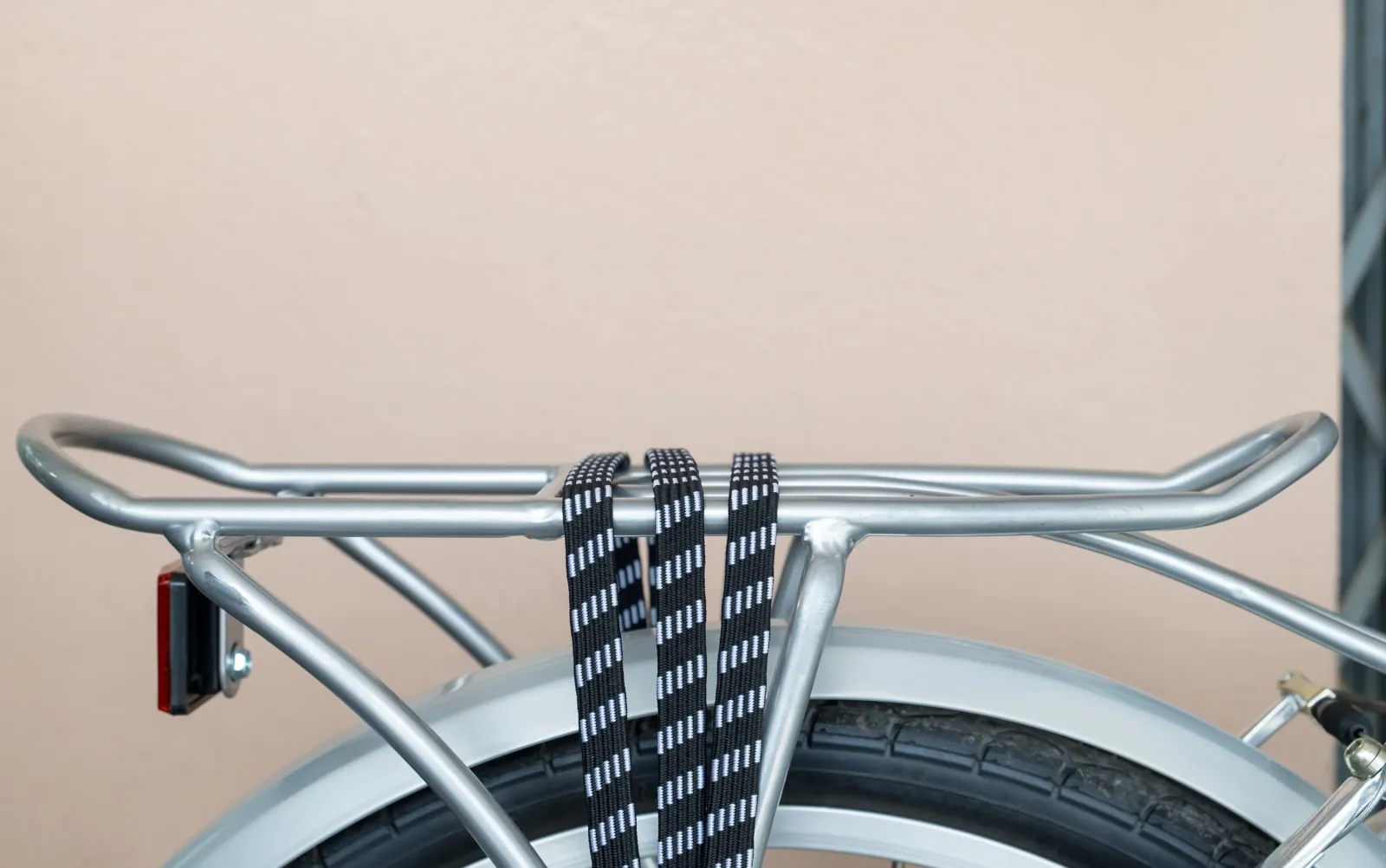
Branded fenders and racks, where the commercial logic works.
Custom bicycle fenders wholesale and custom bicycle racks wholesale split for private label by sub-category. Where private label works: wholesale full coverage fenders, wholesale clip on bike fenders, wholesale mountain bike fenders, and commuter-grade wholesale rear bike racks. Customers shop these on features (tire width compatibility, weight capacity, color match to bike) and price more than on brand. Your shop’s branded commuter fender or pannier-ready rack becomes a routine purchase customers associate with your shop over time.
Where private label is more limited: wholesale touring bike racks, where brand credibility carries significant weight. Established touring rack brands (Tubus, Surly, Topeak Explorer) carry buyer trust built over years of touring-load reliability. A launch-stage private-label touring rack at high capacity can be supplied, but buyers may be skeptical about reliability claims that have not been validated by long-term touring use. We extend volume private label across wholesale commuter bike fenders, wholesale mountain bike fenders, wholesale clip on bike fenders, and wholesale commuter bike racks (up to 25 kg capacity) at 200 units per SKU on commuter fenders and MTB fenders (150 per SKU on commuter-grade racks up to 25 kg), with 3 weeks to first sample and 2–3 months from sample approval. Wholesale touring bike racks are available for private label at 300 units per SKU.
Enquire about private-label fenders and racksSpecs that determine whether a wholesale bicycle fender or rack actually fits and performs.
Wholesale bicycle fenders and wholesale bicycle racks are evaluated on a specific set of frame compatibility and performance variables. Mismatched fenders rub against tires; under-rated racks fail under sustained load. The specs that matter:
Fender tire width range
Wholesale bicycle fenders must accommodate the tire width on the bike. Fender body width must be wider than tire width with adequate clearance for mud and debris. Standard fender widths: 35mm fenders for tires up to 28mm; 45mm fenders for tires 28 to 38mm; 55mm-plus fenders for tires 38 to 50mm; 60mm-plus fenders for fat tires and touring. Mismatched fenders rub against the tire. Wholesale road bike fenders, wholesale commuter bike fenders, and wholesale mountain bike fenders each have specific tire width ranges named per SKU.
Fender frame mounting compatibility
Wholesale full coverage fenders attach to four mounting points: front fender at the fork crown and front fork dropouts; rear fender at the seatstay bridge and rear dropouts. Bikes with dedicated fender eyelets accept standard fenders directly. Bikes without fender eyelets require wholesale clip on bike fenders or P-clip adapters. P-clips can adapt some bikes without eyelets to accept full-coverage fenders, but this requires careful installation. Frame compatibility is named per wholesale bicycle fender SKU.
Fender stays and adjustability
Fender stays connect the fender body to the frame mounting points. Steel stays are more durable; aluminum stays are lighter. Stay adjustability (the ability to fine-tune fender position) varies by design and matters for handling tire-fender clearance. SKS Bluemels (a common premium fender brand) and similar quality fenders include carefully designed stays; cheaper fenders often have less robust stay systems.
Fender clip-on attachment systems
Clip-on fenders attach to the seatpost, fork crown, or other frame points via straps, clips, or quick-release systems. Coverage varies: some clip-ons provide only 30 to 50 percent of the spray protection of full-coverage fenders, others provide near-full coverage. We name coverage approximation per SKU.
Rack weight capacity (rated load)
Rear rack weight capacity ratings reflect the manufacturer’s tested maximum load. Wholesale commuter bike racks typically 18 to 25 kg; wholesale touring bike racks 25 to 40 kg; heavy-duty touring and wholesale bicycle cargo racks for e-bikes 35 to 55 kg. Customers carrying loads beyond the rack’s rated capacity risk rack failure and bike instability. We name the manufacturer-stated rated capacity per wholesale bicycle rack SKU. Important honesty note: rated capacity represents tested load, not theoretical maximum. Loading beyond rated capacity is not recommended even if the rack appears to handle it; long-term metal fatigue under repeated over-load conditions can cause failure.
Rack frame compatibility
Rear racks mount to the frame via two or more mounting points: typically seatstay bridge bolts and rear dropout eyelets. Front racks (porteur racks) mount to fork crown and dropout eyelets. Bikes with proper rack mounting eyelets accept standard racks directly. Bikes without eyelets require P-clip adapters or frame-mount adapters. We name frame compatibility per SKU.
Rack tube diameter and pannier compatibility
Rack tube diameter affects what panniers and attachment systems can mount to the rack. Common tube diameters: 8mm (lightweight, common on some MTB-style racks), 10mm (standard for most commuter racks), 12mm (more common on touring racks), 16mm (heavy-duty touring). Standard pannier clips (Ortlieb QL2, Klick-Fix, universal hook systems) typically accommodate 8 to 16mm range; specific high-capacity panniers may require specific rack diameters. Wholesale pannier racks and wholesale rear cargo racks name tube diameter per SKU.
Rack material and construction
Aluminum racks are typical for commuter-grade (lighter weight, reasonable strength). Steel racks for touring and heavy-duty use (heavier but stronger, more reliable under sustained load). Welded construction is the standard; cast or assembled-from-tubing-with-mechanical-fasteners construction is less reliable. We name material and construction type per SKU.
Rack MIK (Mount Interface for Klick) compatibility
MIK (Mount Interface for Klick) is a newer standard for quick-attach pannier mounting on rear racks, used by some commuter rack brands. MIK-compatible wholesale bicycle racks accept MIK-compatible bags only, via a click-on, click-off interface. MIK is not compatible with standard pannier clip systems by default, so the buyer needs to match MIK racks to MIK panniers. We name MIK compatibility per wholesale bicycle rack SKU and recommend buyers verify pannier system match at quote stage.
Rack e-bike-specific considerations
E-bike racks face higher loads (rider weight plus e-bike weight plus cargo), faster decelerations (regenerative braking on some e-bikes), and sometimes integrated electrical connections (rack-mounted rear lights powered through the e-bike battery). E-bike-specific racks are typically rated for 25 to 55 kg capacity and built with reinforced frames. Some e-bike racks include integrated rear light mount points; we name these features per SKU.
Mounting hardware compatibility
Racks and fenders ship with the standard mounting hardware required for installation. Replacement hardware (eyelet bolts in various lengths and diameters, P-clips for frames without eyelets, frame adapter brackets) is available for service. We supply the volume mounting hardware standards at launch; specialty hardware for unusual frames is confirmed per quote.
Heavy-duty wholesale front bicycle racks (porteur) at the heaviest-duty touring tier are limited at launch; the supplier base for high-capacity front racks is narrower. Cargo bike racks for purpose-built cargo bikes (Yuba Mundo, Riese & Müller Multicharger, and similar) are outside scope at launch; these are typically OEM accessories. Bike trailers (the towed trailers for cargo and kids) are a separate category outside our launch scope. Aero rear racks for time-trial bikes are outside scope.
Larger items that ship as pallet shipments at volume.
Pallet shipping at volume; consolidation reduces freight cost
Wholesale bicycle fenders and wholesale bicycle racks ship larger per SKU than most accessory categories. Fender pairs are long (covering most of the wheel), rack tubes are large to pack efficiently, and weight per unit is moderate. Per-SKU freight is moderate; small reorders move by parcel courier, larger orders by pallet. International freight from the origin port is quoted per shipment alongside your initial quote. For bicycle fender distributors and bicycle rack distributors ordering bulk bicycle fenders and bulk bicycle racks, freight consolidation with other accessory orders typically reduces overall cost at the container level.
Mounting hardware grouped to prevent loss in transit
Wholesale bicycle fenders ship with stays and hardware grouped, and wholesale bicycle racks ship with eyelet bolts and brackets together. Both ship in retail-ready packaging where they are sold through to end customers (boxed with the fender or rack, mounting hardware, instructions, and warranty card). Workshop-bulk packing is available for shops with display setups that do not need retail packaging on every unit. Fender stays and small hardware items are packed together to prevent loss during shipping.
Installation pain points: clearance verification on fenders, torque on rack bolts
Wholesale bicycle fender installation at the customer-bike level is typically a 15 to 30 minute workshop operation involving stay alignment, fender body adjustment, mudflap installation if applicable, and tire-clearance verification. Mismatched fenders that rub the tire are the most common installation problem; the workshop should verify clearance at installation, not after the customer leaves. Rack installation is typically 10 to 20 minutes for standard rack mounts on frames with dedicated eyelets; longer for frames requiring P-clip adapters. Rack installation torque on the mounting bolts matters because over-torque can damage frame eyelets, and under-torque allows the rack to shift under load. Standard torque specifications per SKU are available.
Tell us what your shop needs.
We’ll come back within 2 business days with honest numbers: unit cost at your volume, MOQ per SKU, lead time, freight estimate, and frame compatibility and weight capacity confirmation per SKU. No generic wholesale bicycle fender prices or wholesale bicycle rack prices; every quote reflects your volume, destination, and sub-category mix.
From quote to delivery.
- 1
You enquire
Quote request submitted with your shop type, sub-categories of interest, tire width range you typically service, rack weight capacity needs, MIK and frame eyelet considerations.
- 2
We reply with real numbers
Within 2 business days: unit cost at your volume, MOQ per SKU, lead time, freight estimate, and frame compatibility, weight capacity, and tire-width range confirmation per SKU. Your quote is your wholesale bicycle fender catalog and wholesale bicycle rack catalog for that order.
- 3
Sample if private label or first stocking order
Approve physical samples before any full production for custom bicycle fenders wholesale or custom bicycle racks wholesale, or sample SKUs from the catalog if you are stocking a new range and want to verify frame fit and load performance before committing. Sampling makes particular sense for touring specialty buyers verifying rack load reliability before committing to a large inventory order.
- 4
Order, deposit, production or pick
Order confirmed. Stock catalog items dispatch in around 2 weeks. Private label runs to confirmed production lead time. We keep you updated on every order by email or WhatsApp.
- 5
Freight, customs, delivery
Shipped on agreed Incoterms; documentation supplied for your customs clearance. Small reorders move by parcel courier, larger by pallet, often consolidated with other accessory orders to reduce freight cost.
What buyers actually ask about wholesale bicycle fenders and racks.
What’s the difference between wholesale full coverage fenders and wholesale clip on bike fenders?
Wholesale full coverage fenders mount to frame eyelets at four points (fork crown, fork dropouts, seatstay bridge, rear dropouts) and provide complete spray protection along the wheel’s path. Wholesale clip on bike fenders attach via straps, clips, or quick-release systems without requiring frame eyelets; they provide less coverage but are easier to install and remove. Bikes without dedicated fender eyelets typically use clip-ons or P-clip adapters.
What tire width range do your wholesale bicycle fenders fit?
Wholesale bicycle fenders are sized to specific tire width ranges. Standard widths: 35mm fenders fit tires up to 28mm; 45mm fenders fit 28 to 38mm tires; 55mm-plus fenders fit 38 to 50mm tires; 60mm-plus fenders fit fat tires and very wide touring tires. Mismatched fenders rub against the tire, so wholesale road bike fenders, wholesale commuter bike fenders, and wholesale mountain bike fenders each name their recommended tire width range per SKU.
Can I fit wholesale full coverage fenders to a bike without dedicated fender eyelets?
Sometimes, using P-clip adapters that clamp around frame tubing where eyelets are not present. The installation is more involved than standard fender mounting and the result may be less stable. Some bikes (carbon frames, certain performance road geometries) really are not suited for full-coverage fenders even with adapters. We supply P-clips and frame adapters as separate hardware.
What weight capacity should wholesale bicycle racks cover?
Wholesale commuter bike racks: up to 25 kg accommodates typical groceries, daily essentials, and light cargo. Wholesale touring bike racks: 25 to 40 kg covers full panniers loaded for multi-day trips. Wholesale bicycle cargo racks for e-bikes and heavy-duty touring: 40 kg-plus accommodates heavier loads and the additional weight stresses of e-bike riding. Loading beyond rated capacity is not recommended even if the rack appears to handle it; long-term metal fatigue under repeated over-load conditions can cause failure.
What’s MIK (Mount Interface for Klick) and do I need MIK-compatible wholesale bicycle racks?
MIK is a quick-attach pannier mounting standard developed for newer commuter rack systems. MIK-compatible wholesale bicycle racks accept MIK-compatible bags via a click-on, click-off interface. If your customers are using MIK-compatible commuter panniers, they need MIK-compatible racks. Standard panniers (Ortlieb QL2, Klick-Fix universal) do not fit MIK racks by default; the systems are not interchangeable. Named per wholesale bicycle rack SKU.
Are your wholesale bicycle racks compatible with Tubus, Surly, and other touring rack standards?
Some, depending on the SKU. Wholesale touring bike racks built to Tubus-compatible mounting patterns are stocked at the heavier-duty tier. Surly-pattern racks (often used by gravel and bikepacking customers) are stocked where the supply chain supports it. Specific touring rack standards are confirmed per quote.
Do you supply wholesale front bicycle racks (porteur or low-rider)?
Limited at launch. Porteur racks and low-rider wholesale front bicycle racks have a narrower supplier base; we stock selected models. Specific front rack availability is confirmed per quote.
Do you supply e-bike-specific wholesale bicycle cargo racks rated for higher capacity?
Yes. E-bike-specific wholesale bicycle cargo racks at 25 to 55 kg rated capacity are stocked across the e-bike rack range. Some include integrated rear light mount points or compatibility with e-bike-specific bag attachment systems.
What’s the warranty on wholesale bicycle fenders and wholesale bicycle racks?
Wholesale bicycle fenders and wholesale bicycle racks carry manufacturing-defect coverage on the body, stays, and mounting hardware for 12 months. Wear from normal use (paint scratches, surface oxidation in steel components, fender body abrasion) is not covered. Customer damage from over-load on racks, impact, or modification is not covered. The distinction matters because rack failures from overload are not warranty events.
Do you supply replacement stays, mounting bolts, and rack hardware?
Yes. Replacement parts (stays for specific fender models, eyelet bolts in various sizes, P-clips for various frame diameters, replacement mounting brackets) are available as separate consumables for service work.
What’s the difference between this page and the bags and storage page?
This page covers wholesale bicycle fenders, wholesale bicycle racks, and mounting hardware: the structural accessories that attach to the bike. The bags and storage page covers panniers and bags that attach to racks. They cross-reference each other: a customer ordering panniers needs to verify rack compatibility (specifically MIK or standard pannier attachment), and a customer ordering racks needs to verify pannier compatibility. Quote stage handles compatibility verification.
Do you supply wholesale bicycle mudguards for fat-tire bikes?
Yes. Wholesale bicycle mudguards accommodating tires from 50mm to 90mm-plus widths are available. Specific fat-tire fender SKUs are confirmed per quote based on tire width.
Can you supply a starter wholesale bicycle fender and rack inventory for a new shop?
Yes. Quote stage confirms a starter inventory based on your shop’s target customer mix (commuter, touring, e-bike, MTB) and the typical bikes your customers ride.
Do you supply bike trailers (the towed trailers for cargo or children)?
Not at launch. Bike trailers are a separate category outside our launch scope.
What’s the MOQ for wholesale bicycle fenders and wholesale bicycle racks?
Volume stocking runs at 100 units per SKU on volume commuter fenders and racks, with lower MOQs on mounting hardware and specialty items. Custom bicycle fenders wholesale and custom bicycle racks wholesale run at 200 units per SKU on commuter fenders and MTB fenders (150 per SKU on commuter-grade racks up to 25 kg), with wholesale touring bike racks at 300 units per SKU. Confirmed per category at quote stage.
How do I open a bicycle fender or rack wholesale account?
Two paths. Single-category quotes don’t require an account. Apply for a bicycle fender wholesale account or bicycle rack wholesale account when you want ongoing supply, access to the full wholesale bicycle fender catalog and wholesale bicycle rack catalog, and tier pricing. The application takes 2 business days.
Do you offer a wholesale bicycle fender catalog or wholesale bicycle rack catalog?
We don’t publish static catalogs with fixed prices because wholesale bicycle fender prices and wholesale bicycle rack prices vary by volume, destination, and sub-category mix. Your quote is your catalog.
Can I get custom bicycle fenders wholesale or custom bicycle racks wholesale?
Yes. Custom bicycle fenders wholesale across wholesale full coverage fenders, wholesale clip on bike fenders, and wholesale mountain bike fenders, and custom bicycle racks wholesale across wholesale commuter bike racks up to 25 kg capacity, run at 200 units per SKU on commuter fenders and MTB fenders (150 per SKU on commuter-grade racks up to 25 kg). Wholesale touring bike racks run at 300 units per SKU. 3 weeks to first sample and 2–3 months from sample approval.
Stock the categories that pair with wholesale bicycle fenders and racks.
The cross-link pattern reflects the natural attachment pattern for wholesale bicycle fender and rack buyers. Bags are the primary attachment to racks (with the cross-reference making the boundary clear). Lights cross-link is operationally important for e-bike retailers stocking integrated lighting systems. Workshop consumables cover the mounting and installation considerations.
Ready to stock wholesale bicycle fenders and racks that fit your customers’ bikes?
Tire width range and frame compatibility named per wholesale bicycle fender SKU. Rated weight capacity and tube diameter named per wholesale bicycle rack SKU. Whether you need wholesale full coverage fenders, wholesale clip on bike fenders, wholesale commuter bike racks, or wholesale touring bike racks, your quote covers it. Mounting hardware supplied. Reply within 2 business days.