Wholesale Bicycle Light Suppliers: lights for being seen, lights for seeing, and the accessories that keep both running.
Wholesale bicycle light suppliers for bike shops and retailers worldwide. We supply wholesale LED bicycle lights across wholesale commuter bike lights, performance and trail lights, helmet-mounted lights, and wholesale bike safety lights. Wholesale front bike lights and wholesale rear bike lights with wholesale USB rechargeable bike lights across the range. Wholesale bike light sets, mounting hardware, and replacement batteries supplied alongside. StVZO-approved options for German market shipments. DG-handled freight on lithium-ion. From 100 units per SKU on commuter lights, lower on accessories and safety lights.
- Wholesale commuter + performance + trail bicycle lights
- StVZO available for Germany
- Mounting and batteries supplied
- DG-handled freight on lithium-ion
What we supply.
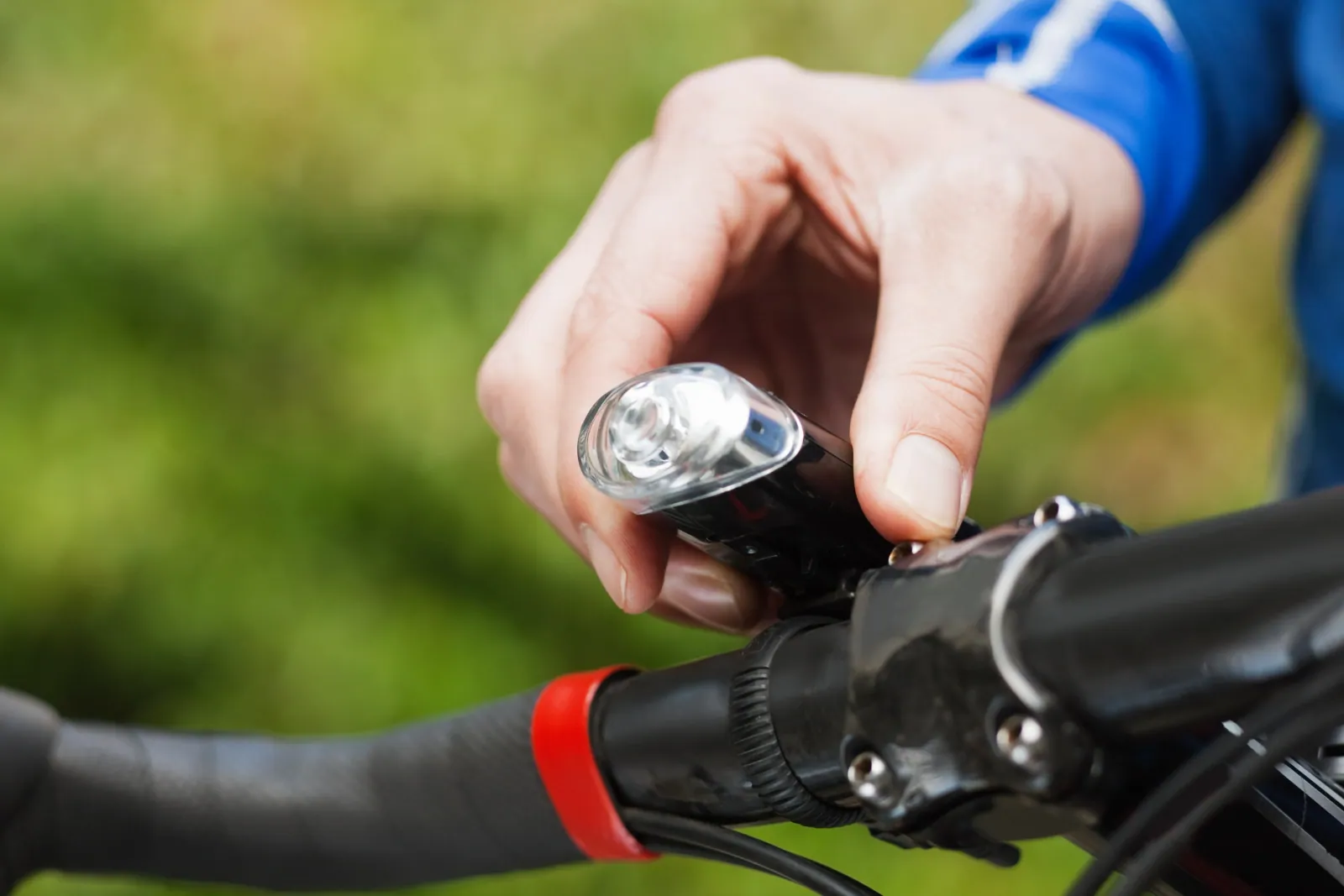
Six sub-categories covering the wholesale bicycle lights your customers genuinely use and the accessories that keep them running. Whether you are a bicycle light supplier for bike shops stocking wholesale commuter bike lights or a bicycle light supplier for dealers building a wholesale bike headlights and wholesale bike tail lights range, we’ve kept SKU breadth tight at launch: common output ranges, standard mounting interfaces, and the light-specific accessories with real reorder demand, rather than thin-stocking specialty lights for niche applications.
Wholesale commuter and urban front bike lights
100–500 lumens · Wholesale USB rechargeable bike lights · Standard handlebar mounts · Multiple modes (constant, flash, pulse, daytime-running) · Wholesale waterproof bike lights with IP-rated water resistance
The volume category for urban and commuter retailers. Wholesale LED bicycle lights with StVZO-approved options available for German market. Wholesale bike headlights for daily commuters.
Wholesale commuter and urban rear bike lights
20–100 lumens · Wholesale USB rechargeable bike lights on most SKUs · Seatpost and seatstay mounts · Multiple flash modes including daytime-running
Wholesale bike tail lights for urban visibility. Some battery-operated SKUs available where USB charging access is unreliable. Visibility in mixed lighting (dawn, dusk, urban evening) drives the daytime-running mode demand.
Wholesale performance and trail front bike lights
1,000–3,000+ lumens · Wholesale high lumen bike lights · Integrated batteries on some SKUs, separate battery packs on the higher-output systems · Refined beam patterns (spot, flood, mixed)
For actually seeing the road or trail at night. Wholesale mountain bike lights for night riding and wholesale road bike lights for winter training are the primary audiences.
Wholesale helmet-mounted lights
500–1,500 lumens typical · Lower weight than handlebar-mounted wholesale bicycle lights · Helmet-compatible mounts supplied · Zip-tie or velcro-strap based
The supplementary light MTB riders use for trail spotting beyond where their bar light points. Paired with a bar-mounted primary light, not as a standalone.
Wholesale bike safety lights
Under 50 lumens typical · Multiple flash modes · Small clip-on, wearable, and helmet-clip designs · Often battery-operated (AAA/AA)
Wholesale bicycle reflectors and lights for supplementary visibility alongside primary lighting. Designed for visibility in mixed lighting conditions. Lower price point, higher reorder cadence.
Wholesale light accessories and mounts
Replacement mounts (handlebar, helmet, seatpost) · GoPro-compatible adapters · Light extension cables · Replacement batteries and chargers · Lens covers
The consumables that keep wholesale bicycle light systems running. Real reorder demand for service-active shops; mount sizing must match the original light.
A B2B bicycle light supplier that names output, beam pattern, and certification on every SKU.
Output and beam pattern named per SKU
Every wholesale bicycle light SKU names the lumen output (real measured output, not theoretical maximum), beam pattern (spot, flood, mixed, or StVZO-compliant), battery capacity and runtime per mode, IP water resistance rating, and mount standard. As an international bicycle light supplier and global bicycle light supplier, we make sure shops don’t get the marketing lumen number without the practical context.
Wholesale pricing that protects shop margin
Direct-from-supplier wholesale bicycle light prices on a category where retail margin is structurally strong. Wholesale bike lights carry better margin than most parts categories because customers shop them on features (output, modes, battery life) rather than purely on price. Tier pricing improves as your volume grows.
Ryden-branded range + your-brand private label
We supply Ryden-branded wholesale bicycle lights; brand-name lights are quoted case by case. Lights are a moderate private-label category: performance and trail customers shop by brand, commuter and urban customers shop by features and price. For bicycle light wholesalers and bicycle light distributors, custom bicycle lights wholesale and private label bike lights are commercially viable in the commuter sub-categories.
StVZO-approved range for German market
A selection of wholesale front bike lights with StVZO approval and the beam-pattern compliance the German market requires. Lights without StVZO approval are not legal for use on German public roads; we name StVZO status on every wholesale bicycle light SKU so German-bound shipments are clearly identified.
Your brand on the lights customers carry every commute.
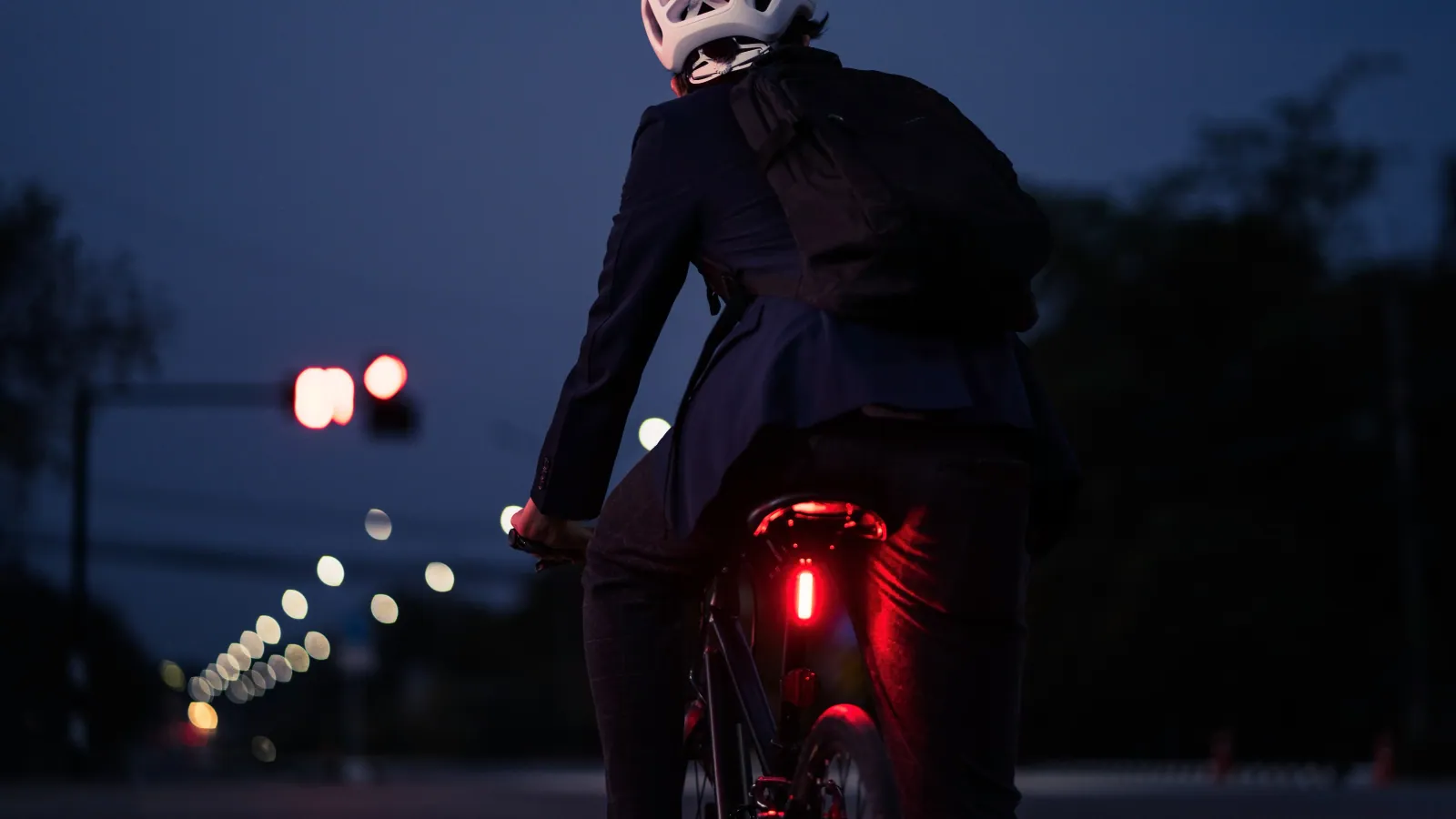
Wholesale bicycle lights are a moderate private-label category, and the strongest sub-category for custom bicycle lights wholesale and private label bike lights is wholesale commuter bike lights. The reasons: customers shopping wholesale commuter bike lights compare features (output, modes, battery life, water resistance) and price more than they compare brands; the engineering depth required for a commuter-grade light is approachable at private-label scale; and a customer who carries your shop’s branded front and rear lights on their daily commute becomes brand-visible at every stoplight and intersection.
We extend private label bike lights across wholesale commuter front bike lights, wholesale commuter rear bike lights, and wholesale bike safety lights at 250 units per SKU on commuter front lights and 300 per SKU on rear and safety lights, with 3 weeks to first sample and 2–3 months from sample approval. Wholesale high lumen bike lights (performance and trail) are honestly outside private-label scope at launch volumes; the high-output systems require engineering depth, certification work, and supply chain relationships beyond what private label at launch can support. Helmet lights are also outside launch private-label scope for the same reason.
Enquire about private-label commuter lightsThe specs that determine whether a wholesale bicycle light works for the use case.
Wholesale bike lights are a category where marketing lumen numbers and real performance often diverge. A 1,000-lumen light claimed by a discount supplier may produce closer to 600 lumens of real measured output, with a beam pattern that puts most of that light somewhere other than where the rider needs to see. Wholesale buyers learn this quickly, and a supplier that names real specifications honestly distinguishes itself from one that doesn’t. The specs that matter:
Lumen output: real measured vs marketing claims
Lumen output is measured at the light’s LED, not at the road. Marketing claims often state the maximum theoretical output of the LED chip; real output is what the optic and reflector actually deliver onto the road or trail surface. The two can differ by 30–40% on poorly designed wholesale LED bicycle lights. We name real measured output per wholesale bicycle light SKU (the output actually delivered onto a measured surface), not LED theoretical output. The number we name is the number a customer can verify with a lumen meter if they choose to.
Beam pattern
Lumen output alone doesn’t tell a buyer whether a light works for the use case. Wholesale front bike lights come with a tight spot beam (distance), a flood beam (width), a mixed beam (performance and trail), or a StVZO-compliant beam with a defined upper cut-off. A 1,000-lumen light with a spot beam illuminates a small circle far ahead; the same lumen output in a flood pattern illuminates a wider area closer to the rider. Commuter and urban lights typically need a wider flood pattern with a defined upper cut-off to avoid blinding oncoming traffic. Beam pattern is named on every wholesale bicycle light SKU.
StVZO compliance for German market
Germany’s StVZO (Straßenverkehrs-Zulassungs-Ordnung) requires that wholesale bicycle lights used on public roads in Germany meet specific beam pattern requirements: a defined upper cut-off line above the horizontal axis (so the light doesn’t blind oncoming traffic or upper-floor windows), minimum brightness at specified angles, and specific approval markings on the light body. StVZO-approved lights are designed differently from non-StVZO lights; they sacrifice some peripheral illumination to comply with the cut-off requirement. We supply both StVZO-approved and non-StVZO lights; SKUs destined for Germany must be StVZO-approved, and we name compliance status on every SKU. German market shipments without StVZO approval are not legal for road use and shouldn’t ship without buyer awareness.
Battery capacity and runtime per mode
Battery capacity is stated in mAh or Wh. Runtime is what matters to the rider, which is how long the light runs in each mode. A wholesale USB rechargeable bike light with a 5,000mAh battery at full output might give 2 hours of runtime; the same battery at half output might give 6 hours. We name runtime per mode on wholesale rechargeable bike lights rather than just battery capacity, because runtime is the practical metric a rider applies.
IP water resistance rating
IP (Ingress Protection) ratings use two numbers: the first is solid-particle protection (typically 6 for cycling lights, indicating dust-tight); the second is liquid-water protection (typically 4 for splash-resistant, 5 for water-jet-resistant, 7 for short-term submersion). Wholesale commuter bike lights are typically IPX4 (splash-resistant, sufficient for rain riding); wholesale waterproof bike lights for performance and trail are typically IP65 or IP67 (sufficient for stream crossings and prolonged rain). IP rating named per SKU.
Battery type and charging
Most wholesale LED bicycle lights use lithium-ion or lithium-polymer batteries with USB charging. Wholesale USB rechargeable bike lights come in micro-USB and USB-C, and the charging standard matters at the workshop level when shops set up charging stations for store-display lights. Some wholesale bike safety lights still use disposable batteries (AAA, AA) where the use case warrants it (safety lights, low-frequency-use lights, or markets where USB charging access is unreliable). Battery type, charging standard, and charge time per SKU are named.
Mount standards
Handlebar mounts vary by clamp diameter (the bar diameter the mount fits onto) and by mounting style (silicone strap, tool-required clamp, GoPro-compatible adapter, integrated mount). Most wholesale commuter bike lights use silicone strap mounts that fit 22.2mm to 35mm bars; wholesale high lumen bike lights often use tool-required clamps that lock to a specific bar diameter. Helmet mounts are typically zip-tie or velcro-strap based, sometimes with GoPro adapter compatibility. Seatpost mounts vary by post diameter. We name the mount standard and the bar/post diameter range per wholesale bicycle light SKU.
Light modes and switching behavior
Most modern lights have multiple modes (high, medium, low, flash, pulse, daytime-running). Mode switching uses different button patterns depending on the light: single press, double press, hold, etc. We name the mode count and switching pattern per SKU because shops setting up store demos and customers learning their new lights benefit from documented switching behavior.
Lens material and replaceability
Lenses are typically polycarbonate for impact resistance; some higher-end lights use coated lenses for anti-reflection or hardening. Replacement lenses are available on selected SKUs for shops that handle warranty service or for customers who damage lenses through impact.
Dynamo-powered lights (lights powered by a hub dynamo rather than batteries) are outside launch scope; the supply chain for dynamo systems is narrower at our launch volumes. Smart lights with app integration and connectivity (Bluetooth-connected lights, light-to-bike-computer integration) are outside scope at launch because the engineering, certification, and warranty depth required is beyond what we can supply at launch volumes. Lights for specialty applications (cargo bike lights with integrated power systems, e-bike lights powered by the bike battery, certain commercial fleet lighting standards) are outside launch scope.
Wholesale bicycle lights ship dense, contain lithium-ion, and have specific packing requirements.
Freight is dense, but lithium-ion ships as dangerous goods
Wholesale bicycle lights ship dense relative to bike freight. A box of lights takes a fraction of the freight footprint of a wheelset. Per-SKU freight is among the lowest of any wholesale category we supply. Small-volume reorders move by parcel courier for fast turnaround. International freight from the origin port is quoted per shipment alongside your initial quote. Lithium-ion battery handling: wholesale LED bicycle lights with lithium-ion batteries (most modern lights) ship as dangerous goods under IATA and IMDG rules when shipped by air or sea internationally. Our forwarder handles DG declarations, and UN 38.3 battery test summaries are confirmed per SKU at quote stage. For bicycle light distributors and bicycle light dealer suppliers ordering bulk bicycle lights, DG freight adds cost that we name transparently rather than hiding in the line item.
Packing per retail tier; battery-containing units have specific requirements
Wholesale bicycle lights ship in retail-ready packaging where they’re sold through to end customers (boxed with branding, mount, charging cable, instructions, and warranty card). Workshop-bulk packing is available for shops with display-floor setups that don’t need retail packaging on every unit. Mount accessories and replacement batteries ship in bulk packing by default. Battery-containing wholesale rechargeable bike lights have specific packing requirements (separators between units, fire-resistant packaging on bulk shipments) that we handle per current carrier rules.
Workshop service: installation is simple, charging-station setup matters at the shop
Light installation is among the simpler workshop operations. Most wholesale bicycle lights mount tool-free or with a single screw, with the mount typically pre-installed on retail SKUs. Charging-station setup at the shop level (for store-display lights) requires considering USB charging standards (USB-A vs USB-C) and the number of simultaneous charge points needed. Light service typically involves battery replacement (on rechargeable systems) or replacement of damaged units; we supply replacement batteries and individual mount components for service-stage repairs.
Tell us what your shop needs.
We’ll come back within 2 business days with honest numbers: unit cost at your volume, MOQ per SKU, lead time, freight estimate including DG handling for lithium-ion lights, and certification confirmation for your market including StVZO where applicable. No generic wholesale bicycle light prices; every quote reflects your volume, destination, and sub-category mix.
From quote to delivery.
- 1
You enquire
Quote request submitted with your shop type, sub-categories of interest, output ranges, and StVZO compliance needs.
- 2
We reply with real numbers
Within 2 business days: unit cost at your volume, MOQ per SKU, lead time, freight estimate including DG handling for lithium-ion shipments, certification confirmation including StVZO where applicable. Your quote is your wholesale bicycle light catalog for that order.
- 3
Sample if private label or first stocking order
Approve physical samples before any full production for custom bicycle lights wholesale or private label bike lights, or sample SKUs from the catalog if you’re stocking a new range and want to verify output and beam pattern before committing. Nothing goes to a full run until you sign off.
- 4
Order, deposit, production or pick
Order confirmed. Stock catalog items dispatch in around 2 weeks. Private label runs to confirmed production lead time. We keep you updated on every order by email or WhatsApp.
- 5
DG freight, customs, delivery
Shipped on agreed Incoterms with appropriate dangerous-goods declarations for lithium-ion shipments; documentation supplied for your customs clearance. Parcel courier for small reorders, pallet for bulk wholesale bicycle lights.
What buyers actually ask about wholesale bicycle lights.
What is the difference between marketing lumens and real measured output on wholesale bicycle lights?
Marketing lumens are often the theoretical maximum output of the LED chip. Real measured output is what the light’s optic and reflector actually deliver onto a surface. The two can differ by 30–40% on poorly designed wholesale LED bicycle lights. We name real measured output per wholesale bicycle light SKU because it’s the metric customers verify.
What is StVZO and when do I need it for wholesale bicycle lights?
StVZO is Germany’s road traffic standard, requiring specific beam-pattern compliance (defined upper cut-off, specific brightness angles, approval markings) for wholesale bicycle lights used on public roads in Germany. Wholesale front bike lights without StVZO approval are not legal for German road use. We supply both StVZO-approved and non-StVZO lights; German market shipments need StVZO approval, and we name compliance status on every wholesale bicycle light SKU.
Do you supply StVZO-approved wholesale bicycle lights?
Yes. A selection of wholesale front bike lights with StVZO approval is included in the launch range. Quote stage confirms exactly which wholesale LED bicycle lights are StVZO-approved.
Do you supply dynamo-powered lights?
Not at launch. Dynamo systems have a narrower supplier base; we’ll consider building into the category if demand warrants.
Do you supply smart lights with app or Bluetooth?
Not at launch. Smart light systems require engineering, certification, and warranty depth beyond what we can supply at launch volumes.
What output range covers most commuter customers for wholesale commuter bike lights?
200–500 lumens covers most wholesale front bike lights needs for commuters; 20–100 lumens covers most wholesale rear bike lights needs. Higher-output wholesale high lumen bike lights serve customers riding in unlit areas or at faster speeds.
What output range do MTB riders need for wholesale mountain bike lights?
1,000+ lumens for handlebar-mounted wholesale mountain bike lights; 500–1,500 lumens supplementary for helmet-mounted. Trail riders typically want the bar-and-helmet combination of wholesale high lumen bike lights.
What is the typical battery life on wholesale commuter bike lights?
Confirmed per SKU. Most wholesale USB rechargeable bike lights run 2–4 hours at full output and 6–12 hours on medium modes. Daytime running modes can extend runtime to 20+ hours.
Do you handle dangerous-goods freight for lithium-ion wholesale bicycle lights?
Yes. Wholesale rechargeable bike lights with lithium-ion batteries ship as dangerous goods under IATA and IMDG rules when shipped by air or sea internationally. Our forwarder handles DG declarations; the freight cost reflects DG handling and we name this transparently in the quote.
What IP ratings do your wholesale waterproof bike lights carry?
Wholesale commuter bike lights typically IPX4 (splash-resistant); wholesale waterproof bike lights for performance and trail typically IP65 or IP67 (suitable for sustained rain and stream crossings). IP rating named per wholesale bicycle light SKU.
What mount standards do your wholesale bicycle lights use?
Most wholesale commuter bike lights use silicone strap mounts fitting 22.2mm to 35mm bars. Wholesale high lumen bike lights often use tool-required clamps. Helmet lights typically zip-tie or velcro-strap based. Mount standard and bar/post diameter range named per SKU.
What is the warranty on wholesale bicycle lights?
Manufacturing-defect coverage on the LED, electronics, and housing for 2 years. Batteries carry a capacity retention guarantee of 70% at 500 charge cycles, the same terms as e-bike batteries. Customer damage from impact, water ingress beyond IP rating, or modification is not covered.
Can you supply replacement mounts and replacement batteries for wholesale bicycle lights?
Yes. Replacement mounts (handlebar, helmet, seatpost) and replacement batteries for wholesale rechargeable bike lights are stocked as separate consumables. Mount sizing must match the original wholesale bicycle light; we confirm fit per SKU.
Can you supply a starter lights inventory?
Yes. Quote stage confirms a starter inventory of wholesale bicycle lights based on your shop’s target customer mix (wholesale commuter bike lights, wholesale mountain bike lights, wholesale road bike lights, mixed) and your service capability.
Do you supply wholesale bike light sets (front and rear together)?
Yes. Wholesale bike light sets pairing wholesale front bike lights and wholesale rear bike lights are available as matched combinations with single-SKU ordering and pair pricing. Particularly popular for wholesale commuter bike lights where customers buy front and rear together.
What is the MOQ for wholesale bicycle lights?
MOQ is 100 units per SKU on commuter lights, lower on accessories and safety lights. Custom bicycle lights wholesale and private label bike lights start from 250 units per SKU on commuter front lights and 300 per SKU on rear and safety lights. Confirmed per category.
How do I open a bicycle light wholesale account?
Two paths. Single-category quotes do not require an account. Apply for a bicycle light wholesale account when you want ongoing supply, access to the full wholesale bicycle light catalog, and tier pricing. The application takes 2 business days. Most bicycle light distributors and bicycle light dealer suppliers start with a single quote and apply after the first order.
Do you offer a wholesale bicycle light catalog?
We do not publish a static wholesale bicycle light catalog or bike light wholesale catalog with fixed prices, because wholesale bicycle light prices vary by volume, destination, output range, and StVZO requirements. Your quote is your catalog.
Can I get custom bicycle lights wholesale or private label bike lights?
Yes, on wholesale commuter bike lights, wholesale rear bike lights, and wholesale bike safety lights. Custom bicycle lights wholesale and private label bike lights carry 3 weeks to first sample and 2–3 months from sample approval. Wholesale high lumen bike lights (performance and trail) and helmet lights are outside private-label scope at launch.
Stock the categories that pair with wholesale bicycle lights.
The cross-link pattern here is the genuine commuter and visibility-adjacent inventory pattern, not generic accessory upsell.
Ready to stock wholesale bicycle lights with the depth your customers actually need?
Output and beam pattern named per SKU, StVZO available for Germany, DG-handled freight on lithium-ion shipments. Whether you need wholesale commuter bike lights, wholesale mountain bike lights, wholesale bike light sets, or wholesale bike safety lights, your quote covers it. Reply within 2 business days.