Wholesale Bike Protective Gear Suppliers: pads with CE EN 1621-1 impact ratings and use-case clarity.
Wholesale bike protective gear suppliers for shops worldwide. We supply wholesale cycling knee pads, wholesale cycling elbow pads, wholesale cycling back protectors, hip protection, and wholesale BMX protective gear. Wholesale MTB protective gear and wholesale mountain bike protection gear across CE EN 1621-1 Level 1 and Level 2 impact ratings, confirmed per SKU with test reports at quote stage. Wholesale cycling body armor and wholesale MTB body armor. Wholesale mountain bike knee pads and wholesale mountain bike elbow pads. Wholesale kids cycling protective gear. Wholesale cycling safety gear and wholesale bike protection gear from 25 units per SKU.
- Wholesale cycling knee pads + elbow pads + back protectors + BMX
- CE EN 1621-1 Level 1 + Level 2, test reports per SKU
- XC + trail + enduro + downhill use cases
- From 25 units per SKU
What we supply.
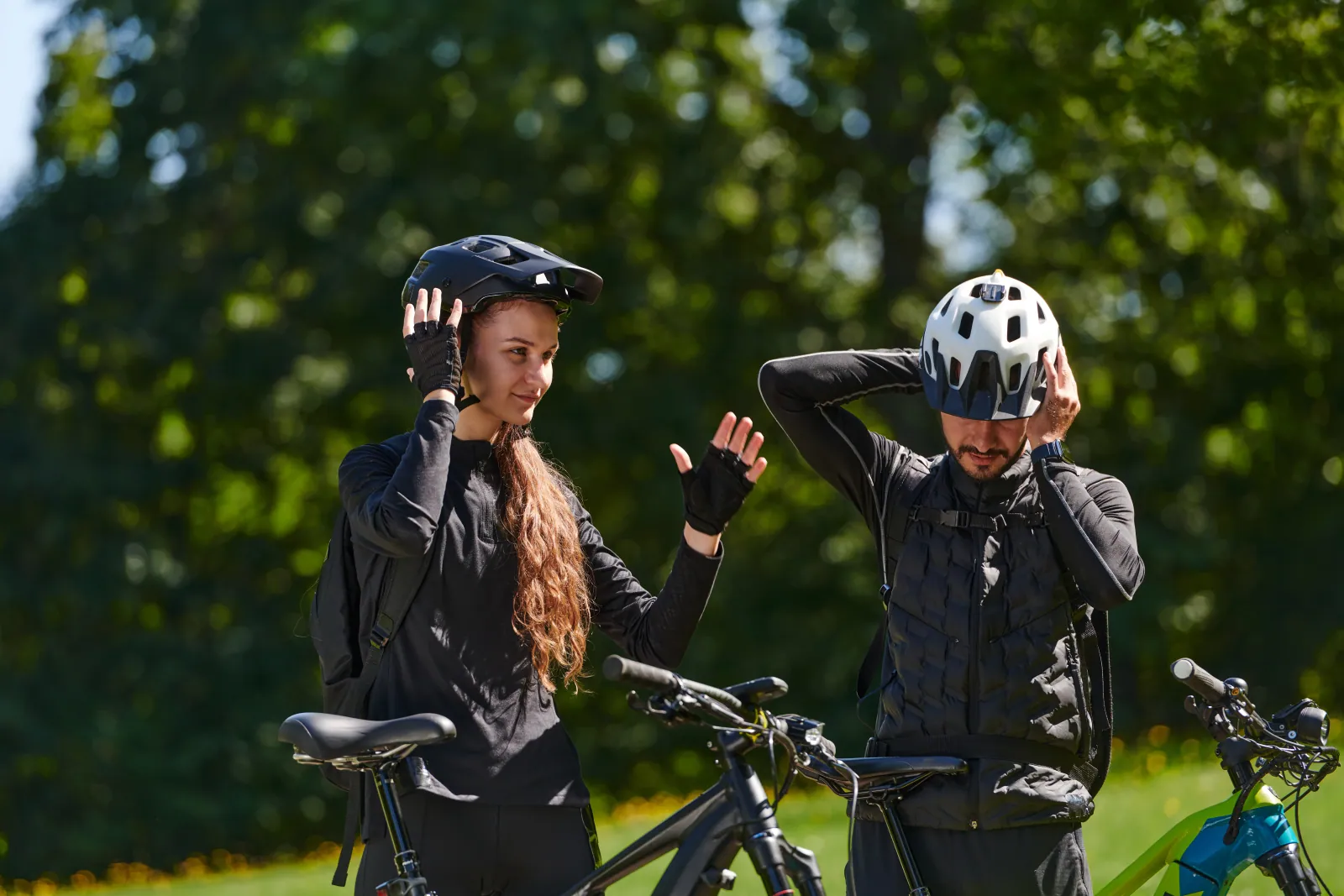
Five sub-categories of wholesale cycling protective gear. Whether you are a cycling protective gear supplier for bike shops stocking wholesale mountain bike knee pads or a cycling protective gear supplier for dealers building a wholesale BMX protective gear range, each sub-category names both the impact rating (CE EN 1621-1 Level 1 or Level 2) and the intended use case (XC, trail, enduro, downhill, BMX) per SKU, because buyers shop on both dimensions and naming one without the other leaves the buyer guessing.
Wholesale cycling knee pads
Wholesale mountain bike knee pads across XC/trail, lightweight, soft padding, pedaling-friendly, CE EN 1621-1 Level 1 typical · Enduro, moderate protection, Level 1 or Level 2 by SKU · Downhill, hard-shell or reinforced padding, Level 2 typical, sometimes with secondary knee-cap protection · Wholesale cycling shin guards on selected extended-coverage SKUs
The most-stocked wholesale cycling protective gear sub-category for MTB specialty retailers.
Wholesale cycling elbow pads
Wholesale mountain bike elbow pads across XC/trail, lightweight, soft, low profile · Enduro, moderate protection · Downhill, hard-shell construction, Level 2, for high-speed crash scenarios
Often sold paired with wholesale cycling knee pads to customers committing to full upper and lower-limb protection.
Hip protection
Hip pads protecting the hip and upper-thigh area, integrated into padded shorts or worn as separate protectors under riding shorts · CE EN 1621-1 Level 1 or Level 2 per SKU
Common in downhill and aggressive enduro use, where lateral falls in technical terrain impact the hip directly.
Wholesale cycling back protectors
Integrated back-protector vests (worn under a jersey, often Level 2) and separate back protectors (clip into a harness or worn stand-alone) · Spine protection across thoracic and lumbar areas · CE EN 1621-2 ratings per SKU, distinct from the EN 1621-1 limb standard
Wholesale MTB body armor and wholesale cycling body armor. Back protectors test under EN 1621-2, a standard distinct from the EN 1621-1 limb-pad standard.
Wholesale BMX protective gear
Wholesale BMX knee pads (often paired with wholesale cycling shin guards), wholesale BMX elbow pads matched to BMX riding positions, and full-body protection systems · Wholesale kids cycling protective gear sets including knee, elbow, and wholesale cycling wrist guards
BMX involves different impact scenarios than MTB (more frequent low-height impacts); the gear is designed accordingly.
A B2B cycling protective gear supplier with impact ratings and use cases named per SKU.
CE EN 1621-1 Level 1 and Level 2 named per SKU
Every wholesale cycling knee pad, wholesale cycling elbow pad, and hip pad SKU names its CE EN 1621-1 impact rating (Level 1 or Level 2), confirmed with test reports at quote stage. Wholesale cycling back protectors are rated to CE EN 1621-2 (the separate back-protector standard). As an international cycling protective gear supplier and global cycling protection supplier, we confirm the safety standards that apply to each product and market per SKU, with test reports, before you order. Naming the certification is the credibility test for protective gear suppliers, pads marketed without certification documentation or with vague "protective" claims fail the buyer’s compliance verification.
Wholesale pricing on a safety-critical category
Direct-from-supplier wholesale cycling protective gear prices on a category where retail margin is structurally strong. Protective gear carries good margin because customers shop on impact rating, fit, and brand credibility for safety reasons, not primarily on price. Tier pricing improves as your volume grows.
Ryden-branded range + private label cycling protective gear
We supply Ryden-branded wholesale cycling protective gear; brand-name protective gear is quoted case by case. For cycling protective gear wholesalers, custom cycling protective gear wholesale and private label cycling protective gear are viable on entry-level pads, wholesale kids cycling protective gear, and wholesale BMX protective gear. Premium downhill wholesale MTB protective gear relies on brand credibility built over years (G-Form, Race Face, Fox, 7iDP), and a launch-stage private-label range can't replicate that.
Use-case descriptors paired with impact ratings
Impact ratings name what the pad absorbs. Use-case descriptors (XC, trail, enduro, downhill, BMX) name when the pad is appropriate. We name both per wholesale bike protective gear SKU because they're complementary, a Level 2 pad designed for downhill isn't always right for a trail rider (too bulky, too heavy for sustained pedaling), and a Level 1 trail pad isn't appropriate for downhill use (insufficient impact protection).
Private label cycling protective gear at entry and mid tier.
Protective gear is a mixed private-label category, and the honest framing matters more than the optimistic one. The category splits commercially: customers buying premium MTB protective gear at the enduro and downhill tier shop heavily on brand credibility, G-Form, Race Face, Fox, 7iDP, POC carry safety credibility built over years of testing, athlete endorsement, and customer-ecosystem investment. A launch-stage private-label range at this tier struggles to compete on safety credibility even with appropriate certification testing.
Customers buying entry and mid-tier protective gear, kids' protective gear, and BMX-specific gear shop on fit, padding feel, and price more than on brand credibility, these are commercially viable for private label. We extend custom cycling protective gear wholesale and private label cycling protective gear across entry-level wholesale cycling knee pads, entry-level wholesale cycling elbow pads, hip pads, basic wholesale cycling back protectors, wholesale kids cycling protective gear sets, and wholesale BMX protective gear at 25 units per SKU, with 3-week sample turnaround, 2–3 months from sample sign-off, plus the time required for CE EN 1621-1 (or EN 1621-2) certification testing on private-label SKUs, which adds 4–6 weeks to total lead time. Premium downhill wholesale MTB protective gear at the Level 2 hard-shell tier is outside private-label scope at launch; brand-name options are quoted case by case.
Enquire about private-label protective gearSpecs that determine whether wholesale cycling protective gear protects against the impacts it claims to handle.
Protective gear is evaluated on a specific set of variables that matter for protection function, riding compatibility, and customer fit. The specs that matter:
CE EN 1621-1, limb pad impact standard
CE EN 1621-1 is the European standard for limb-pad impact protection. It tests pad performance under specific impact conditions (a 5 kg striker dropped from a set height) and assigns one of two levels. Level 1: the pad must reduce transmitted impact force to 18 kN average peak force or less, suitable for moderate-impact scenarios (XC, trail, lighter enduro), and typically lighter, more flexible, and more comfortable for pedaling. Level 2: the pad must reduce transmitted force to 9 kN or less under the same conditions, suitable for higher-impact scenarios (aggressive enduro, downhill), and typically heavier, often with hard-shell construction. The rating is named per wholesale cycling knee pad, wholesale cycling elbow pad, and hip pad SKU and confirmed with test reports at quote stage.
CE EN 1621-2, back protector standard
Wholesale cycling back protectors use a different standard (EN 1621-2) than limb pads because the impact-testing methodology differs for spine protection. EN 1621-2 uses the same Level 1 and Level 2 framework as EN 1621-1, with adjusted test parameters for back-impact scenarios. Back protector EN 1621-2 ratings are named per wholesale cycling back protector SKU and confirmed with test reports at quote stage.
Use-case descriptors and what they mean operationally
Use-case framing complements impact ratings because the practical question buyers ask is "what kind of riding is this pad designed for." We use these descriptors consistently: XC (light, pedaling-focused riding, infrequent lower-speed crashes, typically Level 1 with soft, flexible padding); Trail (mixed terrain with moderate technical challenges, the most common MTB use case, typically Level 1, sometimes Level 2 on more aggressive pads); Enduro (aggressive trail riding with technical descents and racing, typically Level 2 with some hard-shell elements but still pedaling-compatible); Downhill (dedicated descending, racing, or lift-served riding, Level 2 with hard-shell construction, heavier and bulkier); and BMX (BMX-specific profiles with more frequent low-height impacts). The use-case descriptor is named per wholesale bike protective gear SKU alongside the impact rating.
Hard-shell versus soft versus hybrid pad construction
Pad construction varies significantly. Soft pads use viscoelastic foam (foam that stiffens on impact), lightweight, flexible, and comfortable for pedaling. Hard-shell pads use a rigid outer shell over interior padding, more secure protection in high-impact scenarios, less flexible during pedaling. Hybrid pads combine soft construction with strategic hard-shell elements at high-impact zones (for example, a hard shell over the knee cap with soft padding around the perimeter). Construction is named per wholesale cycling protective gear SKU.
Pad sizing, circumference and length measurement
Wholesale cycling protective gear is sized by limb circumference (thigh circumference for wholesale mountain bike knee pads, biceps circumference for wholesale mountain bike elbow pads) plus pad length. Most pads ship in sizes XS through XXL with specific cm/inch ranges per size. A per-SKU sizing chart is available.
Pad retention systems, sleeve, strap, and combination
Sleeve-style pads use elastic sleeves that pull on over the limb, comfortable and well-positioned during typical riding, but require correct sizing for security. Strap-style pads use adjustable straps that wrap around the limb, more adjustable for varying limb sizes, sometimes less comfortable during sustained pedaling. Combination systems use a sleeve plus one or more straps for both comfort and security, common on enduro and downhill pads. The retention system is named per wholesale cycling protective gear SKU.
Pad ventilation
Pads in pedaling-compatible categories (XC, trail, enduro) often include ventilation features, perforated foam panels, mesh sections, or vent ports, to reduce heat buildup during sustained riding. Downhill pads typically have less ventilation, because heat buildup is less of a concern in lift-served descending.
Pad coverage area
Pad coverage varies across SKUs, some knee pads cover the knee plus the upper shin (extended coverage); some cover the knee only (compact coverage). Coverage area is named per SKU.
Material, outer fabric, inner padding, lining
Pad construction layers vary. The outer fabric provides abrasion resistance during slides, typically reinforced synthetic materials (nylon, Cordura, or similar). The inner padding is the impact-absorbing material (viscoelastic foam, EVA foam, or hard-shell layers). The lining provides skin-side comfort, often a moisture-wicking fabric. Each layer is named per SKU.
Anti-slip features on pad interiors
Pads designed for active riding often include silicone grip strips or anti-slip patterns on the interior surface to prevent slipping during movement. Anti-slip features are named per SKU.
Washability
Pads require regular cleaning, especially after riding in mud or sweat. Most pads are hand-washable; some are machine-washable with specific cycle requirements. Heavy washing reduces pad lifespan; per-SKU washing instructions are named.
Kids' protective gear considerations
Wholesale kids cycling protective gear faces specific requirements: smaller age-graded sizing, simpler retention systems for easier on/off, and sometimes designs that appeal to younger riders. It typically uses Level 1 ratings with lighter padding (matching lower impact energies in kids' riding scenarios). Sets that include knee, elbow, and wholesale cycling wrist guards are common for new riders.
Specialty motorsport-style protective gear (full body armor for racing applications) is outside scope at launch. Smart protective gear with integrated sensors or impact-detection technology is outside scope. Specialty industrial protective equipment (construction-grade pads) is outside our cycling scope. Body armor for non-cycling sports use is outside scope.
Wholesale cycling protective gear ships bulky, fits simple.
Freight: bulky per unit relative to weight
Wholesale cycling protective gear ships bulky per unit, pads occupy meaningful volume relative to their weight. Hard-shell downhill pads ship larger than soft trail pads; back protectors ship at moderate volume. For cycling protective gear distributors ordering in bulk, freight is transparently quoted. Per-SKU freight is moderate; reorders move by parcel courier for smaller volumes and pallet for larger orders. International freight from the origin port is quoted per shipment, with pallet capability confirmed at the quote stage per shipment.
Packing: retail-ready, with size and impact rating labelled prominently
Wholesale cycling protective gear ships in retail-ready packaging where it's sold through to end customers (boxed with the pad, sizing information, care instructions, a certification-documentation summary, and warranty information). The packaging shows the size labelling and the impact rating prominently, because customers and retail staff verify both at point of sale. Workshop-bulk packing is available for shops with display setups.
Service: fit verification and replacement-after-impact education
Wholesale cycling protective gear fitting requires proper sizing verification, measuring the customer's limb circumference and confirming against the SKU's sizing chart. Improperly sized pads (too loose or too tight) lose protective function. Pad replacement after significant impact is important customer education, like helmet EPS foam, viscoelastic and EVA pad materials compress under impact and may not fully recover, reducing future protective function. We supply customer-facing materials on pad replacement after impact for shops that want to include them.
Tell us what your shop needs.
We'll come back with honest numbers within 2 business days, Mon–Fri: unit cost at your volume, MOQ per SKU and per size, lead time, freight estimate, and impact-rating verification per SKU. No generic wholesale cycling protective gear prices; every quote reflects your volume, destination, and sub-category mix.
From quote to delivery.
- 1
You enquire
Quote request submitted with your shop type, sub-categories of interest, impact rating tier, use-case profile, and pad construction preference.
- 2
We reply with real numbers and rating verification
Within 2 business days, Mon–Fri: unit cost at your volume, MOQ per SKU, lead time, freight estimate, and CE EN 1621-1 (or EN 1621-2) impact-rating verification per SKU with documentation references. Your quote is your wholesale cycling protective gear catalog and cycling safety gear wholesale catalog for that order.
- 3
Test reports confirmed per SKU
Test reports for the CE EN 1621-1 or EN 1621-2 ratings that apply to each SKU you're sourcing are confirmed at quote stage, before order commitment.
- 4
Sample if private label or first stocking order
Approve physical samples before any full production for custom cycling protective gear wholesale or private label cycling protective gear, including additional time for certification testing on private-label SKUs. Sample SKUs from the catalog if you’re stocking a new range.
- 5
Order, deposit, production or pick
Order confirmed. Stock catalog items dispatch from our supplier on the agreed schedule. Private label runs to the confirmed production lead time plus certification-testing time. We keep you updated on every order by email or WhatsApp.
- 6
Freight, customs, delivery
Shipped on agreed Incoterms with documentation supplied for your customs clearance. Small reorders by parcel courier, larger orders by pallet.
What buyers actually ask about wholesale cycling protective gear.
What impact ratings do your wholesale cycling protective gear carry?
Wholesale cycling knee pads, wholesale cycling elbow pads, and hip pads carry CE EN 1621-1 Level 1 or Level 2 ratings. Wholesale cycling back protectors carry CE EN 1621-2 Level 1 or Level 2 ratings (a separate standard for back protectors). Each wholesale bike protective gear SKU's rating is confirmed with test reports at quote stage.
What's the difference between CE EN 1621-1 Level 1 and Level 2?
Level 1 pads must reduce transmitted impact force to 18 kN average peak force or less under the standard test. Level 2 pads must reduce it to 9 kN or less. Level 2 provides substantially more impact protection but is typically heavier and more rigid. Level 1 is appropriate for XC, trail, and lighter enduro riding; Level 2 is appropriate for aggressive enduro, downhill, and high-impact scenarios.
How are use cases (XC, trail, enduro, downhill) related to impact ratings?
Use cases are a practical framing buyers apply, and they correlate with impact ratings: XC and trail typically use Level 1 pads (lighter, more pedaling-friendly), enduro uses Level 1 or Level 2 depending on the SKU's design, and downhill typically uses Level 2 pads (more protective, heavier). The use-case framing names when the pad is appropriate; the impact rating names what the pad can absorb.
Do you supply hard-shell and soft pad options?
Yes. Soft pads (viscoelastic foam, lightweight, pedaling-friendly) are common at XC, trail, and entry enduro levels. Hard-shell pads (rigid outer shell over interior padding) are common at downhill and aggressive enduro levels. Hybrid designs combine strategic hard-shell elements with a soft perimeter for enduro. Construction is named per wholesale cycling protective gear SKU.
What's the difference between back protectors and the EN 1621-1 limb pad standard?
Back protectors test under EN 1621-2, a different standard than limb pads (EN 1621-1). The test methodology differs because spine-impact scenarios differ from limb-impact scenarios. The Level 1 and Level 2 framework is similar, Level 2 provides more protection. Ratings are named per SKU.
Do you supply wholesale cycling back protectors?
Yes. Integrated back-protector vests and separate wholesale cycling back protectors, covering the spine across the thoracic and lumbar areas. CE EN 1621-2 ratings named per SKU. Wholesale cycling body armor and wholesale MTB body armor are supplied through this sub-category.
Do you supply wholesale BMX protective gear?
Yes. Wholesale BMX knee pads (often paired with wholesale cycling shin guards), wholesale BMX elbow pads matched to BMX riding positions, and full-body protection systems for serious BMX use. BMX riding involves different impact scenarios than MTB; the gear is designed accordingly.
Do you supply wholesale kids cycling protective gear?
Yes. Wholesale kids cycling protective gear in age-graded sizes covering toddler through pre-teen ranges, with simpler retention systems for easier on/off. It typically carries CE EN 1621-1 Level 1 ratings appropriate for kids' riding scenarios. Sets with knee, elbow, and wholesale cycling wrist guards are common for new riders.
Do you supply hip protection?
Yes. Hip pads protect the hip and upper-thigh area where lateral falls in technical riding impact the hip directly. They are available as separate pieces or integrated into padded shorts, with CE EN 1621-1 ratings per SKU.
Do you supply wholesale cycling shin guards?
Yes. Wholesale cycling shin guards are supplied on selected extended-coverage wholesale cycling knee pad SKUs and in wholesale BMX protective gear sets.
Do you supply wholesale cycling wrist guards?
Wholesale cycling wrist guards are supplied primarily in wholesale kids cycling protective gear sets and in selected wholesale BMX protective gear. Adult wrist guards are more common in skateboarding than in cycling; the BMX crossover applies.
Do you supply wholesale cycling chest protectors?
Chest protection is addressed through wholesale cycling back protectors with integrated front coverage (back-protector vests). Standalone wholesale cycling chest protectors are outside our launch scope.
Should wholesale cycling protective gear be replaced after a significant impact?
Yes. Viscoelastic and EVA pad materials compress under significant impact and may not fully recover their protective characteristics, reducing future impact protection. Hard-shell pads may show visible damage after major impacts; soft pads may not show visible damage but should still be evaluated. The general rule: any pad involved in a crash with meaningful impact should be evaluated and likely replaced. Post-impact replacement customer education is supplied.
What is the warranty on wholesale cycling protective gear?
Manufacturing-defect coverage on the pad construction (stitching, seams, shell integrity, foam integrity) for 1 year. Normal-use wear (abrasion, fabric wear, foam compression from cumulative minor impacts) is not covered. Crash damage is not covered as warranty, but replacement after impact is the appropriate customer guidance.
Can you supply custom cycling protective gear wholesale for cycling clubs, racing teams, or corporate accounts?
Yes. Custom branding on our existing wholesale cycling protective gear range (adding logos to the pad outer fabric) is available at 100 units with custom-branding lead times. Some pad designs accommodate logo placement better than others; the quote stage confirms which SKUs support custom branding.
Can you supply a starter wholesale cycling protective gear inventory for a new MTB shop?
Yes. The quote stage confirms a starter inventory based on your shop's target customer mix (XC, trail, enduro, downhill, mixed, BMX) and the size distribution your customer base shops.
Do you supply replacement pad foam or repair parts for warranty service?
Generally no. Protective gear is constructed as integrated systems; foam replacement isn't a standard repair. Defective pads are replaced rather than repaired.
What is the MOQ for wholesale cycling protective gear?
25 units per SKU across wholesale cycling protective gear. Custom cycling protective gear wholesale and private label cycling protective gear start from 25 units per SKU plus certification testing time. Confirmed per category at the quote stage.
How do I open a cycling protective gear wholesale account?
Two paths. Single-category quotes do not require an account. Apply for a cycling protective gear wholesale account when you want ongoing supply, access to the full wholesale cycling protective gear catalog, and tier pricing. The application takes 2 business days, Mon–Fri.
Do you offer a wholesale cycling protective gear catalog?
We do not publish a static wholesale cycling protective gear catalog or cycling safety gear wholesale catalog with fixed prices, because wholesale cycling protective gear prices vary by volume, destination, impact rating, and construction. Your quote is your catalog.
Can I get custom cycling protective gear wholesale or private label cycling protective gear?
Yes, at entry and mid tier. Custom cycling protective gear wholesale and private label cycling protective gear run across entry-level wholesale cycling knee pads, entry-level wholesale cycling elbow pads, hip pads, basic wholesale cycling back protectors, wholesale kids cycling protective gear, and wholesale BMX protective gear at 25 units per SKU plus certification testing time (4–6 weeks). Premium downhill wholesale MTB protective gear is outside private-label scope; brand-name options are quoted case by case.
Stock the categories that pair with wholesale cycling protective gear.
The cross-link pattern here is the genuine attachment pattern for protective gear buyers, the head-protection complement, the kit pairing, and the MTB safety items that complete the setup.
Ready to stock wholesale cycling protective gear with impact ratings buyers can verify?
CE EN 1621-1 Level 1 and Level 2 named per wholesale cycling knee pad and wholesale cycling elbow pad SKU. Use cases (XC, trail, enduro, downhill, BMX) named per SKU. Wholesale cycling back protectors with EN 1621-2 ratings. Wholesale BMX protective gear and wholesale kids cycling protective gear. Test reports confirmed per SKU at quote stage for compliance verification. Reply within 2 business days, Mon–Fri.