Wholesale Bicycle Computer Suppliers: computers that measure what your customers ride, in the ecosystem they already use.
Wholesale bicycle computer suppliers for bike shops and retailers worldwide. We supply wholesale GPS bike computers across performance, gravel, MTB, and adventure categories. Wholesale wireless bike computers and wholesale wired bike computers for everyday riders. Wholesale ANT+ bike computers and wholesale Bluetooth bike computers with sensors that pair with the customer’s existing kit. Wholesale cycling computers and wholesale cycling speedometers with mounts and accessories. Wholesale rechargeable bike computers with DG-handled freight on lithium-ion. From 100 units per SKU on volume non-GPS and accessory items (brand-name GPS units quoted case by case).
- Wholesale GPS bike computers + non-GPS
- Wholesale ANT+ bike computers + wholesale Bluetooth bike computers
- Performance + gravel + MTB + commuter
- Lithium-ion DG freight handled
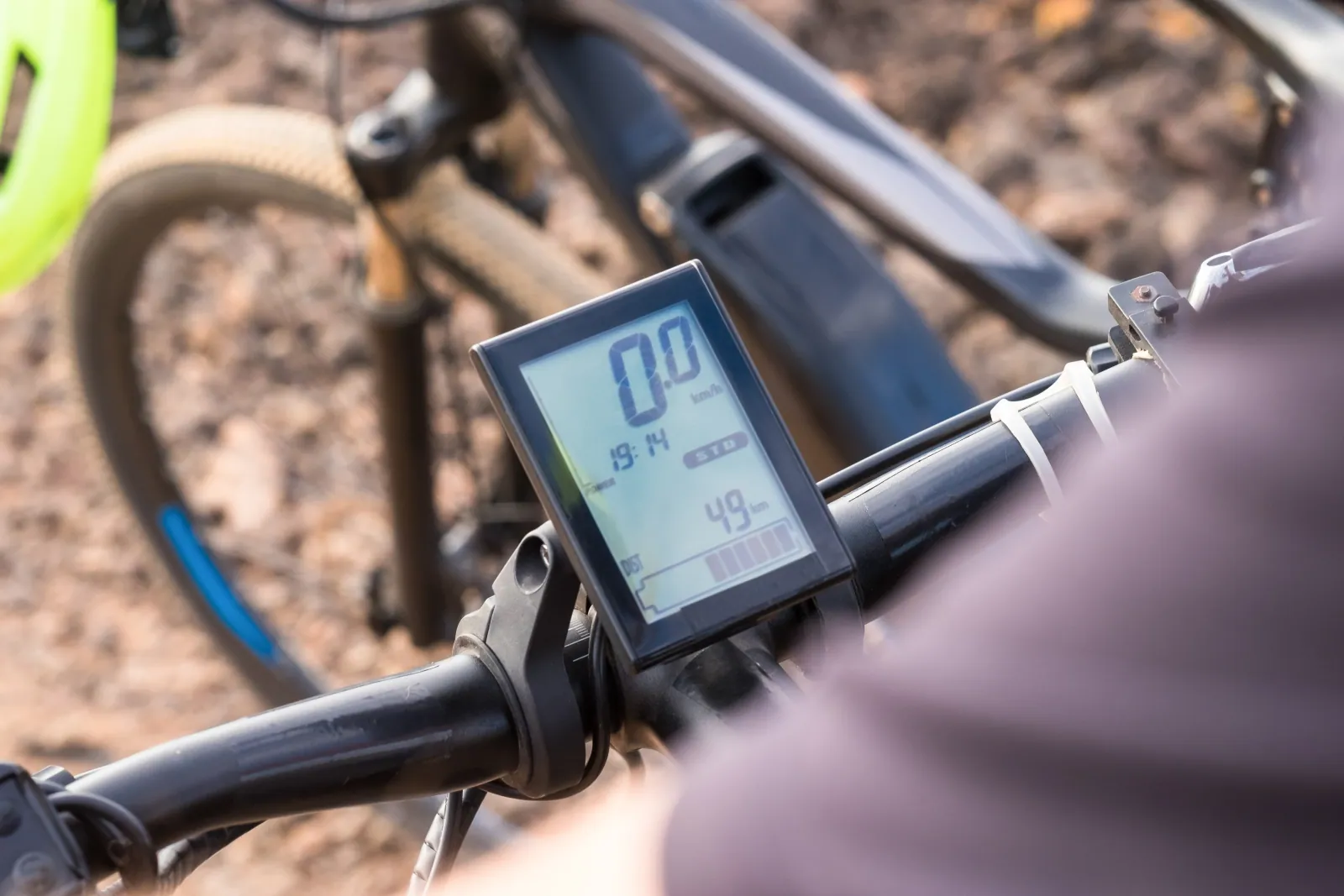
What we supply.
Seven sub-categories of wholesale bicycle computers covering the cycling computer use cases your customers genuinely need across performance, gravel, MTB, and commuter cycling. Whether you are a bicycle computer supplier for bike shops stocking wholesale GPS cycling computers or a bicycle computer supplier for dealers building a wholesale cycling speedometers range, we have structured around the use case and the GPS-versus-basic distinction because those are the primary buyer-evaluation dimensions. Computer mounts, sensors, and accessories are covered as separate sub-categories.
Wholesale GPS bike computers, performance road
Display 2.6” to 3.5” · Battery 12–25 hours typical use · Dual ANT+ and Bluetooth · Power meter and HR compatible
Wholesale road bike computers optimized for performance training. Power meter and wholesale heart rate bike computers compatibility. Wholesale GPS cycling computers with structured workout support, climb detection and analysis.
Wholesale GPS bike computers, gravel and bikepacking
Display 3” and up · Battery 20–35 hours typical use · Downloadable maps · Komoot, Strava, Ride With GPS routes
Wholesale GPS cycling computers optimized for navigation and longer rides. Larger screens for map readability. Wholesale waterproof bike computers with multi-day battery life. Comprehensive turn-by-turn navigation.
Wholesale GPS bike computers, MTB and trail
Compact display · Battery 6–15 hours typical use · Higher impact and dust resistance · Strava segment recording
Wholesale mountain bike computers optimized for trail recording, Strava segments, and durability. Wholesale waterproof bike computers with higher IP ratings for dust and crash exposure. Battery balanced for typical trail ride duration.
Wholesale non-GPS bike computers
Wholesale wired bike computers or wholesale wireless bike computers with wheel-mounted sensor · Speed, distance, time, basic ride metrics · The volume category for everyday riders
Wholesale speedometer bike computers and wholesale cycling speedometers measuring speed, distance, time, and basic ride metrics via wheel sensor. No GPS, no advanced connectivity. The volume category for commuter customers. Custom bicycle computers wholesale and private label bike computers are commercially viable in this sub-category.
Wholesale cycling sensors
Wholesale heart rate bike computers sensors (chest-strap and arm-band) · Wholesale cadence bike computers sensors · Speed sensors · Wholesale ANT+ bike computers and wholesale Bluetooth bike computers dual-protocol where available
Sensors that pair with wholesale bicycle computers. Wholesale heart rate bike computers sensors (chest-strap and arm-band), wholesale cadence bike computers sensors, and speed sensors across wholesale ANT+ bike computers and wholesale Bluetooth bike computers protocols, dual-protocol where available. Power meters quoted case by case.
Computer mounts and accessories
Out-front mounts · Stem mounts · K-Edge style mounts · Replacement charging cables · Screen protectors
Mounts the computer sits on (out-front, stem, handlebar band), replacement hardware, charging cables specific to computer ecosystems, screen protectors. The standard accessory pairing for wholesale bicycle computers.
Smartphone mounts
Compatible with major phone sizes · Weather protection · Vibration-stable
For riders using their phone running a cycling app (Strava, Komoot, Wahoo App) as a computer substitute. Mounts vary by phone size, weather protection, and vibration stability.
A B2B bicycle computer supplier that names connectivity, battery life, and platform integration per SKU.
Connectivity protocols named per SKU
Every wholesale bicycle computer SKU names connectivity at protocol level: wholesale ANT+ bike computers support, wholesale Bluetooth bike computers version, GPS systems supported (GPS, GLONASS, Galileo, BeiDou), electronic shifting compatibility (Shimano Di2, SRAM AXS), platform integrations (Strava, Garmin Connect, Komoot, TrainingPeaks, Ride With GPS). As an international bicycle computer supplier and global bicycle computer supplier, the connectivity ecosystem is the central buyer concern; we make it visible at SKU level rather than burying it in marketing language.
Wholesale pricing on a high-margin specialty category
Direct-from-supplier wholesale bicycle computer prices on a category where retail margin is structurally strong. Wholesale cycling computers carry good margin because customers shop on features, brand, and connectivity more than on price. Tier pricing improves as your volume grows.
Brand-name GPS quoted case by case, private label limited
Wholesale bicycle computers are dominated by established brands (Garmin, Wahoo, Hammerhead, Lezyne, Bryton, Sigma) because customers shop the brand ecosystem, not just the device. For bicycle computer wholesalers and bicycle computer distributors, we quote brand-name wholesale cycling computers case by case rather than competing with established brands via private label at the GPS tier. Custom bicycle computers wholesale and private label bike computers are viable for wholesale non-GPS bike computers and selected accessories only.
Battery life and platform integration documented
Battery life claims often differ from real-world performance under typical riding conditions (display brightness, GPS sampling rate, sensor load). We name real measured battery life under typical use for wholesale rechargeable bike computers, not the manufacturer theoretical maximum; the difference under typical riding conditions is 30 to 50 percent. Platform integration depth (which platforms sync, what data, how reliably) is documented per SKU based on supplier and platform documentation.
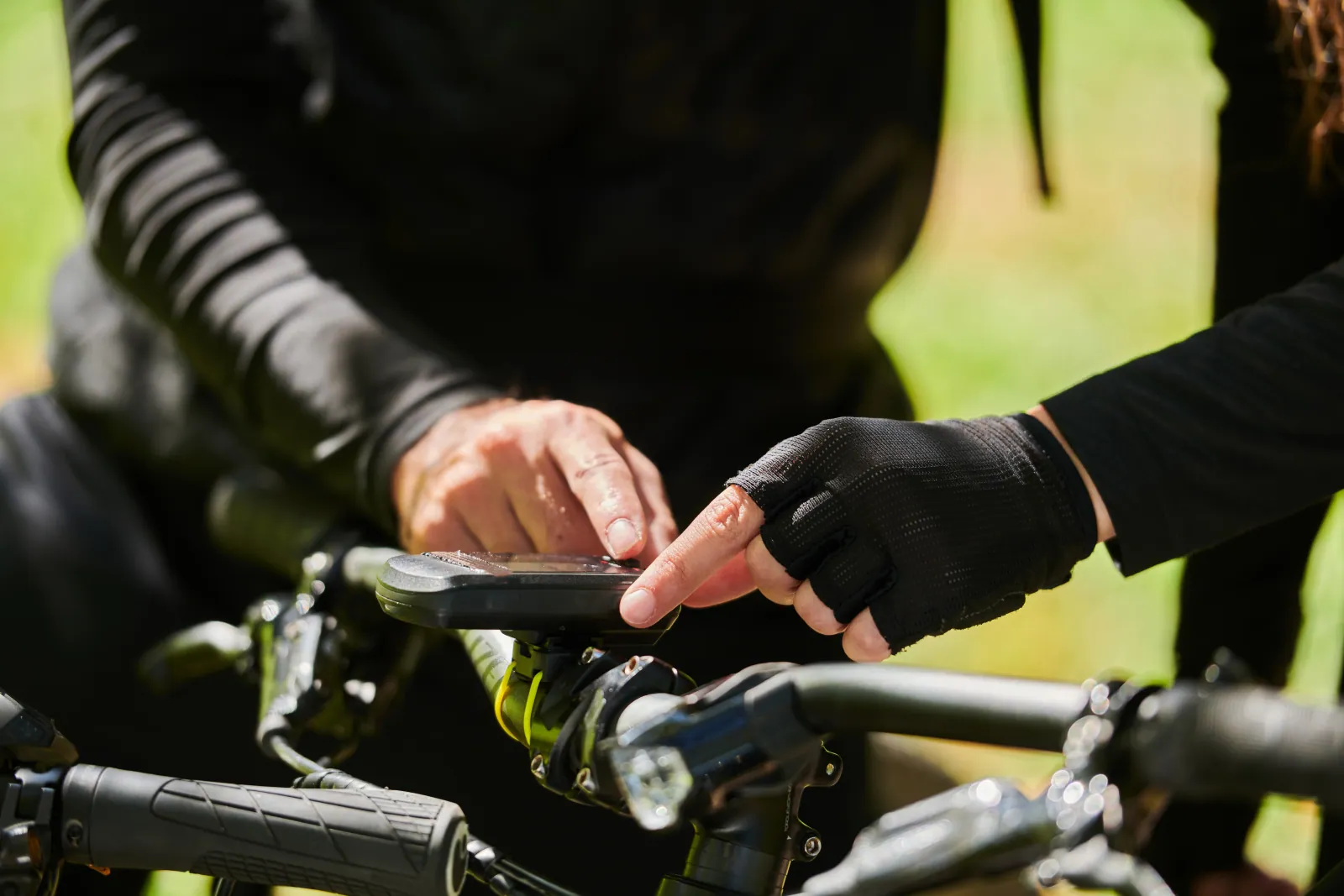
Branded computers, honestly limited to where it makes commercial sense.
Wholesale GPS bike computers depend on platform ecosystems (apps, firmware, customer support) that established brands built over years, so private label faces serious commercial constraints here and the honest answer matters more than the optimistic one. At the GPS tier, customers shop the brand ecosystem: they want Garmin’s Connect IQ, Wahoo’s app, Hammerhead’s Karoo platform, or another established connectivity ecosystem with multi-year app development behind it. Custom bicycle computers wholesale and private label bike computers cannot compete on this dimension at launch. Customers buying GPS computers know this and choose brands accordingly.
Where private label works: wholesale non-GPS bike computers (wholesale wired bike computers and wholesale wireless bike computers, where customers shop on price and features), computer mounts (commodity hardware), screen protectors, and bike-specific charging cables. Where private label does not work at launch: wholesale GPS bike computers at any performance tier. We extend private label bike computers across non-GPS computers and computer accessories at 200 units per SKU on non-GPS basic computers (150 per SKU on mounts and accessories), with 3 weeks to first sample and 2–3 months from sample approval. Brand-name wholesale GPS bike computers are quoted case by case.
Enquire about private-label opportunitiesThe specs that determine whether a wholesale bicycle computer fits the rider’s setup.
Wholesale bicycle computers are evaluated on a more technical specification set than most cycling accessories, because the computer has to integrate with the rider’s existing sensors, training platform, navigation app, and electronic systems. The specs that matter:
ANT+ versus Bluetooth Smart (BLE) connectivity
Wholesale ANT+ bike computers use the wireless protocol that has been the cycling-industry standard for sensor connections since the late 2000s. It is low-power, has minimal interference issues, and is supported by virtually all power meters, heart rate monitors, cadence sensors, and speed sensors designed for cycling. Wholesale Bluetooth bike computers use Bluetooth Smart (BLE), the newer protocol that has become increasingly common on cycling sensors since the mid-2010s. Modern wholesale cycling computers typically support both protocols (called “dual ANT+/Bluetooth” or “dual band”). Single-protocol wholesale bicycle computers support only one or the other. Customers with existing sensor kits need to match the computer to the sensor’s protocol; computers that support both protocols give buyers maximum flexibility. Named per SKU.
GPS systems supported
Wholesale GPS bike computers and wholesale GPS cycling computers use GPS for ride recording and navigation. Multiple GPS systems exist: GPS (US satellites), GLONASS (Russian), Galileo (European), BeiDou (Chinese). Higher-end computers support multiple systems simultaneously for better accuracy and faster satellite acquisition. GPS accuracy in real use typically depends on the number of satellite systems used, the antenna quality, and the riding environment (open sky versus urban canyons versus dense tree cover). We name GPS systems supported per wholesale bicycle computer SKU.
Screen size and readability
Screen sizes range from 1.8” (wholesale non-GPS bike computers) to 3.5”-plus (wholesale GPS cycling computers for navigation). Screen readability in daylight depends on display technology (transflective LCDs work better in sun than backlit LCDs), screen resolution, and refresh rate. Navigation-focused computers prioritize larger screens for map readability; performance computers prioritize compact form factors that do not add bulk to the bars. Named per SKU.
Battery life under typical use
Battery life claims often vary from real-world performance. Manufacturer claims typically assume minimum display brightness, minimum GPS sampling rate, and minimal sensor load; actual use under typical conditions reduces battery life by 30 to 50 percent. We name battery life under typical use (medium display brightness, standard GPS sampling, full sensor load) for wholesale rechargeable bike computers: wholesale GPS bike computers deliver 12 to 25 hours depending on model, with extended-battery wholesale GPS cycling computers reaching 30 to 35 plus hours. Real measured, not theoretical maximum.
Power meter and heart rate compatibility
Power meter compatibility depends on the protocol (ANT+ or Bluetooth Smart) and the power meter brand’s data format compliance. Most power meters use standard ANT+ Power Profile or Bluetooth Cycling Power Service, both of which are widely supported. Wholesale heart rate bike computers sensor compatibility similarly depends on protocol; standard chest-strap and arm-band heart rate monitors using ANT+ or Bluetooth pair widely across modern computers.
Cadence and speed sensor compatibility
Wholesale cadence bike computers sensors (measuring pedal revolution rate) and speed sensors (measuring wheel rotation) are common cycling sensors. Modern wireless cadence and speed sensors use ANT+ or Bluetooth; legacy wired sensors connect via dedicated cables to specific computer ports. Wholesale ANT+ bike computers and wholesale Bluetooth bike computers protocol compatibility determines sensor pairing.
Electronic shifting integration
Shimano Di2 and SRAM AXS electronic shifting systems can broadcast shift data and battery status to compatible bike computers. Computers that integrate display this on-screen during rides. We name electronic shifting compatibility per SKU.
Training platform integration
Wholesale bicycle computers sync ride data to training platforms over USB, WiFi, or mobile-app pairing. Common platforms: Strava (broadly compatible), Garmin Connect (Garmin computers natively, others via third-party export), Komoot (route loading and ride recording, widely supported), TrainingPeaks (training plan loading, supported by performance computers), Ride With GPS (route planning, widely supported), Zwift (indoor trainer integration, varies by computer). Integration depth varies by wholesale cycling computer brand and model and is documented per SKU based on supplier and platform documentation.
Navigation features
Navigation depth varies from basic breadcrumb-only ride recording (showing where you went on a map after the ride) to full turn-by-turn navigation with downloadable maps, voice prompts, and route recalculation if you go off-course. Gravel and bikepacking computers typically have the most comprehensive navigation; performance road computers may have lighter navigation features focused on Strava segments. Per-SKU navigation level documented.
IP rating and durability
Bike computers operate in weather and impact conditions. Wholesale waterproof bike computers carry IP ratings (described per SKU) that indicate water and dust resistance: IPX7 (waterproof to 1m for 30 minutes), IPX6 (heavy water spray), IP67 (full dust protection plus IPX7-equivalent water). Impact resistance is harder to quantify but matters for wholesale mountain bike computers and gravel computers exposed to crashes. Named per SKU.
Mounting options
Bike computers mount via various systems: stem mount (computer sits on top of stem with proprietary mount), out-front mount (computer extends forward of the bars on an aero-shaped mount), handlebar mount (computer attaches directly to the bars via a band). Most modern computers ship with a stem and handlebar mount; out-front mounts (typically K-Edge or third-party) are sold separately. Per-SKU mount included documented.
Smartphone mounts as related accessories
Smartphone mounts allow a rider to use their phone running a cycling app (Strava, Komoot, Wahoo App) as a computer substitute. Mounts vary by phone size compatibility, weather protection, and security against vibration. We supply selected smartphone mount SKUs as accessories on this page, but the dedicated computer category remains the primary focus.
Bike computers with cellular connectivity (such as Garmin Edge 1040 with cellular, or Hammerhead Karoo 2 cellular versions) are outside scope at launch; the cellular service complexity (carrier relationships, data plans, regional variations) is beyond what we can supply at launch volumes. Computers with integrated cameras are outside scope. Specialty computers for time-trial and triathlon-specific applications are outside scope.
Small electronics with specific freight and warranty considerations.
DG freight for lithium-ion wholesale rechargeable bike computers
Wholesale bicycle computers ship small and light per SKU, among the lightest cycling accessory categories per unit. Per-SKU freight is low; small reorders move by parcel courier, larger orders by pallet. Battery and electronics handling: wholesale rechargeable bike computers with lithium-ion batteries (most modern GPS computers) ship as dangerous goods under IATA and IMDG rules when shipped by air or sea internationally, the same DG handling as wholesale bicycle lights. The packaging meets UN 38.3 requirements; documentation includes appropriate dangerous-goods declarations. For bicycle computer distributors ordering bulk bicycle computers, international freight from the origin port is quoted per shipment with DG handling reflected transparently in the freight estimate.
Packing matches retail tier; bulk packing available for shops with display setups
Wholesale bicycle computers ship retail-ready or workshop-bulk, in retail-ready packaging where they are sold through to end customers (boxed with the computer, mounting hardware, charging cable, instructions, and warranty card). Replacement and add-on accessories (mounts, sensors, charging cables) ship in their own retail packaging. Workshop-bulk packing is available for shops with display setups that do not need retail packaging on every unit.
Installation involves customer-app pairing; firmware and platform sync stay with the customer
Computer installation at the customer-bike level is typically a 10–15 minute workshop operation involving mount installation, sensor pairing (if sensors are part of the customer purchase), and customer-app pairing on their smartphone. Pairing computers to existing customer sensors requires the customer phone for initial setup. Replacement parts (mounts, charging cables, screen protectors) are available for service. Firmware updates and platform sync issues are typically customer-app responsibilities, not workshop-bench operations.
Tell us what your shop needs.
We’ll come back within 2 business days with honest numbers: unit cost at your volume, MOQ per SKU, lead time, freight estimate including DG handling for lithium-ion computers, and case-by-case pricing on any brand-name units. No generic wholesale bicycle computer prices; every quote reflects your volume, destination, and sub-category mix.
From quote to delivery.
- 1
You enquire
Quote request submitted with your shop type, sub-categories of interest, connectivity protocols needed, GPS system requirements, battery life ranges, and training platform priorities.
- 2
We reply with real numbers
Within 2 business days: unit cost at your volume, MOQ per SKU, lead time, freight estimate including DG handling for lithium-ion computer shipments, case-by-case pricing on any brand-name units you request, and connectivity and platform compatibility confirmation. Your quote is your wholesale bicycle computer catalog for that order.
- 3
Sample if private label or first stocking order
Approve physical samples before any full production for private label bike computers (non-GPS computers and accessories), or sample SKUs from the catalog if you are stocking a new computer range and want to verify connectivity and platform integration before committing. Nothing goes to a full run until you sign off.
- 4
Order, deposit, production or pick
Order confirmed. Stock catalog items dispatch in around 2 weeks. Private label runs to confirmed production lead time. We keep you updated on every order by email or WhatsApp.
- 5
DG freight, customs, delivery
Shipped on agreed Incoterms with appropriate dangerous-goods declarations for lithium-ion wholesale rechargeable bike computers. Parcel courier for small reorders; pallet for bulk. Documentation supplied for your customs clearance.
What buyers actually ask about wholesale bicycle computers.
Do your wholesale GPS bike computers support both ANT+ and Bluetooth?
Most current wholesale GPS bike computers in our range support both protocols (dual band wholesale ANT+ bike computers and wholesale Bluetooth bike computers). Some entry-level wholesale GPS cycling computers support only one protocol; we name protocol support per wholesale bicycle computer SKU explicitly so a buyer evaluating a customer’s existing sensor kit can verify compatibility before committing.
Which GPS systems do your wholesale GPS cycling computers use?
Wholesale GPS bike computers in our range typically support GPS (US), GLONASS (Russian), and Galileo (European). Some higher-end wholesale GPS cycling computers add BeiDou (Chinese). Multi-system support improves accuracy and satellite acquisition speed in challenging environments such as urban canyons and dense tree cover. Named per SKU.
What real-world battery life should I expect from wholesale rechargeable bike computers?
Manufacturer battery life claims typically reflect minimum display brightness, minimum GPS sampling rate, and minimal sensor load. Under typical use (medium display brightness, standard sampling, full sensor load), real-world battery life is typically 70 to 80 percent of the manufacturer claim. We name battery life under typical use in the SKU descriptions: wholesale GPS bike computers deliver 12 to 25 hours of real-world use; extended-battery wholesale GPS cycling computers reach 30 to 35 plus hours.
Do your wholesale bicycle computers integrate with Strava, Garmin Connect, and Komoot?
Yes, with integration depth varying by wholesale cycling computer brand and model. Strava integration is broadly available across most computers. Garmin Connect is native on Garmin computers and via third-party export on others. Komoot route loading is widely supported. TrainingPeaks training plan loading varies by tier. Documented per wholesale bicycle computer SKU.
Do your wholesale cycling computers support electronic shifting (Shimano Di2, SRAM AXS)?
Most current wholesale GPS bike computers in our range display Shimano Di2 and SRAM AXS shift status and battery levels. Named per wholesale bicycle computer SKU.
What is the difference between Garmin, Wahoo, Hammerhead, Lezyne, Bryton, and Sigma?
Different brand ecosystems with different strengths. Garmin has the longest history and broadest platform integration. Wahoo emphasizes simplicity and quick setup. Hammerhead Karoo has Android-based flexibility. Lezyne offers competitive pricing with capable feature sets. Bryton and Sigma are strong in budget-to-mid-tier. Brand-name wholesale cycling computers are quoted case by case.
Can you supply private label GPS bike computers?
No, not at launch. Wholesale GPS bike computers depend on platform ecosystems (apps, firmware updates, customer support) that established brands have built over years, and a launch-stage private-label GPS computer cannot compete on this dimension. Custom bicycle computers wholesale and private label bike computers are viable for wholesale non-GPS bike computers (wholesale wired bike computers, wholesale wireless bike computers, wholesale cycling speedometers) and computer accessories only.
Can you supply wholesale non-GPS bike computers as private label?
Yes. Private label bike computers across wholesale non-GPS bike computers (wholesale speedometer bike computers, wholesale cycling speedometers) from 200 units per SKU on non-GPS basic computers (150 per SKU on mounts and accessories). Basic non-GPS computers measure speed, distance, and time via wheel-mounted sensors; the engineering depth is approachable at private-label scale, and customers shop these on price and basic features rather than on brand ecosystem.
Do you supply power meters?
Power meters are a specialty sub-category quoted case by case; specific brands and types are confirmed at quote stage. We do not currently stock a launch-wide private-label power meter range.
Do you supply wholesale heart rate bike computers sensors and wholesale cadence bike computers sensors?
Yes. Wholesale heart rate bike computers sensors (chest-strap and arm-band styles), wholesale cadence bike computers sensors, and speed sensors are stocked across wholesale ANT+ bike computers and wholesale Bluetooth bike computers protocols. Power meters are supplied per quote. Compatibility named per SKU.
Do you handle DG freight for lithium-ion wholesale rechargeable bike computers?
Yes. Wholesale bicycle computers with lithium-ion batteries ship as dangerous goods internationally, the same handling as wholesale bicycle lights. Our forwarder handles DG declarations and the freight cost reflects DG handling transparently in the quote.
What IP ratings do your wholesale waterproof bike computers carry?
IPX7 (waterproof to 1m for 30 minutes), IPX6 (heavy water spray), or IP67 (full dust protection plus IPX7-equivalent water). Wholesale waterproof bike computers are stocked for wholesale mountain bike computers and wholesale road bike computers use cases. Named per SKU.
What is the warranty on wholesale bicycle computers?
Wholesale bicycle computers carry manufacturing-defect coverage on the display, electronics, and housing for 2 years, with battery capacity retention of 70% at 500 charge cycles. Customer damage from impact, water ingress beyond the SKU’s IP rating, or modification is not covered.
Can you supply replacement mounts and charging cables for wholesale bicycle computers?
Yes. Replacement mounts, brand-specific charging cables, and screen protectors are stocked as separate accessories for service.
Do you supply smartphone mounts as an alternative to wholesale bicycle computers?
Yes, as related accessories. Smartphone mounts suit riders using a phone running cycling apps as a wholesale cycling computer substitute. They vary by phone size compatibility, weather protection, and vibration stability. Confirmed per SKU.
Can you supply a starter wholesale bicycle computer inventory?
Yes. Quote stage confirms a starter inventory based on your shop’s target customer mix and the connectivity ecosystem your customers use.
What is the MOQ for wholesale bicycle computers?
MOQ is 100 units per SKU on volume non-GPS and accessory items (brand-name GPS units quoted case by case). Private label bike computers run from 200 units per SKU on non-GPS basic computers (150 per SKU on mounts and accessories).
How do I open a bicycle computer wholesale account?
Two paths. Single-category quotes do not require an account. Apply for a bicycle computer wholesale account when you want ongoing supply, access to the full wholesale bicycle computer catalog, and tier pricing. The application takes 2 business days.
Do you offer a wholesale bicycle computer catalog?
We do not publish a static wholesale bicycle computer catalog or bike computer wholesale catalog with fixed prices, because wholesale bicycle computer prices vary by volume, destination, brand, and connectivity tier. Your quote is your catalog.
Can I get custom bicycle computers wholesale with my own branding?
Yes, on wholesale non-GPS bike computers (wholesale wired bike computers, wholesale wireless cycling computers, wholesale speedometer bike computers) and computer accessories. Wholesale GPS bike computers are brand-name only, quoted case by case. Custom bicycle computers wholesale carry 3 weeks to first sample and 2–3 months from sample approval.
Stock the categories that pair with wholesale bicycle computers.
The cross-link pattern reflects the natural attachment pattern for wholesale bicycle computer buyers. Lights pair commercially with computers as the other performance accessory category; workshop tools cover the mounting hardware. Bags and bottles round out the performance customer set.
Ready to stock wholesale bicycle computers in the ecosystem your customers use?
Wholesale GPS bike computers for performance, gravel, and MTB. Wholesale non-GPS bike computers and wholesale cycling speedometers for commuters. Wholesale ANT+ bike computers and wholesale Bluetooth bike computers with connectivity and platform integration documented per SKU. DG-handled freight on lithium-ion. Reply within 2 business days.